
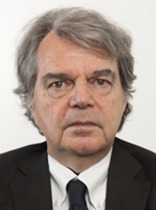
Renato Brunetta, an influential figure in Italian politics and economics, was born in Venice on May 26, 1950. Over the decades, he has become known not only for his academic contributions but also for his significant role in shaping Italy’s public administration and labor policies. His journey from humble beginnings to a prominent public figure is a testament to his perseverance, intellect, and dedication.
Early Life and Education
Renato Brunetta’s story begins in the picturesque city of Venice, where he was born into a working-class family. His father was a street vendor, which meant that Brunetta grew up in an environment where hard work and determination were essential. These early experiences undoubtedly shaped his worldview and contributed to his future success.
In 1973, Brunetta graduated with a degree in Political Science and Economics from the University of Padua. This academic achievement marked the beginning of a prolific career in both academia and public service.
Academic Career and Early Contributions
After completing his studies, Brunetta embarked on an academic career that would see him become a respected economist and educator. He initially served as an assistant in the courses of “Theory and Politics of Development” and “Applied Economics” at the University of Padua. His work in these fields demonstrated his keen interest in the dynamics of economic development and labor markets, subjects that would remain central to his career.
From 1982 to 1990, Brunetta was an associate professor of “Foundations of Economics” at the Istituto Universitario di Architettura di Venezia (IUAV). During this period, he also held the position of Vice President of the Manpower and Social Affairs Committee at the OECD in Paris from 1985 to 1989. This role allowed him to influence labor policies on an international scale, further solidifying his reputation as a leading economist.
Political Career and Influence
Brunetta’s foray into politics began in earnest in the 1990s when he started advising various Italian governments on economic matters. He served as an economic advisor to several prominent Italian politicians, including Bettino Craxi, Giuliano Amato, and Carlo Azeglio Ciampi. His expertise in labor economics and industrial relations made him an invaluable asset in these roles.
In 1999, Brunetta was elected as a Member of the European Parliament (MEP) under the Forza Italia party. During his tenure, which lasted until 2008, he served as Vice President of the Committee on Industry, Research, and Energy. He was also a member of several parliamentary delegations, including those dealing with relations with China, Croatia, and Turkey. These roles further expanded his influence on both European and international levels.
The 2000s: A Decade of Public Service and Reforms
The 2000s marked a significant period in Brunetta’s career as he transitioned from academia and advisory roles into more direct political involvement. In 2007, he became the Vice Coordinator of Forza Italia, a position that allowed him to shape the party’s policies and strategies.
In 2008, Brunetta was elected to the Italian Chamber of Deputies and was appointed Minister for Public Administration and Innovation in the fourth Berlusconi government. This role was particularly significant as it allowed Brunetta to implement one of his most well-known policies: the “anti-fannulloni” (anti-slackers) decree. This decree aimed to increase productivity and efficiency within the Italian public sector, which had long been criticized for its inefficiency and bureaucratic inertia. The decree quickly became law in February 2009, and its implementation reportedly led to improved performance across various public administrations.
Literary Contributions and Recognition
Beyond his political and academic achievements, Renato Brunetta is also a prolific author and editor. He has written extensively on labor economics and industrial relations, contributing to both academic journals and public discourse. He founded and directed the journal “Labour – Review of Labour Economics and Industrial Relations,” which has been a significant platform for discussions on labor-related issues.
Brunetta has also collaborated with prominent figures such as Vittorio Feltri to publish political conversation manuals, which were well-received by the public and contributed to his reputation as an intellectual force in Italian politics.
Throughout his career, Brunetta has received numerous awards for his contributions to economics and public policy. These include the Saint Vincent Prize for Economics in 1988, the Tarantelli Prize for the best work in labor economics in 1992, and the Scanno Prize for the best work in industrial relations in 1994. In 2000, he was awarded the International Rodolfo Valentino Prize for his work in economics, finance, and communication.
The 2020s: A Return to Ministerial Office
Renato Brunetta’s career took another significant turn in 2021 when he was appointed as the Minister for Public Administration in the government of Mario Draghi. This appointment marked his return to a role he had held more than a decade earlier, demonstrating the enduring trust in his ability to reform and modernize Italy’s public sector.
During his tenure in Draghi’s government, Brunetta continued to push for reforms aimed at increasing efficiency and transparency in public administration. His efforts were part of a broader strategy to modernize Italy’s economy and make it more competitive on the global stage.
However, Brunetta’s political journey in the 2020s also saw some challenges. In July 2022, following Mario Draghi’s resignation as Prime Minister, Brunetta decided to break away from his party, signaling a significant shift in his political career. This decision underscored his willingness to stand by his principles, even when it meant leaving behind long-standing political affiliations.
Historical Context and Legacy
Renato Brunetta’s life and career must be understood within the broader context of Italy’s economic and political landscape over the past few decades. His rise to prominence occurred during a period of significant economic transformation in Italy, as the country grappled with the challenges of globalization, industrial restructuring, and the need for public sector reform.
Brunetta’s policies, particularly in the realm of public administration, were often controversial but also widely recognized for their impact. His “anti-fannulloni” decree, for example, was both praised for its effectiveness and criticized for its perceived harshness. Nevertheless, it remains a defining feature of his legacy, illustrating his commitment to improving the efficiency of Italy’s public institutions.
As an economist, Brunetta’s work has contributed to our understanding of labor markets and industrial relations, both in Italy and internationally. His academic publications, combined with his practical experience in government, have made him a respected voice in discussions about economic policy and public administration.
Conclusion
Renato Brunetta is a figure who embodies the intersection of academia and politics, using his deep understanding of economics to influence public policy and drive reforms. From his early days as a student in Venice to his roles in government and academia, Brunetta’s life has been characterized by a relentless pursuit of excellence and a commitment to public service.
His story is not just one of personal achievement but also of significant contributions to Italy’s economic and political development. As he continues to navigate the complexities of Italian politics, Renato Brunetta remains a key figure in the ongoing discourse about how best to modernize and improve public administration in Italy.
In sum, Renato Brunetta’s life is a testament to the power of knowledge, dedication, and the willingness to challenge the status quo in the pursuit of progress. His legacy, though still being written, is one that will undoubtedly leave a lasting impact on both Italian politics and the field of economics.


