
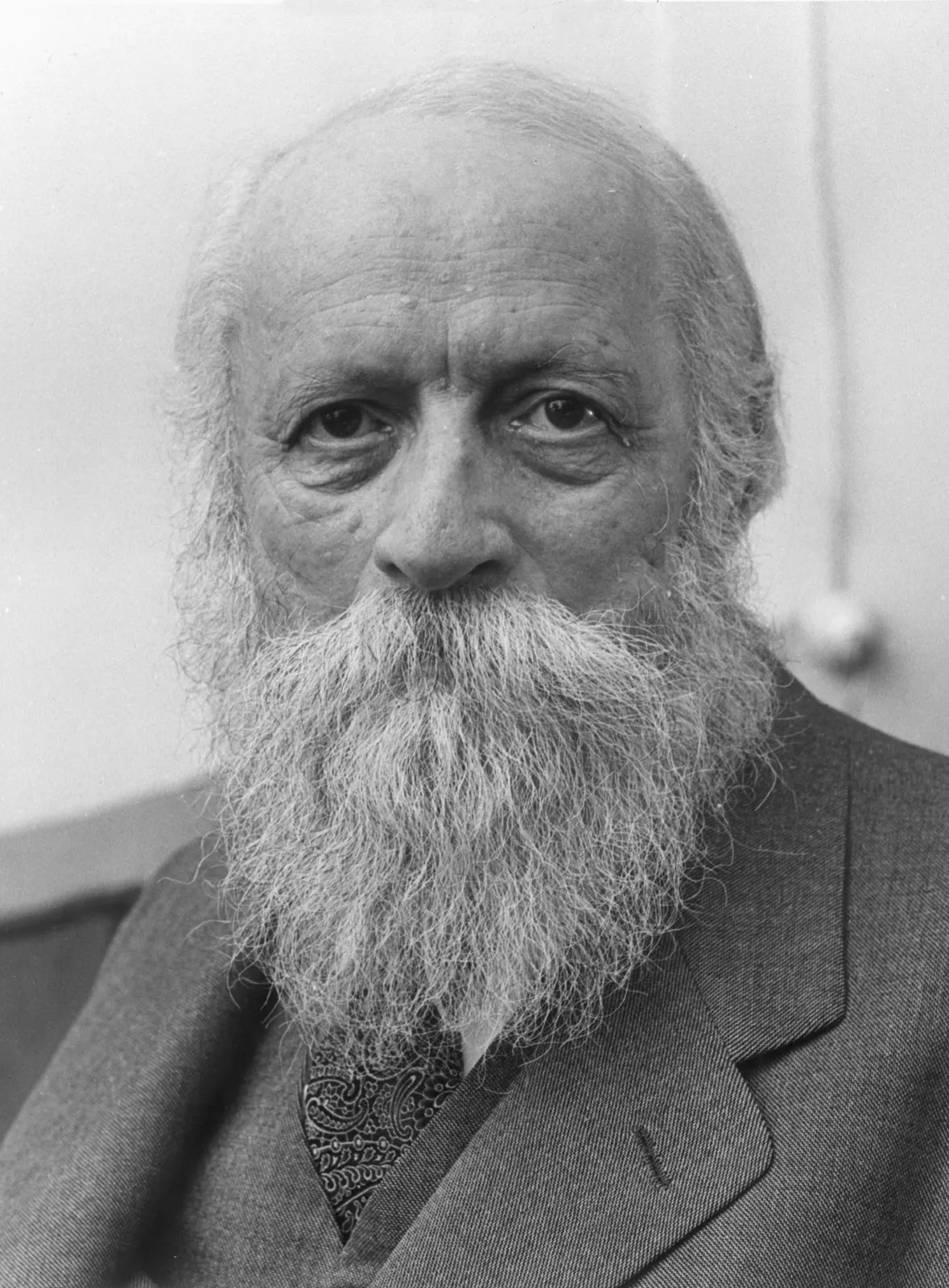
Martin Buber, born on February 8, 1878, in Vienna, Austria, is one of the most influential Jewish philosophers of the 20th century. His work spans theology, sociology, and philosophy, and he is best known for his philosophy of dialogue, particularly his concept of the “I-Thou” relationship. Buber’s intellectual journey was shaped by his deep engagement with Jewish mysticism, existentialism, and the socio-political movements of his time. His life was marked by a profound commitment to fostering understanding and dialogue between different cultures and religions, particularly between Jews and Arabs in Palestine.
Early Life and Intellectual Influences
Martin Buber’s early life was shaped by a complex cultural and religious environment. Born in Vienna to a Jewish family, Buber was raised in Lemberg (now Lviv, Ukraine) by his grandparents after his parents separated. His grandfather, Solomon Buber, was a renowned scholar of Jewish Midrashic literature, and his influence on the young Martin was profound. This early exposure to Jewish texts and traditions laid the foundation for Buber’s lifelong engagement with Jewish thought.
Buber’s intellectual curiosity was not limited to Jewish studies. As a young man, he immersed himself in the works of Western philosophers, including Immanuel Kant, Friedrich Nietzsche, and Søren Kierkegaard. These thinkers profoundly influenced his developing ideas, particularly his focus on the existential and relational aspects of human life. Nietzsche’s critique of traditional morality and Kierkegaard’s exploration of individual existence and faith were especially impactful on Buber’s philosophical outlook.
In his early twenties, Buber became involved with the Zionist movement, which sought to establish a Jewish homeland in Palestine. However, Buber’s approach to Zionism differed from the mainstream political Zionism of Theodor Herzl. While Herzl advocated for the establishment of a Jewish state primarily as a refuge from anti-Semitism, Buber envisioned Zionism as a cultural and spiritual renaissance for the Jewish people. He believed that the Jewish return to Palestine should be based on ethical and spiritual renewal rather than mere political sovereignty.
Buber’s involvement in the Zionist movement was marked by his advocacy for a binational state in Palestine, where Jews and Arabs could live together in mutual respect and cooperation. This vision was rooted in his broader philosophical commitment to dialogue and understanding between different cultures and religions.
The Philosophy of Dialogue: “I-Thou” and “I-It”
Martin Buber’s most famous contribution to philosophy is his concept of dialogue, which he articulated in his seminal work Ich und Du (I and Thou), published in 1923. In this work, Buber distinguishes between two fundamental modes of human existence: the “I-Thou” relationship and the “I-It” relationship.
The “I-Thou” relationship is characterized by mutual presence, openness, and direct encounter between two beings. In this mode of existence, individuals engage with each other as whole persons, without objectifying or reducing the other to a mere means to an end. The “I-Thou” relationship is a deeply spiritual and transformative experience, where the boundaries between self and other dissolve, and a genuine connection is established.
In contrast, the “I-It” relationship is a mode of existence where individuals relate to others as objects, tools, or means to achieve specific goals. In this relationship, the other is not encountered as a whole person but rather as an “It,” something to be used, manipulated, or controlled. The “I-It” mode is essential for the practical functioning of society, but Buber warns that when it becomes dominant, it leads to alienation, dehumanization, and the breakdown of genuine relationships.
Buber’s philosophy of dialogue extends beyond interpersonal relationships to encompass the relationship between humans and the divine. In the “I-Thou” relationship, Buber sees the possibility of encountering God, who is the “eternal Thou.” This encounter with the divine is not mediated by religious institutions or doctrines but occurs directly in the moment of genuine dialogue.
Buber’s ideas on dialogue had a significant impact on various fields, including theology, psychology, education, and political theory. His emphasis on the importance of authentic human relationships resonated with the existentialist movement and influenced thinkers such as Emmanuel Levinas and Gabriel Marcel.
Academic Career and Political Engagement
In 1925, Martin Buber was appointed as a professor of Jewish religion and ethics at the University of Frankfurt. His academic work during this period focused on Jewish mysticism, particularly Hasidism, a movement that emerged in Eastern Europe in the 18th century. Buber’s studies on Hasidism, published in works such as Tales of the Hasidim and The Legend of the Baal-Shem, introduced Western audiences to the spiritual richness of this Jewish tradition.
Buber’s interest in Hasidism was not merely academic. He saw in Hasidism a model of the “I-Thou” relationship, where the divine presence is encountered in everyday life and where spirituality is expressed through joy, community, and deep personal connection. Buber’s writings on Hasidism were influential in revitalizing interest in Jewish mysticism and in shaping modern Jewish thought.
The rise of Nazism in Germany forced Buber to confront the growing dangers facing the Jewish community. In 1933, after Adolf Hitler came to power, Buber resigned from his academic position in protest against the Nazi regime’s anti-Semitic policies. He devoted himself to Jewish education and community organization, working to strengthen Jewish identity and resilience in the face of persecution.
In 1938, as the situation in Germany became increasingly perilous, Buber emigrated to Palestine, where he was offered a professorship at the Hebrew University of Jerusalem. In Palestine, Buber continued his work on Jewish thought and philosophy, but he also became increasingly involved in the political and social issues facing the Jewish and Arab communities.
Buber remained committed to his vision of a binational state in Palestine, advocating for cooperation and dialogue between Jews and Arabs. He believed that the establishment of a Jewish state should not come at the expense of the Arab population and that both peoples had a legitimate claim to the land. Buber’s position was controversial, and he faced criticism from both Zionist and Arab nationalists. However, his commitment to dialogue and peaceful coexistence remained unwavering.
Later Life and Legacy
After the end of World War II, Martin Buber became a prominent figure in the global intellectual community. He traveled extensively, giving lectures and participating in conferences in Europe and the United States. Buber’s ideas on dialogue and human relationships gained widespread recognition, and he received numerous honors for his contributions to philosophy and Jewish thought.
In 1951, Buber was awarded the Goethe Prize by the University of Hamburg, one of Germany’s highest literary honors. This award was particularly significant, as it represented a form of reconciliation between Buber, a Jewish philosopher, and the German intellectual tradition from which he had been forced to flee.
In 1958, Buber’s wife, Paula Winkler, passed away, a loss that deeply affected him. Despite this personal tragedy, Buber continued his work, publishing some of his most important later works, including The Eclipse of God and The Knowledge of Man. These works explored the challenges of maintaining a genuine relationship with the divine in the modern world, where faith is often eclipsed by doubt, secularism, and existential anxiety.
Buber’s contributions to the philosophy of religion were further recognized in 1963 when he was awarded the Erasmus Prize in Amsterdam, a prestigious award given for contributions to European culture, society, or social science.
Martin Buber passed away on June 13, 1965, in his home in Talbiyeh, Jerusalem. His death marked the end of a remarkable intellectual journey, but his legacy continues to influence contemporary thought. Buber’s philosophy of dialogue remains relevant in a world where communication and understanding between different cultures, religions, and individuals are more critical than ever.
The Impact of Martin Buber’s Thought
Martin Buber’s ideas have had a lasting impact on various fields of study, including theology, philosophy, education, and political theory. His emphasis on dialogue as the foundation of human relationships has influenced approaches to conflict resolution, interfaith dialogue, and psychotherapy.
In education, Buber’s concept of the “I-Thou” relationship has inspired approaches that emphasize the importance of genuine interaction between teachers and students. Educators who are influenced by Buber strive to create learning environments where students are not treated as passive recipients of knowledge but as active participants in a shared journey of discovery.
In the field of psychology, Buber’s ideas have resonated with humanistic and existential therapists who prioritize the therapeutic relationship as a space for authentic encounter. His work has influenced figures such as Carl Rogers, who developed client-centered therapy, and Viktor Frankl, whose logotherapy focuses on finding meaning in life through relationships and responsibility.
Buber’s political thought, particularly his advocacy for a binational state in Palestine, continues to be relevant in discussions about the Israeli-Palestinian conflict. While his vision of a shared homeland for Jews and Arabs has not been realized, Buber’s commitment to dialogue and mutual respect remains an important reminder of the possibilities for peaceful coexistence.
Conclusion
Martin Buber’s life and work embody a profound commitment to dialogue, understanding, and the pursuit of truth. His philosophy of the “I-Thou” relationship challenges us to engage with others—not as objects to be used or manipulated—but as whole persons with whom we can build meaningful connections. Buber’s ideas are not just abstract concepts; they offer practical guidance for living a more authentic, compassionate, and connected life.
As we reflect on Buber’s contributions to philosophy, religion, and social thought, it becomes clear that his work is as relevant today as it was in his lifetime. In a world where divisions and misunderstandings often lead to conflict, Buber’s emphasis on dialogue and mutual respect provides a valuable framework for building a more just and peaceful society.
Martin Buber’s legacy continues to inspire those who seek to bridge the gaps between individuals, cultures, and religions. His life was a testament to the power of ideas to transform not only the way we think but also the way we live together in the world.


