
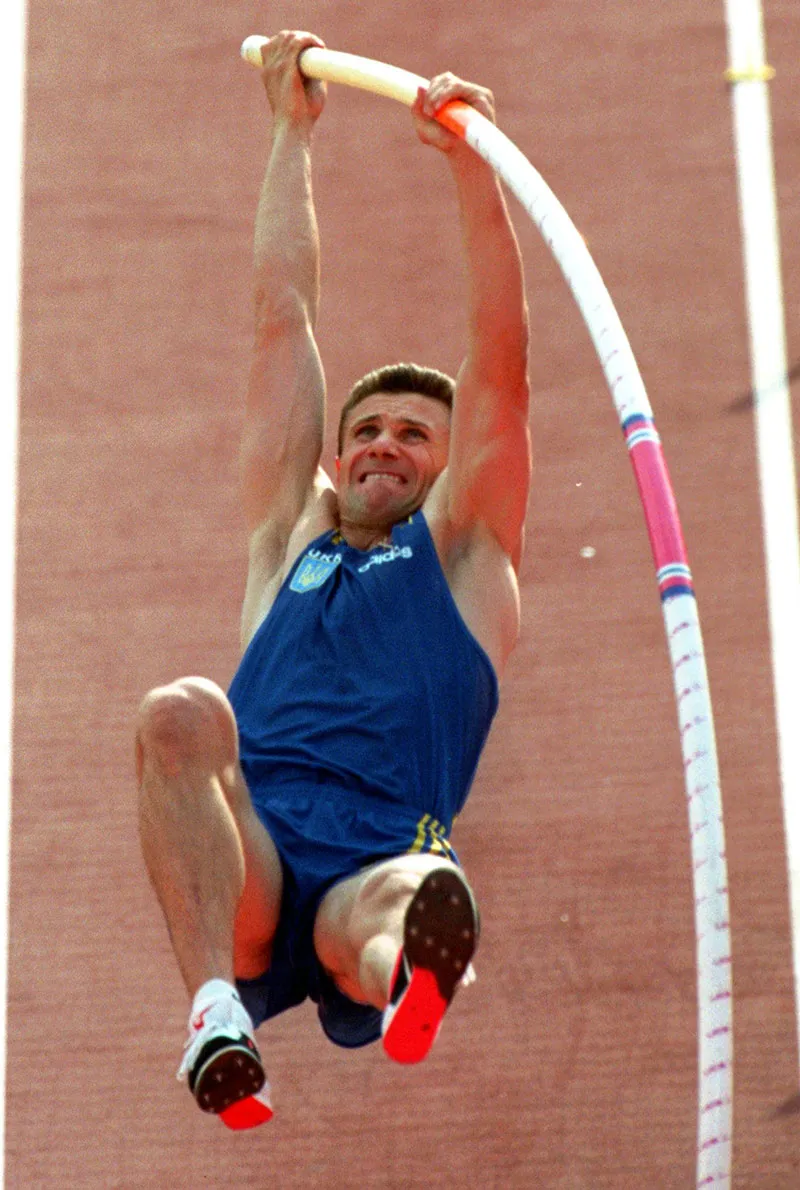
Sergej Bubka, born on December 4, 1963, in Luhansk, Ukraine, is widely regarded as the greatest pole vaulter of all time. Bubka’s career in athletics has been marked by his extraordinary achievements in pole vaulting, where he consistently pushed the boundaries of what was thought possible in the sport. His name has become synonymous with excellence in athletics, not only for his record-breaking performances but also for his contributions to sports administration and global sports development. This article explores the life, career, and legacy of Sergej Bubka, offering detailed insights into his rise to fame, his numerous accomplishments, and his impact on the world of sports.
Early Life and Introduction to Pole Vaulting
Sergej Bubka was born in Luhansk, a city in southeastern Ukraine, during a time when the region was part of the Soviet Union. From an early age, Bubka displayed an interest in sports, particularly in track and field events. His athletic journey began in earnest at the age of nine when he first tried pole vaulting. This early exposure to the sport would set the stage for his future dominance.
In 1978, at the age of 15, Bubka moved to Donetsk to train under the guidance of Vitaly Petrov, a renowned coach who played a crucial role in developing Bubka’s technique and athletic prowess. Under Petrov’s mentorship, Bubka quickly progressed, showing exceptional talent and a natural aptitude for pole vaulting. By the early 1980s, he had already made a name for himself in the Soviet Union’s athletics circuit.
Rise to International Stardom: Breaking Records
Sergej Bubka’s international breakthrough came in 1983 when he won a major competition in Helsinki, Finland, clearing a height of 5.70 meters. This victory marked the beginning of Bubka’s rise to global fame as he continued to set new standards in pole vaulting. His performances captivated the world, and he quickly became a dominant force in the sport.
One of the most significant milestones in Bubka’s career occurred on July 13, 1985, in Paris, France, when he became the first athlete to clear the six-meter mark in pole vaulting. This achievement was considered monumental, as the six-meter barrier had long been viewed as nearly impossible to overcome. Bubka’s success not only established him as the world’s best pole vaulter but also redefined the limits of human athletic performance.
Bubka’s ability to consistently surpass his own records became a hallmark of his career. Between 1984 and 1988, he improved his world record by a total of 21 centimeters, a remarkable feat in a sport where incremental progress is the norm. His dominance in pole vaulting was so absolute that it was often said that the competition was not between Bubka and other athletes, but between Bubka and the bar.
The Strategic Approach to Record-Breaking
One of the unique aspects of Sergej Bubka’s career was his strategic approach to setting world records. It was widely speculated that Bubka deliberately broke his records in small increments, capitalizing on the significant financial bonuses offered by the Soviet Union for each world record. This strategy allowed him to maximize his earnings while continuing to push the boundaries of the sport. While some critics questioned this approach, it undeniably contributed to Bubka’s legendary status in athletics.
Bubka’s mastery of the technical and physical aspects of pole vaulting was unparalleled. His exceptional speed, strength, and agility allowed him to use longer and stiffer poles than his competitors, giving him a greater advantage in converting speed into height. This combination of physical prowess and technical precision made Bubka virtually unbeatable during his peak years.
Olympic Success and Disappointments
Despite his dominance in the sport, Sergej Bubka’s Olympic career was marked by both triumph and disappointment. His greatest Olympic achievement came at the 1988 Seoul Olympics, where he won the gold medal with a vault of 5.90 meters. This victory solidified his status as the world’s top pole vaulter and fulfilled a lifelong dream of Olympic glory.
However, Bubka’s Olympic journey was not without setbacks. He was unable to compete in the 1984 Los Angeles Olympics due to the Soviet Union’s boycott of the games. This missed opportunity likely cost him a second Olympic gold medal. In the 1992 Barcelona Olympics, Bubka was surprisingly eliminated after failing to clear 5.70 meters, a height well below his usual standards. This unexpected failure shocked the athletics world and was one of the few blemishes on his otherwise stellar career.
Bubka’s misfortune at the Olympics continued in 1996 when an injury prevented him from competing in the Atlanta Games. His final Olympic appearance came at the 2000 Sydney Olympics, where he was once again unable to reach the podium, marking the end of his Olympic aspirations.
Continued Dominance and the Legacy of Record-Setting
Despite the challenges he faced at the Olympics, Sergej Bubka’s legacy in pole vaulting is defined by his unparalleled record-setting achievements. Over the course of his career, Bubka set 35 world records, 17 of which were outdoors and 18 indoors. His outdoor world record of 6.14 meters, set in Sestriere, Italy, on July 31, 1994, still stands today, nearly three decades later. His indoor world record of 6.15 meters, set in 1993, remained unbroken until 2020, when it was finally surpassed by Swedish pole vaulter Armand Duplantis.
Bubka’s dominance in pole vaulting for nearly two decades is unmatched in the history of the sport. His ability to consistently perform at the highest level, even as he aged, speaks to his extraordinary dedication and resilience. Bubka’s influence extended beyond the track, as he became a symbol of excellence and perseverance in athletics.
Contributions to Sports Administration and Philanthropy
After retiring from competitive athletics in 2001, Sergej Bubka transitioned into sports administration, where he continued to make significant contributions to the global sports community. In 1999, he was elected to the International Olympic Committee (IOC), where he served in various leadership roles, including Vice President of the International Association of Athletics Federations (IAAF) and President of the National Olympic Committee of Ukraine.
Bubka’s involvement in sports administration allowed him to advocate for the development of athletics and the promotion of sports as a tool for social change. He was instrumental in establishing programs to support young athletes and improve sports infrastructure in Ukraine and other countries. His efforts to promote fair play, integrity, and the values of Olympism have earned him widespread respect within the international sports community.
In addition to his work with the IOC, Bubka has been actively involved in various philanthropic initiatives. He founded the “Bubka Sport Club” in Donetsk, a center for athletics that has nurtured the talents of young athletes in Ukraine. The club has produced several successful athletes, including Maksym Mazuryk, who won the pole vault at the World Junior Championships in 2002.
Bubka has also supported various humanitarian causes, including programs for children affected by the Chernobyl disaster, initiatives to combat tuberculosis, and efforts to promote the social inclusion of people with disabilities. His commitment to using sports as a vehicle for positive change has made him a respected figure not only in athletics but also in the broader context of global development.
The End of an Era: Bubka’s Retirement and Continued Influence
Sergej Bubka officially retired from competitive athletics on February 4, 2001, at the age of 37. His retirement was marked by a ceremony in Donetsk, where a bronze statue was unveiled in his honor. The statue, which depicts Bubka in a solemn pose with his pole, stands as a tribute to his extraordinary career and the impact he had on the sport of pole vaulting.
Even in retirement, Bubka’s influence on athletics continues to be felt. His records remain benchmarks for aspiring pole vaulters, and his legacy as a pioneer in the sport endures. Bubka’s story is one of relentless pursuit of excellence, a testament to the power of dedication, innovation, and a willingness to push the limits of human potential.
Conclusion
Sergej Bubka’s life and career represent the pinnacle of athletic achievement. His ability to consistently break records, dominate his sport, and inspire generations of athletes has made him one of the most revered figures in the history of athletics. Beyond his achievements on the field, Bubka’s contributions to sports administration, philanthropy, and global development underscore his commitment to using sports as a force for good.
As the greatest pole vaulter of all time, Sergej Bubka’s name will forever be associated with excellence, innovation, and the pursuit of greatness. His story serves as an inspiration to athletes and sports enthusiasts around the world, reminding us of the limitless possibilities that can be achieved through hard work, perseverance, and a relentless drive to be the best.


