
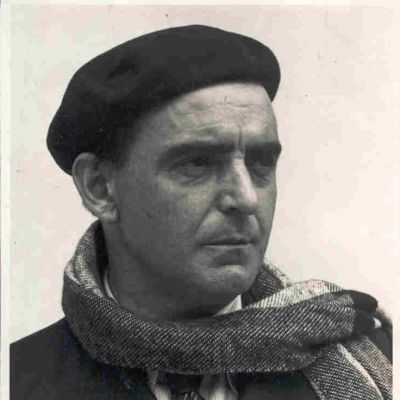
Anselmo Bucci, an Italian artist, painter, and engraver, was born on May 25, 1887, in Fossombrone, a small town in the province of Pesaro, Italy. His life and work represent a significant chapter in the history of early 20th-century art, particularly within the context of the avant-garde movements in Italy and France. This article will delve into the life of Anselmo Bucci, exploring his age, fame, and life highlights, while also providing historical context and insights into his artistic contributions.
Early Life and Education
Anselmo Bucci’s passion for art emerged at a young age, despite his family’s initial encouragement to pursue classical studies. During his school years, Bucci’s family moved to Veneto, where he continued his education. However, it was during their time near Ferrara that Bucci’s artistic talents began to flourish, thanks to the guidance of the renowned painter Francesco Salvini.
In 1905, Bucci enrolled at the prestigious Accademia di Brera in Milan, despite residing in Monza with his family. Even during these formative years, Bucci exhibited a distinct dissatisfaction with the prevailing rhetorical style of painting. This dissatisfaction led him to move to Paris in 1906, seeking the vibrant artistic environment of the French capital, which was at the forefront of the avant-garde movement.
Paris: The Birth of an Artist
Paris in the early 20th century was a melting pot of artistic innovation, attracting artists from all over the world. Anselmo Bucci, despite the financial struggles he faced, was no exception. He arrived in Paris in 1906 but famously remarked that he did not have his first proper meal until 1910, highlighting the hardships he endured during his early years in the city.
However, these struggles were offset by the rich artistic circles he became a part of. Bucci befriended and collaborated with prominent artists such as Gino Severini, Pablo Picasso, and Amedeo Modigliani. His work as an engraver began to gain recognition during this period, with his unique style combining elements of futurism and post-impressionism, all while maintaining a connection to classical Italian traditions.
Bucci’s engravings, particularly his series titled “Paris qui bouge” (Paris in Motion), attracted significant attention from critics, including Guillaume Apollinaire and André Salmon. His work was also appreciated by the influential publisher Devambez, who began to print his engravings, marking the beginning of Bucci’s rise to fame.
The Impact of World War I
The outbreak of World War I in 1914 marked a pivotal moment in Bucci’s career. He volunteered to join the “Battaglione Ciclisti” in Lombardy, a battalion that included other notable futurist artists and poets such as Filippo Tommaso Marinetti and Umberto Boccioni. Bucci’s experiences during the war profoundly influenced his art, leading him to become one of the most prolific war artists of his time.
In 1917, Bucci published a series of works in Paris depicting scenes from the frontlines, titled “Croquis du Front Italien” (Sketches from the Italian Front). These powerful images captured the harsh realities of war and solidified his reputation as a significant figure in wartime art. Two years later, Bucci produced a series of twelve lithographs titled “Finis Austriae,” focusing on the decline of the Austro-Hungarian Empire.
Post-War Career and the Formation of the “Novecento” Group
After World War I, Bucci divided his time between Milan and Paris, continuing to paint and exhibit his works in both Italian and French art circles. His art began to gain recognition beyond France, with exhibitions in England, Holland, and Belgium. In 1920, Bucci was invited to participate in the prestigious Venice Biennale, further cementing his international reputation.
Around this time, Bucci’s artistic style began to shift towards classicism, a movement that sought to return to figurative art and a more recognizable representation of subjects, distancing itself from the extremes of avant-garde abstraction. This shift aligned Bucci with a group of like-minded artists and intellectuals centered around the writer Margherita Sarfatti. In 1922, Bucci, along with artists like Mario Sironi, Achille Funi, and Leonardo Dudreville, founded the “Novecento” group, a collective that aimed to revive classical art in the modern era. It was Bucci who coined the name “Novecento” for the group.
Literary Contributions and Later Life
As Bucci’s career progressed, he began to distance himself from the Novecento movement, increasingly turning his attention to literary pursuits. He started writing articles and essays, showcasing his versatility as an artist and intellectual. In 1925, Bucci created eight drypoint illustrations for the first Italian edition of Rudyard Kipling’s “The Jungle Book,” which were widely acclaimed.
Bucci’s literary endeavors culminated in 1930 when he won the prestigious Viareggio Literary Prize for his book “Il pittore volante” (The Flying Painter). This recognition underscored Bucci’s multifaceted talent, as he continued to paint, write, and engage in various artistic projects throughout the 1930s.
World War II and Final Years
The outbreak of World War II once again provided Bucci with an opportunity to contribute to the war effort through his art. He produced a series of engravings depicting the exploits of the Italian Navy and Air Force, capturing the heroism and tragedy of war.
However, the war also brought personal tragedy for Bucci. In 1943, his house and studio in Milan were destroyed during an air raid. Forced to leave Milan, Bucci returned to Monza, where he spent the last decade of his life in relative isolation. Despite this, he continued to receive recognition for his work, including the Premio Angelicum in 1949, an award for sacred art.
Anselmo Bucci passed away in Monza on November 19, 1955, at the age of 68. His legacy as an artist, engraver, and writer endures, with his works continuing to be celebrated in art galleries and exhibitions around the world.
The Legacy of Anselmo Bucci
Anselmo Bucci’s life and work offer a fascinating glimpse into the artistic and cultural shifts of the early 20th century. From his early years in Paris, where he mingled with the leading figures of the avant-garde, to his contributions as a war artist and his role in the formation of the Novecento group, Bucci’s career reflects the complexities and contradictions of a rapidly changing world.
His ability to navigate different artistic styles—from futurism to classicism—while also engaging in literary pursuits, highlights Bucci’s versatility and intellectual curiosity. Today, Bucci is remembered not only for his contributions to Italian art but also for his role in the broader European art scene.
Bucci’s work continues to be studied and appreciated for its technical mastery and its ability to capture the spirit of the times. His engravings, in particular, are celebrated for their dynamic composition and intricate detail, offering a window into the social and political upheavals of the early 20th century.
In conclusion, Anselmo Bucci was an artist who left an indelible mark on the art world. His journey from the small town of Fossombrone to the bustling art scenes of Paris and Milan is a testament to his determination, talent, and unwavering commitment to his craft. Through his paintings, engravings, and writings, Bucci provided a unique perspective on the world around him, one that continues to resonate with audiences today.


