
Introduction
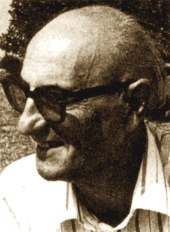
Gesualdo Bufalino, born on November 15, 1920, in Comiso, Sicily, is a name that resonates deeply within the world of Italian literature. Despite gaining literary fame later in life, Bufalino’s work has left an indelible mark on the cultural landscape, particularly through his exploration of themes such as mortality, memory, and the human condition. His literary career, characterized by a late but impactful emergence, is a testament to the power of words and the enduring significance of intellectual pursuit. This article explores Gesualdo Bufalino’s life, from his early years to his rise to fame, and highlights the key moments that defined his career.
Early Life and Intellectual Formation
Gesualdo Bufalino was born in Comiso, a small town in the province of Ragusa, Sicily. Growing up in a modest family, Bufalino was introduced to the world of literature and intellectual inquiry at a young age, largely due to his father’s passion for reading. His father, a blacksmith by trade, maintained a small library that became a source of fascination for the young Bufalino. It was here that Bufalino first encountered the written word, a discovery that would shape his future.
Bufalino’s early education took place in Ragusa, where he attended high school. His intellectual curiosity was nurtured by his Italian teacher, Paolo Nicosia, a distinguished scholar of Dante and a student of Cesare Angelini. Under Nicosia’s guidance, Bufalino developed a deep appreciation for classical literature, particularly the works of Dante, which would influence his later writing.
In 1939, Bufalino won a prestigious Latin prose competition organized by the National Institute of Roman Studies, an achievement that took him to Rome, where he was received by Benito Mussolini at Palazzo Venezia. This early recognition of his literary talent marked the beginning of Bufalino’s long and complex relationship with the world of letters.
World War II and Its Aftermath
Bufalino’s academic pursuits were interrupted by the outbreak of World War II. In 1942, he was forced to abandon his studies at the University of Catania when he was called up for military service. As a young officer stationed in Friuli, Bufalino found himself caught in the chaos of the war. In 1943, following the Italian armistice, he was captured by German forces. However, he managed to escape and spent several months in hiding in the countryside of Sacile before making his way to Emilia, where he survived by giving private lessons.
The war years were a time of great hardship for Bufalino, both physically and emotionally. In 1944, he contracted tuberculosis, a life-threatening illness that would significantly impact his life and work. He was admitted to a sanatorium in Scandiano, where he spent several years recuperating. During this time, Bufalino immersed himself in literature, drawing from the extensive library made available to him by a cultured doctor. This period of convalescence, though difficult, allowed Bufalino to deepen his engagement with literature, laying the groundwork for his future writing.
Following the end of the war, Bufalino returned to Sicily and resumed his studies, eventually earning a degree in literature from the University of Palermo. Despite his academic success, Bufalino chose to lead a quiet life away from the literary spotlight, dedicating himself to teaching Italian literature in a secondary school in Vittoria, a town near his birthplace.
A Late Bloomer: The Emergence of a Literary Voice
Bufalino’s journey into the literary world was anything but conventional. For decades, he lived a relatively obscure life, writing privately and focusing on his teaching career. It was not until the 1970s, when he was in his 50s, that Bufalino began to take his writing seriously, encouraged by friends who recognized his talent. One of the most significant figures in Bufalino’s literary awakening was Leonardo Sciascia, a renowned Sicilian writer and intellectual who would become a close friend and mentor.
In 1981, at the age of 61, Bufalino published his first novel, “Diceria dell’untore” (“The Plague Sower’s Tale”). The novel, a haunting exploration of mortality set in a sanatorium during the aftermath of World War II, was met with critical acclaim and quickly established Bufalino as a major literary voice. The novel’s success was largely due to its rich, baroque style and its profound meditation on life, death, and the human experience. “Diceria dell’untore” went on to win the prestigious Campiello Prize, one of Italy’s most coveted literary awards, catapulting Bufalino to national fame.
Bufalino’s late entry into the literary world was seen by many as a breath of fresh air. His writing, marked by a deep intellectualism and a unique blend of realism and metaphysical reflection, stood out in a literary landscape that had become increasingly dominated by more contemporary and experimental forms. Bufalino’s work was a reminder of the enduring power of classical literary forms and themes.
Literary Legacy and Major Works
Following the success of “Diceria dell’untore,” Bufalino entered a period of intense creative activity, producing a number of significant works that further solidified his place in Italian literature. His second novel, “Argo il cieco” (“Blind Argus”), published in 1984, continued his exploration of memory and identity, this time through the story of a man revisiting his past loves. The novel, like his first, was praised for its stylistic elegance and psychological depth.
Bufalino’s third novel, “Le menzogne della notte” (“The Lies of the Night”), published in 1988, is often considered his masterpiece. The novel, which won the prestigious Strega Prize, Italy’s highest literary honor, is a complex narrative set in a prison during the 19th century. Through a series of interconnected stories told by the prisoners, Bufalino explores themes of truth, deception, and the nature of storytelling itself. “Le menzogne della notte” is a testament to Bufalino’s mastery of narrative form and his ability to weave intricate tales that resonate with philosophical and existential questions.
In addition to his novels, Bufalino also produced a significant body of poetry, essays, and short stories. His poetry collection “L’amaro miele” (“The Bitter Honey”), published in 1982, reflects his preoccupation with themes of love, loss, and the passage of time. Bufalino’s essays, often written in a highly lyrical and reflective style, cover a wide range of topics, from literary criticism to personal memoirs. His short stories, many of which were collected in “Museo d’ombre” (“Museum of Shadows”) in 1982, further demonstrate his versatility as a writer and his keen insight into the human condition.
Bufalino’s writing is characterized by its intricate language, rich imagery, and deep philosophical underpinnings. His works often explore the tension between reality and illusion, the passage of time, and the inevitability of death. Despite his relatively small output, Bufalino’s impact on Italian literature has been profound, with his works continuing to be studied and celebrated for their intellectual rigor and artistic beauty.
The Quiet Life of a Public Intellectual
Despite his late success, Bufalino remained a deeply private individual, shunning the public eye and avoiding the literary circles that often accompany fame. He continued to live in Comiso, the small Sicilian town where he was born, leading a simple life focused on reading, writing, and teaching. Even after achieving national recognition, Bufalino preferred to stay close to his roots, drawing inspiration from the landscape and history of Sicily.
Bufalino’s decision to remain in Comiso, rather than move to a more cosmopolitan city, reflects his deep connection to his homeland and his belief in the importance of place in shaping identity and creativity. Sicily, with its rich cultural heritage and complex history, provided Bufalino with a constant source of inspiration, influencing both the themes and the style of his writing.
In interviews and public appearances, Bufalino often spoke of his love for literature and his belief in the power of the written word to transcend time and place. He saw writing as a form of resistance against the ephemerality of life, a way to preserve memory and give meaning to human existence. This belief is evident in his work, which is imbued with a deep sense of nostalgia and a yearning for a connection to the past.
Tragic End and Posthumous Recognition
Gesualdo Bufalino’s life came to a tragic end on June 14, 1996, when he died in a car accident in his hometown of Comiso. His death was a great loss to the world of literature, cutting short a career that, though late-blooming, had already made a significant impact.
In the years since his death, Bufalino’s work has continued to be celebrated and studied, with his novels, essays, and poetry remaining a vital part of the Italian literary canon. His writing, marked by its intellectual depth and stylistic beauty, continues to resonate with readers and scholars alike, ensuring that his legacy endures.
Bufalino’s life and work stand as a testament to the power of perseverance and the importance of following one’s intellectual passions, regardless of the obstacles or the timing. His story is a reminder that it is never too late to achieve greatness and that the most profound contributions to culture and knowledge often come from those who take the time to deeply engage with the world around them.
Conclusion
Gesualdo Bufalino was a man of letters whose life and work reflect the complexities of the human experience. From his early years in Sicily to his late emergence as a literary force, Bufalino’s journey was marked by intellectual curiosity, a deep love for literature, and a commitment to exploring the most profound aspects of existence. His work, which delves into themes of memory, mortality, and the search for meaning, continues to captivate and inspire, ensuring his place among the greats of Italian literature.
As we reflect on Bufalino’s life and legacy, it is clear that his contributions to literature extend far beyond the boundaries of his time and place. His writing, with its rich language and deep philosophical insights, offers timeless reflections on the human condition, making Gesualdo Bufalino a writer whose work will be read and revered for generations to come.


