
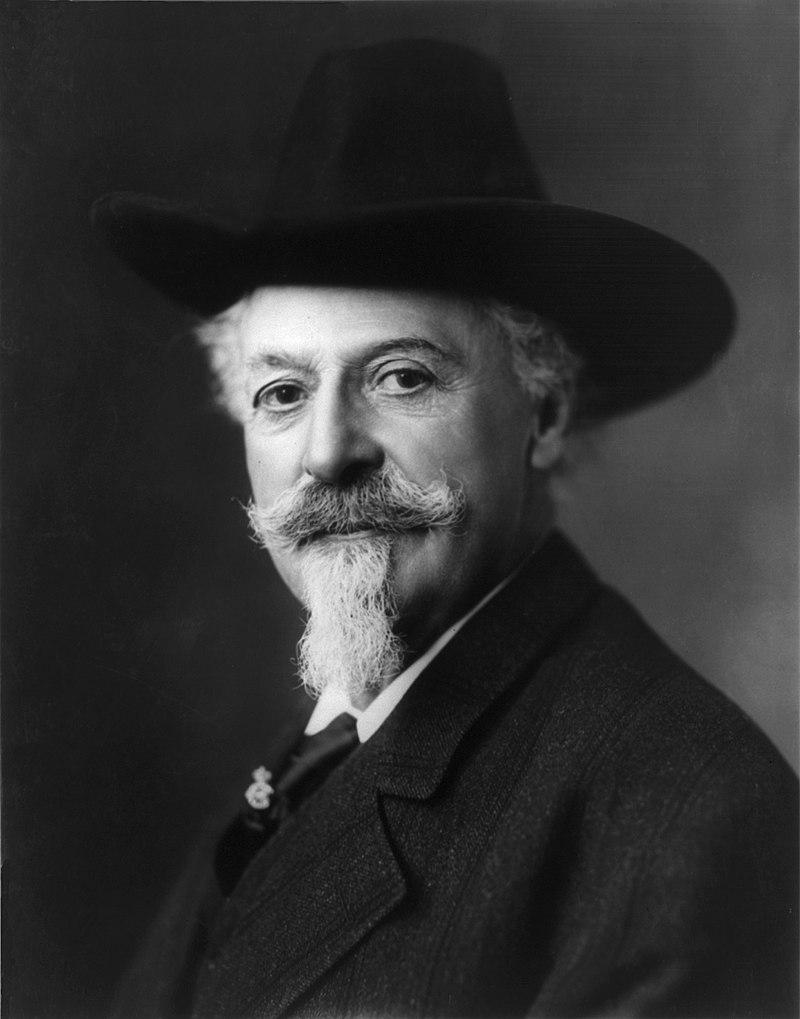
Buffalo Bill, born William Frederick Cody on February 26, 1846, in Le Claire, Iowa, is one of the most iconic figures in American history. Known for his larger-than-life persona, Cody’s life story is a blend of fact and fiction, myth and reality, all of which have contributed to his enduring fame. This article delves into the life of Buffalo Bill, exploring his early years, rise to fame, and lasting impact on American culture.
Early Life and the American Frontier
William Cody grew up during a period of rapid expansion and change in the United States, often referred to as the American Frontier. The young Cody was deeply influenced by the rugged and often dangerous life on the frontier, which would later define his career and legacy.
At the tender age of 15, Cody answered an advertisement that today would seem extraordinary: “Wanted: Young, skinny, wiry fellows, not over eighteen. Must be expert riders, willing to risk death daily. Orphans preferred.” This ad was for the Pony Express, a mail service that delivered messages, newspapers, and mail using relays of horse riders across the United States. Cody’s stint as a Pony Express rider was the beginning of his life of adventure.
Military Service and the Birth of Buffalo Bill
The American Civil War broke out when Cody was still a teenager. In 1863, at the age of 17, he enlisted in the Seventh Kansas Cavalry, where he served as a scout and soldier. His military service during the Civil War was a significant period in Cody’s life, where he honed many of the skills that would later make him famous.
After the war, Cody found work as a scout for the U.S. Army during the Indian Wars, which were conflicts between Native American tribes and the United States government. It was during this time that Cody earned the nickname “Buffalo Bill.” The name was given to him after he won a bison hunting contest against another hunter named William Comstock. The contest, which involved killing the most buffalo, was a marketing stunt for the “Buffalo Bill” nickname. Cody reportedly killed over 4,000 buffalo in an 18-month period to supply meat to workers on the Kansas Pacific Railroad, a feat that further solidified his legend.
Buffalo Bill and the Wild West Show
Buffalo Bill’s fame skyrocketed not just because of his exploits on the frontier but also due to his ability to market himself and his adventures. His exploits were popularized in dime novels, which were cheap and highly sensationalized stories that often blurred the line between fact and fiction. These novels, written by authors like Ned Buntline, painted Cody as a larger-than-life hero of the Wild West.
In 1883, Buffalo Bill took his fame to new heights by creating the “Buffalo Bill’s Wild West” show. This traveling show was a combination of circus, theater, and rodeo, and it showcased reenactments of frontier life, including Native American battles, stagecoach robberies, and buffalo hunts. The show was a massive success and toured not only the United States but also Europe, where it captivated audiences in London, Paris, and beyond.
The Wild West show was more than just entertainment; it was a cultural phenomenon that played a significant role in shaping the global image of the American West. Cody’s show featured real-life cowboys, Native Americans, and historical figures such as Sitting Bull and Calamity Jane. It presented a romanticized version of the American frontier that has persisted in popular culture to this day.
The Legacy of Buffalo Bill
Buffalo Bill’s influence on American culture is immense. His Wild West show helped to solidify the myth of the American frontier, a place of adventure, danger, and opportunity. This myth became a central part of America’s national identity, influencing literature, film, and television for generations.
However, Cody’s legacy is not without controversy. The depiction of Native Americans in his shows was often one-dimensional, portraying them as either noble savages or bloodthirsty villains. This simplistic and often derogatory portrayal contributed to the stereotypes that have persisted in American culture. Yet, it is also worth noting that Cody employed many Native Americans in his shows and paid them a fair wage, which was uncommon at the time.
Buffalo Bill’s contribution to American culture extended beyond the stage. He was also involved in various business ventures and was an advocate for conservation. Despite his reputation as a buffalo hunter, Cody later became a vocal advocate for the preservation of the bison population, recognizing the devastating impact that hunting and habitat destruction had on the species.
Buffalo Bill in Popular Culture
Buffalo Bill’s life and legacy have been immortalized in various forms of media, from literature and film to television and theater. He has been portrayed by numerous actors in films such as The Plainsman (1936) by Cecil B. DeMille, where he was played by Gary Cooper, and Buffalo Bill (1944) by William A. Wellman. In 1976, Robert Altman directed Buffalo Bill and the Indians, or Sitting Bull’s History Lesson, with Paul Newman in the title role. Each portrayal, while different, contributed to the ongoing mythologization of Buffalo Bill as an American icon.
In Italy, Buffalo Bill’s legacy was also celebrated. The Italian director Giuseppe Accatino created the film Buffalo Bill a Roma in 1949, which highlighted a real-life challenge Cody faced when his Wild West show visited Rome. The film depicts a competition between Cody and a group of Italian cowboys known as “butteri,” who represented the Agro Pontino region. This event, though lesser-known, added to the legend of Buffalo Bill, showcasing his global influence.
Later Life and Death
As Buffalo Bill aged, the popularity of the Wild West show began to wane, especially with the advent of new entertainment forms like motion pictures. Despite the decline, Cody continued to perform and tour with the show until financial difficulties forced him to sell the production in 1913.
In his later years, Cody remained a public figure, known for his patriotism and contributions to American culture. He converted to Catholicism later in life and expressed a desire to meet Pope Leo XIII during his travels in Europe, a testament to his complex personal beliefs and his recognition of his global influence.
Buffalo Bill passed away on January 10, 1917, at the age of 71 in Denver, Colorado. He was buried on Lookout Mountain, as per his request, overlooking the Great Plains where he had spent much of his life. His death marked the end of an era, but his legacy continued to grow, cementing his place in American folklore.
The Historical Context and Nuances of Buffalo Bill’s Life
To fully understand Buffalo Bill’s impact, it is important to consider the historical context of his life and career. Cody lived during a time of significant change in America—the westward expansion, the Civil War, the Indian Wars, and the industrialization of the country. His life and career were deeply intertwined with these events, and he became a symbol of the American frontier spirit.
Buffalo Bill’s life also reflects the complexities of American identity during the late 19th and early 20th centuries. He was both a product and a producer of the myth of the West—a myth that celebrated the rugged individualism and pioneering spirit of America, while often glossing over the violence and displacement that accompanied westward expansion. Cody’s own views evolved over time, particularly regarding Native Americans and conservation, demonstrating a capacity for growth and reflection that is often overlooked in discussions of his legacy.
Conclusion: The Enduring Appeal of Buffalo Bill
Buffalo Bill remains one of the most enduring figures in American history. His life story, a mix of reality and myth, continues to captivate people around the world. As a soldier, hunter, showman, and entrepreneur, Cody embodied the spirit of the American West—a spirit of adventure, resilience, and, at times, contradiction.
Buffalo Bill’s Wild West show may have been entertainment, but it also served as a powerful tool for shaping the world’s perception of America. His portrayal of the West has had a lasting impact on American culture, influencing everything from literature to film to the national identity itself.
As we continue to explore the complexities of American history, Buffalo Bill’s life serves as a reminder of the power of myth and the ways in which individuals can shape, and be shaped by, the stories we tell about our past.


