
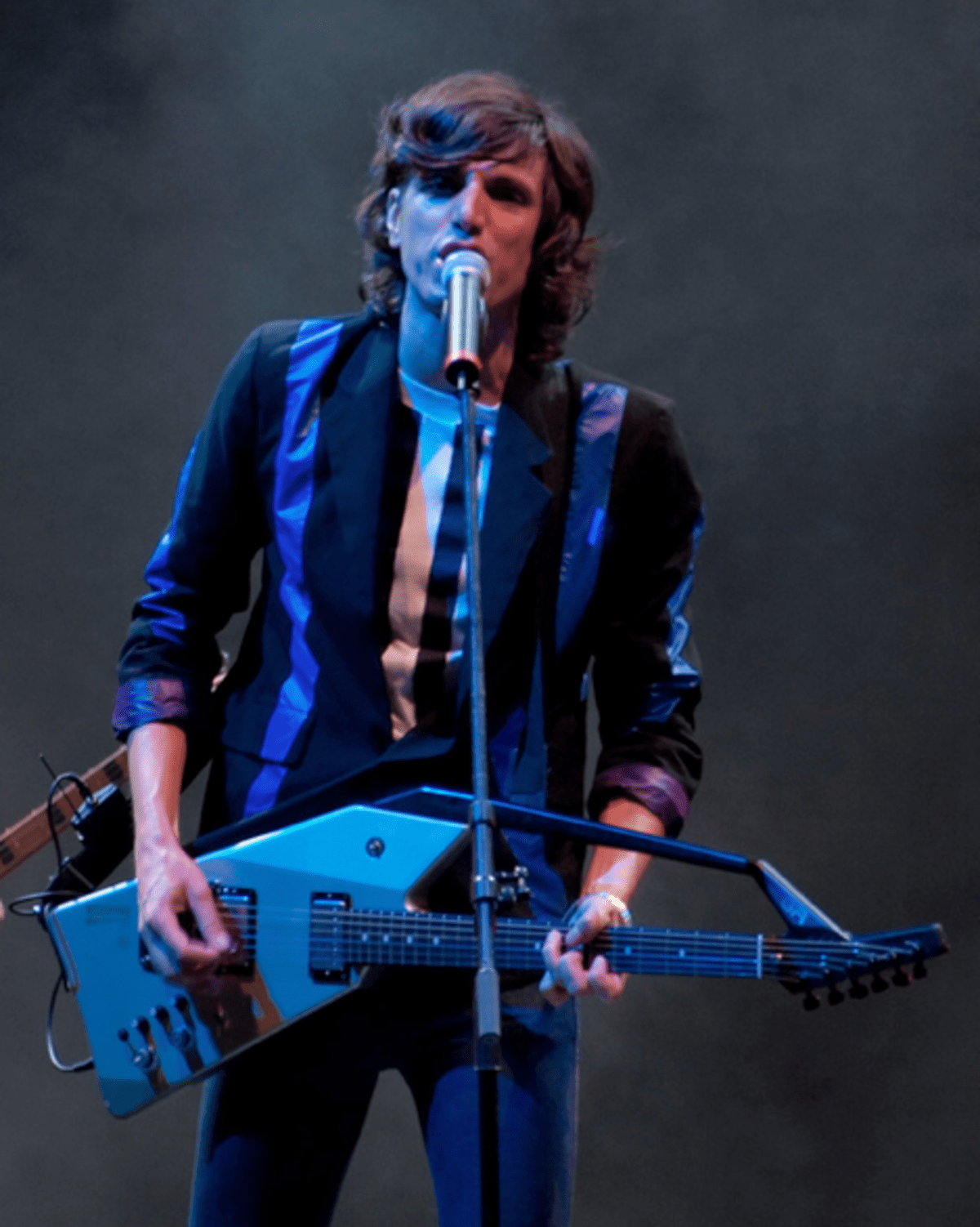
Cristian Bugatti, known by his stage name Bugo, is an Italian singer-songwriter, musician, and artist who has played a pivotal role in shaping the landscape of contemporary Italian music. Born on August 2, 1973, in Rho, a town near Milan, Bugo has been credited with revolutionizing the Italian music scene in the 2000s. Often described as a “Fantautore” (a portmanteau of “fantasia” and “cantautore”), Bugo has become a respected and influential figure in Italian culture, known for his genre-defying music and his artistic versatility.
Early Life and Influences
Bugo spent much of his childhood in Cerano, a small town in the province of Novara. His teenage years were marked by a strong disinterest in academic life, leading to conflicts with teachers and a general sense of frustration with the school system. However, during this period, Bugo developed a deep passion for literature, particularly poetry. He was particularly influenced by the works of Arthur Rimbaud, a French poet known for his innovative and rebellious spirit. This fascination with Rimbaud would later manifest in Bugo’s own approach to songwriting and artistic expression.
Music also played a significant role in Bugo’s early life. Initially, he began his musical journey as a drummer, playing in local bands during his teenage years. However, his time behind the drums was cut short by his conscription into the military. It was during his time in the military that Bugo picked up the guitar and began writing his own songs, marking the beginning of his career as a singer-songwriter.
The Formation of Bugo’s Musical Identity
In the early 1990s, after his stint in the military, Bugo formed a band called Quaxo, where he took on the role of lead vocalist and guitarist. The band was heavily influenced by the punk rock movement, as well as by the grunge sounds of bands like Nirvana, whose album Nevermind was a defining record of the era. Despite the band’s efforts, Quaxo did not achieve significant success, and Bugo soon realized that his path lay in pursuing a solo career.
Bugo’s solo journey began in the late 1990s, when he released his first single, “Questione d’eternità,” on vinyl. This release marked the beginning of Bugo’s exploration of music as a solo artist, allowing him to experiment with different sounds and themes without the constraints of a band setting.
Breakthrough and Success in the 2000s
The turn of the millennium marked a significant period in Bugo’s career. In 2000, he released his debut album, La prima gratta, which introduced his unique blend of rock, folk, and electronic music to a broader audience. However, it was his second album, Sentimento Westernato, released in 2001, that truly established Bugo as a rising star in the Italian music scene. The album’s eclectic sound and innovative approach to songwriting earned him critical acclaim and a record deal with Universal Music.
Sentimento Westernato was followed by the release of Dal lo fai al ci sei in 2002, which continued to build on Bugo’s reputation as a genre-defying artist. His music, which combined elements of rock, electronic, and folk, resonated with a generation of listeners who were looking for something different from the mainstream Italian pop music of the time.
In the mid-2000s, Bugo continued to push the boundaries of Italian music with albums like Golia & Melchiorre (2004) and Sguardo Contemporaneo (2006). These albums showcased Bugo’s ability to blend introspective lyrics with experimental sounds, further solidifying his position as a trailblazer in the Italian music scene. During this period, Bugo also began collaborating with other artists, including the writer Aldo Nove, with whom he co-wrote the song “Amore mio infinito,” a tribute to Nove’s book of the same name.
Bugo’s Artistic Evolution and the 2010s
After a brief hiatus, Bugo returned to the music scene in 2015 with the album Nessuna scala da salire, released under the Carosello label. This album marked a new chapter in Bugo’s career, reflecting his growth as an artist and his continued willingness to explore new musical territories. The album was well-received, and Bugo’s return was celebrated by both fans and critics alike.
During this period, Bugo also explored other artistic avenues, particularly in the visual arts. From 2010 to 2014, Bugo lived in New Delhi, India, with his wife Elisabetta, whom he married in 2011, and their son. During his time in India, Bugo immersed himself in the local culture and began experimenting with conceptual art, creating works that were exhibited both in India and Italy. His artistic endeavors during this period were influenced by his interest in contemporary art and the blending of different cultural perspectives.
In 2019, Bugo’s career took another significant turn when it was announced that he would be participating in the 70th edition of the Sanremo Music Festival, one of Italy’s most prestigious music competitions. Bugo teamed up with fellow musician Morgan to perform the song “Sincero” at Sanremo 2020. However, the performance became infamous due to an onstage incident in which Morgan altered the lyrics of the song, leading to a public fallout between the two artists. Despite the controversy, Bugo’s participation in Sanremo brought him widespread media attention and introduced his music to a new generation of listeners.
Bugo returned to Sanremo in 2021, this time as a solo artist, performing the song “E invece sì.” His performance was well-received, and the song became a popular hit, further cementing Bugo’s status as a significant figure in Italian music.
Bugo’s Musical Style and Influence
Bugo’s musical style is difficult to categorize, as it spans multiple genres and defies conventional labels. Throughout his career, Bugo has experimented with rock, electronic, folk, and pop music, often blending these styles in ways that are uniquely his own. His lyrics are known for their introspective and often abstract nature, drawing inspiration from literature, personal experiences, and philosophical themes.
Bugo’s influence on Italian music cannot be overstated. He is often credited with pioneering a new wave of Italian singer-songwriters who have embraced a more experimental and genre-blending approach to music. His willingness to challenge the status quo and push the boundaries of what is considered “mainstream” has inspired many younger artists who have followed in his footsteps.
Personal Life and Interests
Bugo has always maintained a certain level of privacy regarding his personal life. However, it is known that he married his wife, Elisabetta, in 2011, in a ceremony held in India. The couple has one child and lived in New Delhi for several years before returning to Italy. Bugo’s time in India had a profound impact on his artistic outlook, as it exposed him to new cultural experiences and artistic influences.
In addition to his musical career, Bugo has shown a keen interest in the visual arts. His work in this field has been described as conceptual and avant-garde, often exploring themes related to identity, culture, and the intersection of different artistic disciplines. Bugo has also contributed to various contemporary art magazines and has been involved in several art exhibitions.
Outside of his artistic pursuits, Bugo is known to be an avid sports fan, particularly of soccer and basketball. He has also appeared in several films, including “Pedra Mendalza” (2003) and “Missione di pace” (2011), further showcasing his versatility as an artist.
The Legacy of Bugo
As of today, Bugo remains an influential figure in Italian music and culture. His contributions to the evolution of Italian songwriting and his role in challenging the conventions of the music industry have left a lasting impact. Bugo’s legacy is not only defined by his music but also by his artistic vision and his commitment to authenticity in his work.
Bugo’s influence extends beyond the music industry. His work in the visual arts, his involvement in film, and his contributions to contemporary art magazines have all contributed to his reputation as a multi-faceted artist. He is regarded as a pioneer who has consistently pushed the boundaries of what is possible in art and music, and his work continues to inspire new generations of artists.
Conclusion: The Enduring Appeal of Bugo
Bugo’s journey from a disinterested student to one of Italy’s most respected artists is a testament to his talent, perseverance, and willingness to take risks. His ability to seamlessly blend different musical genres and his commitment to exploring new artistic territories have made him a unique and influential figure in Italian culture.
As Bugo continues to create and perform, his influence on the Italian music scene remains strong. Whether through his music, his visual art, or his contributions to contemporary culture, Bugo’s work will undoubtedly continue to resonate with audiences for years to come.


