
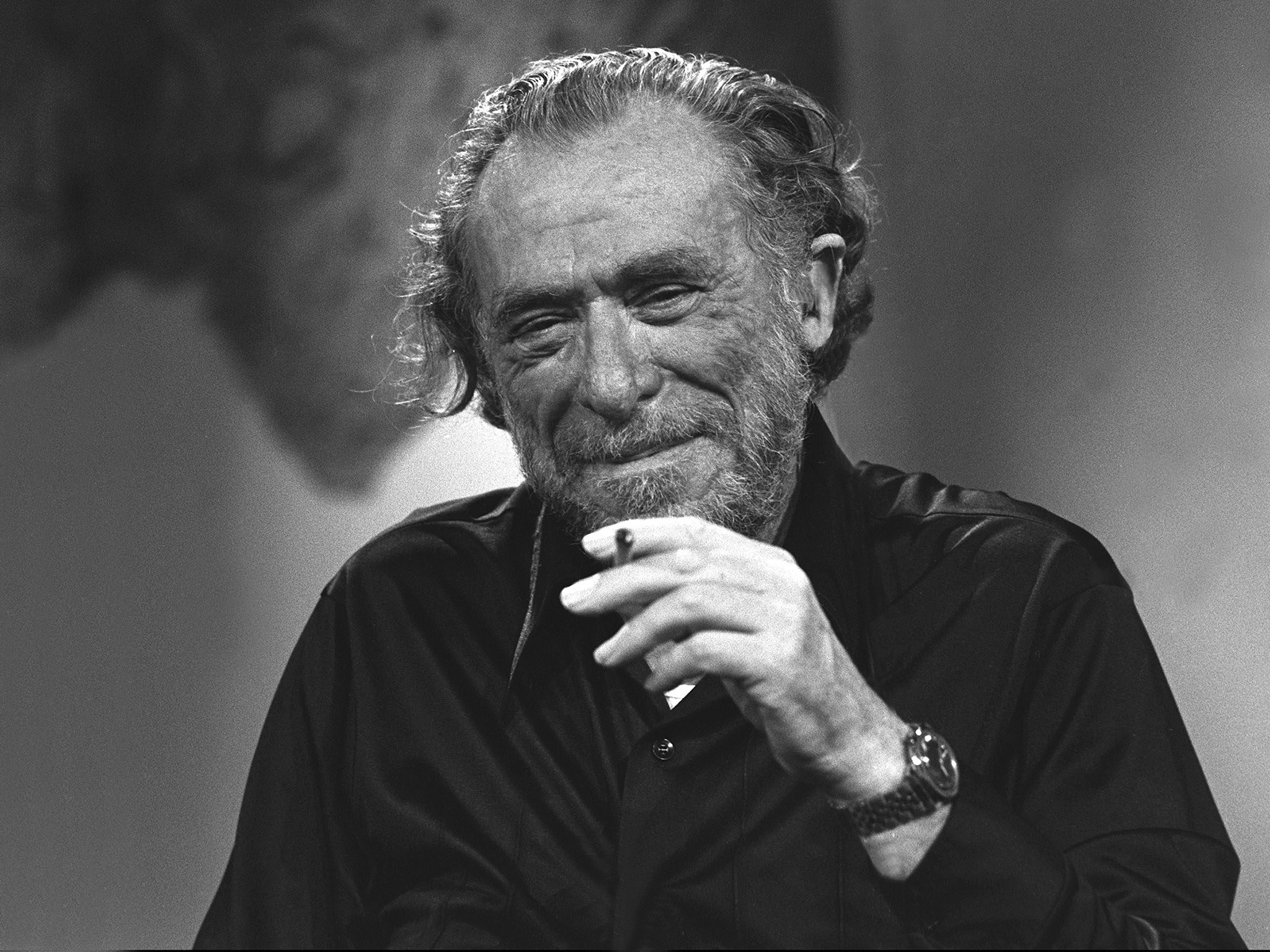
Charles Bukowski, born Heinrich Karl Bukowski on August 16, 1920, in Andernach, Germany, is one of the most iconic and controversial figures in American literature. His raw, unfiltered prose and poetry, often focused on the gritty underbelly of life, has resonated with readers around the world, making him a cult figure among literary enthusiasts. Bukowski’s life was as tumultuous as his writing, filled with hardship, rebellion, and a relentless pursuit of authenticity. This article delves into the life, fame, and highlights of Charles Bukowski, exploring the nuances of his literary career and the historical context that shaped his work.
Early Life and Troubled Beginnings
Charles Bukowski’s early life was marked by hardship and alienation, experiences that would later heavily influence his writing. Born in Germany to a German-American father and a German mother, Bukowski’s family moved to the United States when he was just three years old. They settled in Los Angeles, California, a city that would become a central character in much of Bukowski’s work.
Bukowski’s childhood was far from idyllic. His father, a former American soldier who struggled to find steady work, was abusive and often beat young Charles. This abuse, coupled with the isolation imposed by his parents, left Bukowski withdrawn and resentful. He was bullied at school, partly due to his German accent and partly because of the severe acne that scarred his face during his teenage years. These experiences fueled a deep sense of alienation and a disdain for authority, themes that would permeate his writing.
At the age of 13, Bukowski began drinking, an escape that would become a lifelong habit. Alcohol became a central part of his identity and a frequent subject in his work. It was during these formative years that Bukowski also discovered his love for literature, finding solace in the works of authors like John Fante, Ernest Hemingway, and D.H. Lawrence. Despite his growing interest in writing, Bukowski’s early attempts at creative expression were met with little encouragement.
The Struggles of a Young Writer
After graduating from Los Angeles High School in 1939, Bukowski briefly attended Los Angeles City College, where he studied journalism and literature. However, his academic career was short-lived. Disillusioned with the structured education system and eager to experience life firsthand, Bukowski dropped out of college and began a period of drifting across the United States.
During the 1940s, Bukowski lived a nomadic existence, working a series of menial jobs in cities like New Orleans, San Francisco, and St. Louis. His jobs included stints as a dishwasher, truck driver, and postal worker—experiences that provided rich material for his later writing. During this time, he continued to write, submitting short stories to literary magazines, but faced constant rejection. In 1944, his first short story, “Aftermath of a Lengthy Rejection Slip,” was published in Story magazine, giving him a brief taste of success.
However, the lack of recognition and the harsh realities of his life led Bukowski to abandon writing for nearly a decade. Instead, he immersed himself in the world of bars, racetracks, and seedy apartments, living on the fringes of society. This period, which Bukowski referred to as his “ten-year drunk,” was a time of intense personal turmoil but also provided the raw experiences that would later fuel his literary output.
The Rebirth of Bukowski the Writer
In the late 1950s, Bukowski returned to writing, driven by a sense of urgency and the need to articulate his experiences. His work began to appear in underground and small press publications, where his unvarnished portrayal of life resonated with a growing counterculture audience. Bukowski’s early poetry collections, such as Flower, Fist, and Bestial Wail (1960), showcased his distinctive voice—brutally honest, darkly humorous, and unapologetically crude.
Bukowski’s break came in 1969 when John Martin, a literary editor and small press publisher, offered to pay him $100 a month for life if he would quit his job at the post office and write full-time. Bukowski, who was then 49 years old, accepted the offer, and within a month, he completed his first novel, Post Office (1971). The novel was a semi-autobiographical account of his years working for the United States Postal Service, filled with the same raw, biting humor that characterized his poetry.
Post Office was a critical success and marked the beginning of Bukowski’s ascent to literary fame. The novel’s success also established his partnership with Martin, who founded Black Sparrow Press to publish Bukowski’s works exclusively. Over the next two decades, Bukowski would produce a prolific body of work, including novels, short stories, and poetry collections, that solidified his reputation as a major figure in American literature.
Fame and the Literary Outlaw Persona
As Bukowski’s fame grew, so did his reputation as a literary outlaw. He became known for his public readings, where he would often appear drunk and engage in verbal sparring with audience members. These performances only added to his mythic status as a hard-drinking, womanizing rebel who lived life on his own terms.
Bukowski’s writing was often autobiographical, blurring the lines between his life and art. His alter ego, Henry Chinaski, appeared in many of his works, serving as a vehicle for Bukowski to explore his own experiences with brutal honesty. Through Chinaski, Bukowski delved into the despair of working-class life, the futility of the American Dream, and the escapism offered by alcohol, sex, and gambling.
His novels, such as Factotum (1975), Women (1978), and Ham on Rye (1982), continued to build on these themes, each one offering a deeper insight into Bukowski’s worldview. Ham on Rye, in particular, is a poignant exploration of his troubled childhood and early adulthood, revealing the roots of his alienation and anger.
Despite—or perhaps because of—his raw and unpolished style, Bukowski gained a devoted following. His work resonated with readers who felt disconnected from mainstream society, and his unabashed portrayal of life’s harsh realities struck a chord with those who had experienced similar struggles. Bukowski’s writing was not for the faint of heart; it was gritty, vulgar, and often misogynistic. Yet, beneath the surface, there was a profound humanity in his work—a recognition of the pain and beauty inherent in the human condition.
Later Life and Enduring Legacy
In the later years of his life, Bukowski’s literary success allowed him to live more comfortably, but he never abandoned the themes that had defined his work. He continued to write prolifically, producing some of his most acclaimed poetry collections, such as Love is a Dog from Hell (1977) and The Last Night of the Earth Poems (1992). His writing became more reflective as he aged, often contemplating death and the passage of time.
Bukowski’s personal life also saw some stability during this period. In 1976, he met Linda Lee Beighle, a health food store owner who would become his companion for the rest of his life. Linda had a calming influence on Bukowski, encouraging him to adopt healthier habits and providing him with a sense of domestic stability that he had previously lacked. They married in 1985, and Bukowski’s later years were marked by a relative peace that had eluded him for much of his life.
Despite his mellowing with age, Bukowski remained a prolific writer until the end. He was diagnosed with leukemia in 1993 but continued to write, completing his final novel, Pulp (1994), shortly before his death. Pulp was a departure from his previous work, a surreal and self-aware noir parody that offered a fittingly unconventional conclusion to his literary career.
Charles Bukowski passed away on March 9, 1994, at the age of 73. His death marked the end of an era, but his work continues to influence and inspire new generations of readers and writers. Bukowski’s legacy is complex; he is celebrated for his unflinching honesty and unique voice, yet criticized for his often misogynistic and abrasive content. Nevertheless, his impact on American literature is undeniable.
Bukowski’s writing captures the essence of a life lived on the margins, offering a voice to those who exist outside the mainstream. His work remains relevant because it speaks to the universal human experience—our struggles, our vices, and our quest for meaning in an often indifferent world. Bukowski may have been a literary outsider, but his work has secured him a place in the canon of American literature.
Conclusion
Charles Bukowski’s life and work are a testament to the power of authenticity in literature. He lived life on his own terms, and his writing reflects that uncompromising attitude. Bukowski’s raw, unfiltered portrayal of life’s hardships and his ability to find beauty in the mundane have earned him a lasting place in the literary world.
As we reflect on Bukowski’s contributions to literature, it’s clear that his work transcends the boundaries of genre and convention. He was a writer who dared to expose the ugliness of life, but in doing so, he also revealed its underlying beauty. Bukowski’s legacy endures not because he was a perfect writer, but because he was a true one—a writer who captured the essence of the human experience with all its flaws and contradictions.
Charles Bukowski may have been an outsider, but his work continues to resonate with those who seek truth in its rawest form. His life was as unconventional as his writing, and it is this authenticity that has cemented his place in the annals of literary history.


