
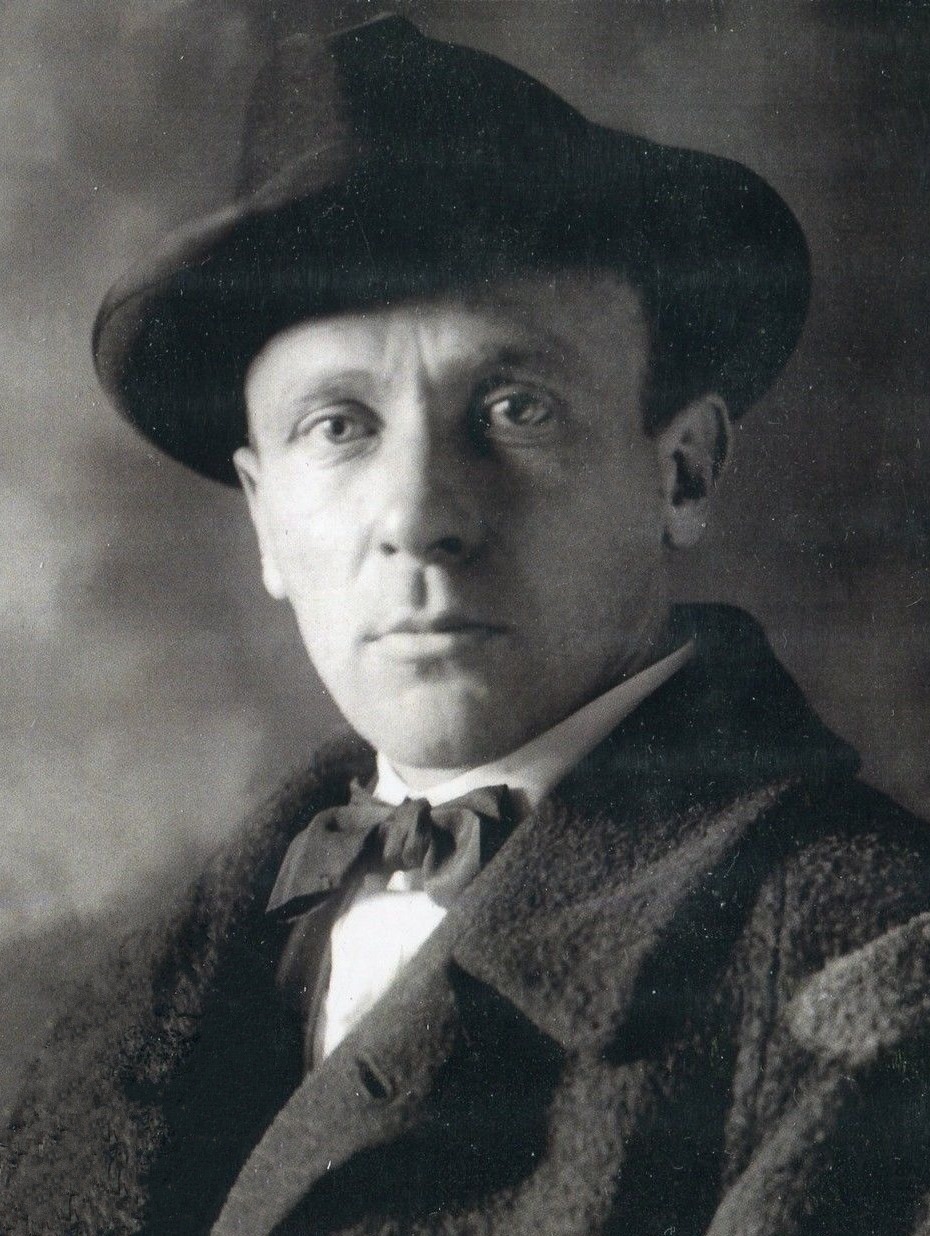
Michail Afanasyevich Bulgakov was born on May 15, 1891, in Kyiv, Ukraine, then part of the Russian Empire. The eldest of seven siblings, Bulgakov grew up in a family deeply rooted in education. His father was a professor of history and criticism of Western religions, while his mother was a former teacher. This intellectual environment undoubtedly played a significant role in shaping Bulgakov’s early interests and talents, particularly in literature and theater.
Early Life and Education
Bulgakov’s early fascination with the arts became evident as a child when he began writing plays that his siblings would perform. His passion for literature only deepened during his time at the Kyiv gymnasium, where he developed an affinity for Russian and European literature. Influential writers like Charles Dickens, Fyodor Dostoevsky, and Nikolai Gogol left a lasting impact on him, guiding his literary inclinations.
The death of his father in 1907 marked a significant turning point in Bulgakov’s life. He was primarily raised by his mother, who instilled in him a strong sense of responsibility and discipline. This period also coincided with Bulgakov’s entry into medical school at Kyiv University in 1909, where he would later graduate with honors in 1916. However, his medical career was short-lived, as his true calling lay in writing.
From Medicine to Literature
Bulgakov’s experiences as a physician, particularly during World War I, where he served as a volunteer for the Red Cross, had a profound effect on him. He was severely wounded twice on the front lines and relied on morphine to manage the pain. These experiences would later inspire his semi-autobiographical work, A Country Doctor’s Notebook, which vividly depicts the struggles and moral dilemmas faced by a young doctor in rural Russia.
Despite his promising start in medicine, Bulgakov grew increasingly disillusioned with the profession. By 1919, after surviving a bout of typhus, he decided to abandon medicine altogether to pursue his passion for writing. His first literary works were published in the North Caucasus, where he had been working as a military doctor. These early works, including the play Self-Defense and the novel The White Guard, showcased his burgeoning talent and set the stage for his later success.
The Road to Fame and the Struggles of Censorship
Bulgakov’s move to Moscow in the early 1920s marked a new chapter in his life. However, it was far from easy. He faced significant challenges finding stable work, and his literary career was frequently hampered by the Soviet regime’s censorship. Despite these obstacles, Bulgakov managed to secure a position as a secretary for the literary section of the Glavpolitprosvet, a government organization dedicated to political education.
During this time, Bulgakov wrote some of his most famous works, including Diaboliad, The Fatal Eggs, and Heart of a Dog. These works blended elements of science fiction with sharp social satire, a combination that would become a hallmark of Bulgakov’s style. However, his criticism of the Soviet regime did not go unnoticed, and many of his works were censored or outright banned.
The 1920s were a tumultuous decade for Bulgakov, both personally and professionally. His first marriage to Tatiana Lappa ended in divorce in 1924, and his second marriage to Lyubov Belozerskaya in 1925 did little to alleviate the pressures of his life under the Soviet regime. Despite the challenges, Bulgakov continued to write, completing several plays, including Zoyka’s Apartment and The Purple Island. However, the Soviet authorities’ increasing censorship and repression took a toll on his mental health.
The Master and Margarita: A Literary Masterpiece
Perhaps the most significant work of Bulgakov’s career is The Master and Margarita. Written over the course of many years and revised multiple times, this novel is considered one of the greatest literary achievements of the 20th century. It is a complex and layered narrative that weaves together themes of good and evil, love and betrayal, and the power of the state versus the individual.
The Master and Margarita was inspired, in part, by Bulgakov’s third wife, Elena Sergeevna Shilovskaya, whom he married in 1932. Elena served as the muse for the character of Margarita, a devoted and courageous woman who makes a pact with the devil to save her lover, the Master, from the clutches of Soviet authorities. The novel is also a scathing critique of Soviet society, thinly veiled in a fantastical narrative that features the devil himself, under the guise of a mysterious stranger named Woland, visiting Moscow and wreaking havoc.
Despite its brilliance, The Master and Margarita was not published during Bulgakov’s lifetime. The novel was heavily censored, and Bulgakov himself was often at odds with the Soviet authorities. Nevertheless, he continued to work on the novel until his death in 1940, leaving behind a legacy that would only be fully appreciated posthumously.
Later Years and Legacy
The 1930s were a difficult period for Bulgakov. Despite being personally protected from arrest by Joseph Stalin, who was reportedly a fan of his work, Bulgakov’s literary career was stifled by relentless censorship. His plays were banned, his novels were unpublished, and his attempts to leave the Soviet Union were repeatedly denied.
Bulgakov spent his final years working as a librettist and consultant for the Bolshoi Theatre, but even this work was fraught with frustration. His health deteriorated rapidly, and he was eventually diagnosed with nephrosclerosis, the same disease that had claimed his father’s life. In his final years, Bulgakov was plagued by despair and a deep sense of disillusionment, but he continued to write, revising The Master and Margarita and hoping for a day when his work would be recognized.
Michail Bulgakov passed away on March 10, 1940, at the age of 48. He was buried at the Novodevichy Cemetery in Moscow, a resting place for many of Russia’s greatest cultural figures. It wasn’t until the 1960s, more than two decades after his death, that The Master and Margarita was finally published in its entirety, bringing Bulgakov the fame and recognition that had eluded him during his lifetime.
Historical Context and Influence
Bulgakov’s life and work must be understood within the broader context of Soviet history. The Russian Revolution of 1917 and the subsequent rise of the Soviet Union created an environment in which artists and intellectuals were often subject to strict state control. Bulgakov, like many of his contemporaries, struggled to navigate this oppressive landscape. His works, which often contained veiled criticisms of the regime, were frequently censored or suppressed.
However, this censorship also contributed to Bulgakov’s unique style. His use of satire, allegory, and fantastical elements allowed him to critique the Soviet system without overtly challenging it. This approach not only helped him avoid the worst of Stalin’s purges but also gave his work a timeless quality that continues to resonate with readers today.
Bulgakov’s influence can be seen in the works of later Russian writers, as well as in the broader literary canon. His blending of the real and the surreal, his sharp wit, and his deep understanding of human nature have made him a beloved figure in Russian literature. The Master and Margarita, in particular, has been adapted into numerous films, plays, and operas, and remains a touchstone for discussions of censorship, power, and artistic freedom.
Conclusion
Michail Bulgakov’s life was marked by both extraordinary creativity and immense personal struggle. Born into a world on the brink of revolution, he witnessed firsthand the chaos and brutality of the early Soviet years. Despite the many obstacles he faced, including censorship, personal loss, and ill health, Bulgakov remained committed to his art. His works, particularly The Master and Margarita, continue to captivate and inspire readers around the world, offering a powerful testament to the enduring power of literature in the face of oppression.


