
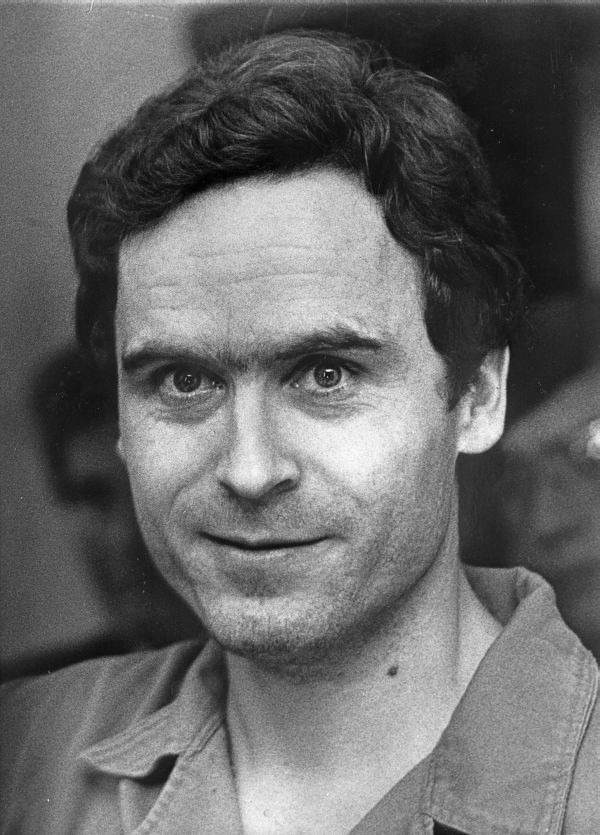
Ted Bundy, one of the most notorious serial killers in American history, remains a subject of endless fascination and horror. Born Theodore Robert Bundy on November 24, 1946, in Burlington, Vermont, his name is now synonymous with terror, manipulation, and unspeakable violence. Over the course of his life, Bundy committed a series of heinous crimes that shocked the nation and forever changed the way the public perceives serial killers. This article delves into the life, crimes, and the complex persona of Ted Bundy, offering a detailed exploration of his rise to infamy and the psychological underpinnings of his actions.
Early Life and Troubled Beginnings
Ted Bundy’s early life was marked by confusion, secrecy, and dysfunction, elements that would later contribute to his disturbed psyche. Born in a home for unwed mothers, Bundy was raised believing that his grandparents were his parents and that his mother was his sister. This deceit was intended to avoid the stigma of illegitimacy, but it only served to create a foundation of mistrust and identity confusion in young Ted.
His mother, Louise Cowell, eventually reclaimed Ted and moved to Tacoma, Washington, where she married John Bundy, a man who adopted Ted and gave him his surname. Despite John Bundy’s efforts to bond with Ted, the boy remained distant and emotionally detached. From a young age, Bundy exhibited behaviors that hinted at the darkness within. He was known to have an interest in macabre topics, and as he grew older, his fascination with violence and control became more pronounced.
Bundy’s childhood was not entirely devoid of positive experiences. He was an intelligent and charismatic boy, traits that would later make him both successful in his early academic endeavors and dangerously effective as a predator. However, his inability to form genuine emotional connections and his growing obsession with power and control over others set the stage for the horrifying acts he would later commit.
The Emergence of a Predator
Ted Bundy’s descent into criminality began in his early twenties. After a failed relationship with Stephanie Brooks, a woman he had been deeply infatuated with, Bundy began to unravel. His rejection by Brooks is often cited as a critical turning point in his life, leading to a deep-seated resentment toward women who represented the unattainable.
Bundy initially led a seemingly normal life. He attended the University of Puget Sound before transferring to the University of Washington, where he studied Chinese. His charming demeanor and good looks allowed him to move easily through social circles, masking the growing darkness within him. During this period, Bundy began committing petty thefts, which were likely an early manifestation of his need for control and power.
By the mid-1970s, Bundy’s crimes escalated from theft to brutal assaults and murder. His first confirmed murders occurred in 1974, though it is widely believed that he may have begun killing as early as 1969. Bundy’s modus operandi involved luring young women, often by feigning injury or disability, and then overpowering them. He would abduct his victims, sexually assault them, and then kill them, often revisiting their corpses to perform further acts of necrophilia.
Bundy’s killing spree spread across multiple states, including Washington, Oregon, Utah, Colorado, and Florida, making him one of the most prolific serial killers in American history. His ability to evade capture for so long was due in part to his intelligence and his meticulous planning. Bundy was careful, methodical, and highly adaptable, traits that made him exceptionally dangerous.
Capture and Trial
Ted Bundy’s eventual capture was the result of a combination of law enforcement persistence and a few crucial mistakes on his part. In 1975, Bundy was pulled over by police in Utah while driving a stolen vehicle. A search of the car revealed suspicious items, including handcuffs, a crowbar, and a ski mask. Although these items were not enough to convict him of murder, they were sufficient to keep him under surveillance.
Bundy was eventually arrested and charged with the kidnapping of Carol DaRonch, one of his surviving victims. His trial for the DaRonch kidnapping was a prelude to the larger murder trials that would follow. Bundy, who had studied law briefly, insisted on representing himself in court. This decision allowed him to maintain control over his defense and provided him with a platform to manipulate the proceedings.
Despite his efforts, Bundy was convicted of the DaRonch kidnapping and sentenced to prison. However, his incarceration was far from the end of his criminal activities. In 1977, Bundy managed to escape from custody not once, but twice. The first escape occurred while he was in a law library, where he had been given permission to research his case. He jumped from a second-story window and remained at large for several days before being recaptured.
His second escape, in December 1977, was even more audacious. Bundy managed to saw through a small hole in the ceiling of his cell, losing enough weight to squeeze through and escape. He fled to Florida, where he resumed his killing spree, attacking a sorority house at Florida State University. In one night, he brutally assaulted four women, killing two of them.
Bundy’s final capture came shortly after the murder of a 12-year-old girl, Kimberly Leach. His arrest in February 1978 marked the end of his killing spree, but the subsequent trials would captivate the nation and expose the full extent of his crimes.
The Trials and the Media Sensation
The trial of Ted Bundy was one of the first to be nationally televised, and it quickly became a media circus. Bundy’s charm and intelligence, which had helped him evade capture for so long, were now on full display for the public. He continued to represent himself, using the courtroom as a stage to manipulate public perception and attempt to sway the jury.
However, the evidence against Bundy was overwhelming. Bite marks on one of his victims were matched to his teeth, and eyewitness testimonies placed him at the scene of several murders. Despite his attempts to discredit the prosecution’s case, Bundy was convicted of the murders in Florida and sentenced to death.
Bundy’s death sentence did not immediately end his time in the spotlight. Over the next decade, Bundy would become a symbol of the dangers of charismatic criminals. His case was studied by criminologists, psychologists, and law enforcement officials, all seeking to understand the mind of a killer who had eluded capture for so long.
During his time on death row, Bundy gave numerous interviews in which he alternated between confessing to his crimes and denying them. He claimed to have found religion and attempted to use his newfound faith to garner sympathy. However, these efforts were ultimately in vain. Bundy was executed in the electric chair on January 24, 1989, in Florida State Prison.
Psychological Profile and Legacy
Ted Bundy’s crimes have been extensively analyzed by psychologists and criminologists, who have sought to understand the motivations and psychological underpinnings of his actions. Bundy is often described as a textbook example of a psychopath. He exhibited a complete lack of empathy, a grandiose sense of self-worth, and a superficial charm that he used to manipulate those around him.
One of the most disturbing aspects of Bundy’s psychology was his ability to compartmentalize his life. He maintained relationships, held jobs, and pursued education while simultaneously engaging in a brutal campaign of violence. This duality made him an enigma to those who knew him and a subject of fascination for the public.
Bundy’s legacy is a complex one. He is remembered as one of the most terrifying serial killers in history, but his case also had a profound impact on the criminal justice system. His ability to evade capture for so long highlighted the need for better coordination between law enforcement agencies across state lines. His trial, which was broadcast to millions, also changed the way the media covers high-profile criminal cases.
In the years since his execution, Ted Bundy has become a figure of cultural significance. He has been the subject of countless books, documentaries, and films, each attempting to unravel the mystery of how a man who appeared so normal could commit such heinous acts. His life serves as a chilling reminder of the potential for evil that can lurk behind a friendly facade.
Conclusion
Ted Bundy’s life and crimes continue to captivate and horrify people around the world. He was a master manipulator, a cold-blooded killer, and a figure who defied easy categorization. Bundy’s story is one of deception, brutality, and the terrifying capabilities of the human mind when devoid of empathy and conscience.
As we reflect on Bundy’s legacy, it is important to remember the victims who lost their lives at his hands. Their stories are often overshadowed by the sensationalism surrounding Bundy, but they are the true tragedies of this dark chapter in American history. The lessons learned from Bundy’s case have helped shape modern criminal psychology and law enforcement, ensuring that future predators are caught before they can inflict similar harm.
Ted Bundy remains a symbol of the dangers that can arise when charm and intelligence are used for evil. His life is a stark reminder that appearances can be deceiving and that true monsters can walk among us, hidden in plain sight.


