
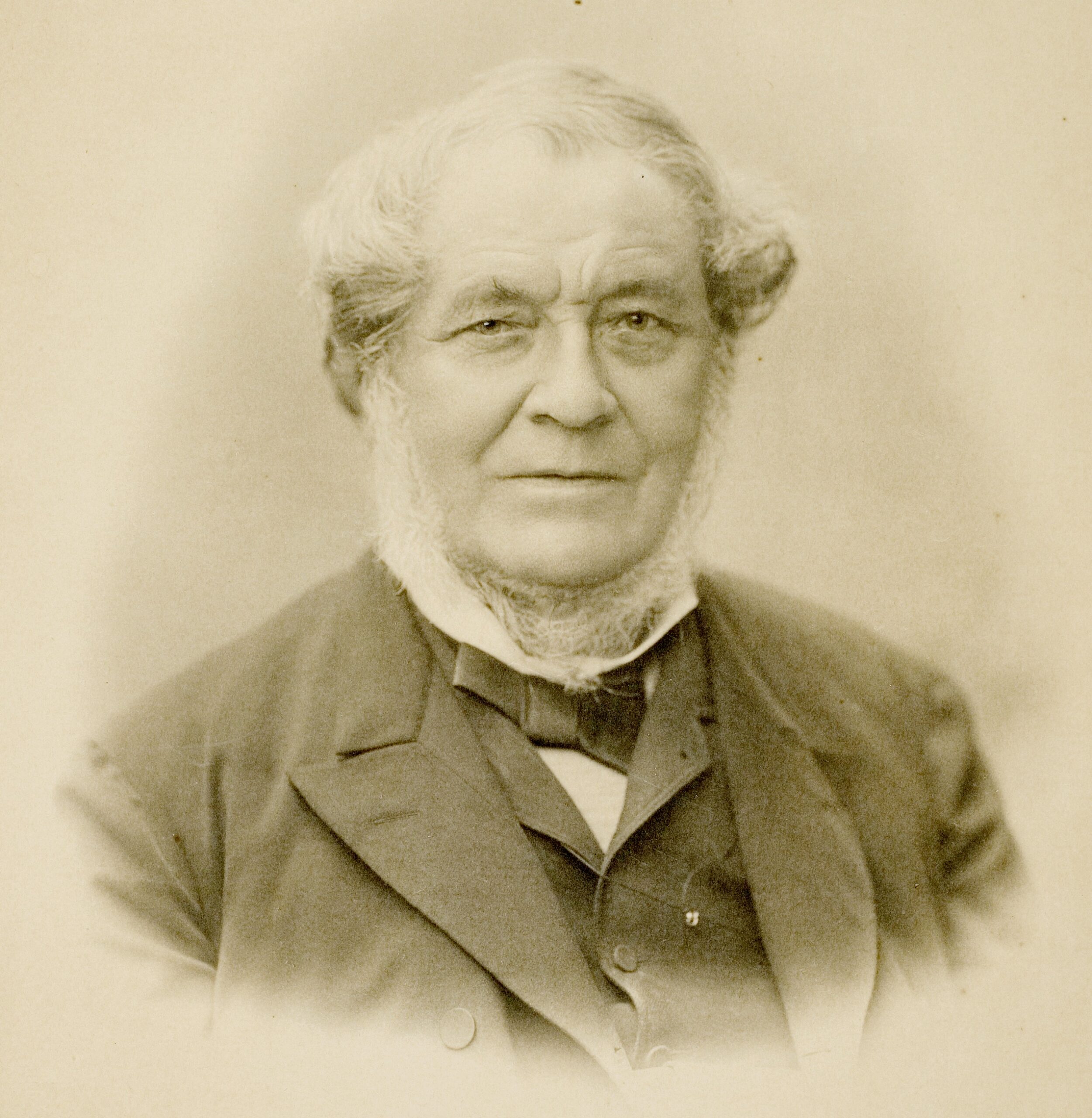
Robert Wilhelm Eberhard Bunsen, born on March 31, 1811, in Göttingen, Germany, was a pioneering chemist and physicist whose work has had a lasting impact on the scientific community. Known primarily for the Bunsen burner, a staple in chemistry laboratories worldwide, Bunsen’s contributions extend far beyond this iconic invention. His research in spectroscopy, photochemistry, and gas analysis, alongside his development of new laboratory techniques, has earned him a place among the most influential scientists of the 19th century. This article delves into the life, achievements, and enduring legacy of Robert Bunsen, exploring the nuances of his scientific career and the historical context in which he worked.
Early Life and Education
Robert Bunsen was the youngest of four brothers in a family deeply rooted in academia. His father, Christian Bunsen, was a professor of modern philology, which influenced Robert’s early interest in science and education. Bunsen’s academic journey began at the Holzminden Gymnasium, a prestigious secondary school, where he demonstrated an early aptitude for the sciences. At the age of 17, Bunsen enrolled at the University of Göttingen, where he studied chemistry under Friedrich Stromeyer, a renowned chemist known for discovering the element cadmium.
Bunsen’s academic brilliance was evident from the outset. He earned his doctorate at the age of 19 with a dissertation on the solubility of metal salts, which laid the foundation for his future research in chemical reactions and solutions. After completing his doctoral studies, Bunsen embarked on a grand tour of Europe, a customary practice for young scholars at the time. This journey, which took place from 1830 to 1833, allowed him to meet and exchange ideas with some of the leading scientists of the era, including Justus von Liebig in Giessen and Eilhard Mitscherlich in Bonn.
Early Research and Innovations
Upon his return to Germany, Bunsen began his academic career as a lecturer at the University of Göttingen. It was here that he conducted his first major research on the solubility of arsenic compounds. This work was groundbreaking, as Bunsen discovered that hydrated ferric oxide could act as an antidote to arsenic poisoning. His findings were widely recognized, and the use of ferric oxide as an antidote became a standard practice in medicine for many years.
In 1836, Bunsen accepted a position as a professor at the University of Kassel, where he continued his research on arsenic derivatives. During this time, he began studying cacodyl compounds, a group of highly toxic and volatile arsenic-containing chemicals. While working with these compounds, Bunsen experienced several accidents, including a severe arsenic poisoning and the loss of vision in his right eye due to an explosion in the laboratory. These incidents underscored the dangers of chemical research during the 19th century, a time when safety protocols were not as rigorous as they are today.
The Bunsen Burner and Advances in Laboratory Techniques
In 1841, Bunsen made a significant contribution to electrochemistry by developing a carbon electrode to replace the more expensive platinum electrode in Grove’s battery. This innovation made electrochemical experiments more accessible to scientists by reducing costs. However, it was in 1852, when Bunsen became a professor at the University of Heidelberg, that he would make his most famous contribution to science—the Bunsen burner.
Although the Bunsen burner is often credited solely to Bunsen, its initial design was based on earlier work by British scientist Michael Faraday. Bunsen perfected the device, optimizing it for laboratory use by designing a burner that produced a consistent, smokeless flame with a high temperature. This innovation revolutionized laboratory work, providing a reliable heat source for chemical experiments, and became an indispensable tool in scientific research.
Bunsen’s interest in laboratory techniques extended beyond the Bunsen burner. He developed several other important tools and methods, including the Bunsen cell, an early type of galvanic cell, and the Bunsen ice calorimeter, which allowed for the precise measurement of heat produced in chemical reactions. These contributions significantly advanced the field of experimental chemistry and laid the groundwork for future scientific discoveries.
Collaboration with Gustav Kirchhoff and the Birth of Spectroscopy
One of the most significant collaborations in Bunsen’s career was with Gustav Kirchhoff, a physicist with whom he worked closely from 1859 onwards. Together, they pioneered the field of spectroscopy, a technique that involves studying the interaction between matter and electromagnetic radiation to identify chemical elements. Their collaboration led to the discovery of two new elements, cesium and rubidium, through their analysis of the spectral lines emitted by various substances.
Spectroscopy became an essential tool in chemical analysis, allowing scientists to determine the composition of substances based on their light spectra. Bunsen and Kirchhoff’s work in this field opened up new avenues of research, particularly in astronomy, where spectroscopy is used to analyze the composition of stars and other celestial bodies. Their contributions to spectroscopy earned them the prestigious Davy Medal from the Royal Society in 1877, a recognition of their groundbreaking achievements.
Later Years and Contributions to Geology
In the later years of his career, Bunsen’s interests shifted towards geology, a field that had always fascinated him. After retiring from his position at the University of Heidelberg in 1889, Bunsen devoted much of his time to studying volcanic activity and mineralogy. His work in this area was highly regarded, and he made significant contributions to our understanding of volcanic gases and geothermal phenomena.
Despite his retirement, Bunsen remained active in the scientific community, mentoring young scientists and continuing to publish research. His dedication to science was evident in his willingness to explore new fields and his ability to apply his chemical expertise to a wide range of scientific problems.
Legacy and Impact on Science
Robert Bunsen’s legacy is immense, both in terms of his contributions to chemistry and his influence on the scientific method. His work in developing laboratory techniques and his pioneering research in spectroscopy have had a lasting impact on science, laying the foundation for many of the advances that followed.
The Bunsen burner, perhaps his most famous invention, continues to be a fundamental tool in chemistry laboratories worldwide. However, Bunsen’s contributions go far beyond this single invention. His approach to scientific research, characterized by meticulous experimentation and a willingness to take risks, has inspired generations of scientists.
Bunsen’s collaboration with Gustav Kirchhoff is often cited as a model of scientific partnership, demonstrating the power of interdisciplinary collaboration in advancing knowledge. Their work in spectroscopy not only expanded the field of chemistry but also had a profound influence on other scientific disciplines, including physics and astronomy.
In addition to his scientific achievements, Bunsen is remembered for his role as a mentor and educator. He trained many students who went on to become prominent scientists in their own right, further extending his influence on the scientific community.
Conclusion: The Enduring Legacy of Robert Bunsen
Robert Bunsen’s life and career are a testament to the power of curiosity, innovation, and perseverance in the pursuit of scientific knowledge. From his early research on arsenic compounds to his pioneering work in spectroscopy, Bunsen made significant contributions to a wide range of scientific fields. His inventions and discoveries have had a lasting impact on both chemistry and the broader scientific community.
Bunsen’s legacy is not only reflected in the tools and techniques he developed but also in the countless scientists who have been inspired by his work. His ability to blend theoretical knowledge with practical experimentation set a standard for scientific research that continues to influence the way science is conducted today.
As we continue to explore the mysteries of the natural world, the spirit of inquiry and innovation that Robert Bunsen embodied remains as relevant as ever. His contributions to science have stood the test of time, and his name will forever be associated with the pursuit of knowledge and the advancement of human understanding.


