
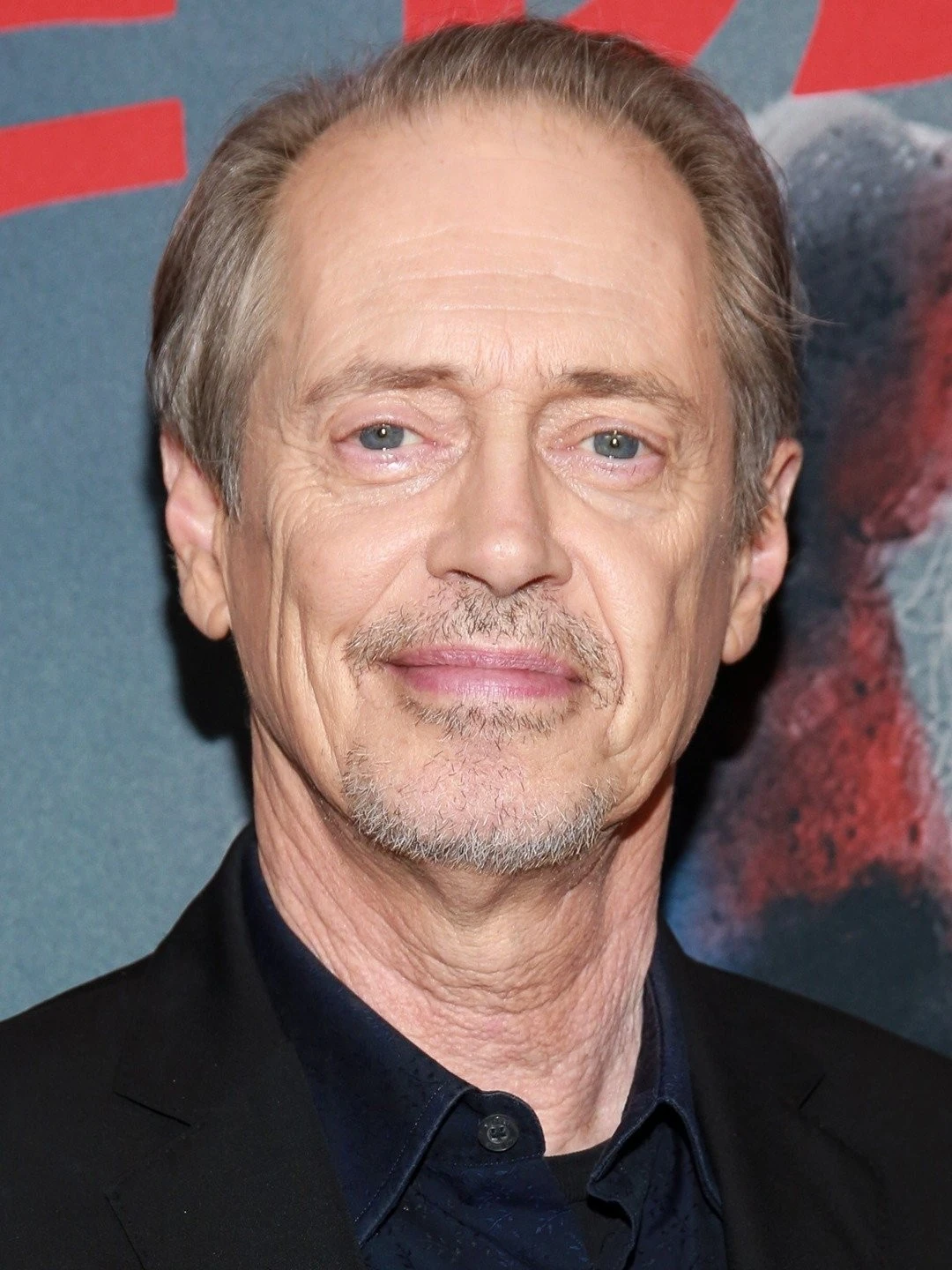
Steve Buscemi, born on December 13, 1957, in Brooklyn, New York, is one of Hollywood’s most recognizable and respected actors, known for his distinctive looks, unique voice, and a career that spans over four decades. With a background that includes working as a firefighter, Buscemi has established himself not only as a versatile actor but also as a director and filmmaker, contributing significantly to both independent and mainstream cinema.
Early Life and Background
Steve Buscemi was born and raised in the working-class neighborhoods of Brooklyn and Long Island. His father, John Buscemi, was a sanitation worker, and his mother, Dorothy, was a hostess. Growing up in a modest household, Buscemi was drawn to the arts from a young age, finding solace and expression in acting during his high school years.
After graduating from Valley Stream Central High School, Buscemi worked as a firefighter in New York City from 1980 to 1984. Despite the demands of the job, his passion for acting never waned. In 1984, Buscemi decided to pursue his dream more seriously, enrolling in the Lee Strasberg Institute, where he honed his craft. This decision marked the beginning of his journey into the world of film and television.
Breakthrough in Independent Cinema
Buscemi’s early career was rooted in the independent film scene, a genre that perfectly suited his offbeat charm and unconventional looks. His breakthrough role came in 1986 when he was cast as Nick in “Parting Glances,” one of the first films to address the AIDS epidemic. Buscemi’s portrayal of a gay rock musician struggling with the disease was both poignant and powerful, earning him critical acclaim and establishing him as a serious actor.
This role paved the way for Buscemi to become a mainstay in independent cinema, where he found his niche. Over the next few years, he worked with various indie directors, carving out a reputation as a reliable character actor capable of bringing depth and authenticity to a wide range of roles.
Collaborations with the Coen Brothers
One of the most significant collaborations in Buscemi’s career has been with the Coen Brothers, who have cast him in several of their films. The partnership began with “Miller’s Crossing” (1990), where Buscemi played a small but memorable role. However, it was his role in “Barton Fink” (1991) that really showcased his talent, playing the memorable role of Chet, the bellhop.
Buscemi’s most iconic role with the Coens came in 1996 with “Fargo,” where he played Carl Showalter, a bumbling kidnapper. His portrayal of Carl is a masterclass in balancing comedy and menace, making the character both amusing and terrifying. The role solidified Buscemi’s status as a character actor par excellence, capable of stealing scenes even when surrounded by other strong performers.
Another notable collaboration with the Coens was in “The Big Lebowski” (1998), where Buscemi played Donny, a soft-spoken, gentle character who often finds himself at the receiving end of his friend Walter’s (John Goodman) outbursts. Although his role was relatively small, Buscemi’s performance left a lasting impression, contributing to the film’s cult status.
Quentin Tarantino and “Reservoir Dogs”
Buscemi’s career took another significant turn when he worked with Quentin Tarantino on the groundbreaking film “Reservoir Dogs” (1992). In the film, Buscemi played Mr. Pink, a fast-talking, paranoid criminal who refuses to tip waitresses. His performance, filled with nervous energy and sharp wit, was one of the standout elements of the film and helped launch Tarantino’s career as well as further boost Buscemi’s own profile.
“Reservoir Dogs” was a critical and commercial success, and Buscemi’s portrayal of Mr. Pink became iconic. His character’s monologue about tipping remains one of the most memorable scenes in modern cinema, demonstrating Buscemi’s ability to deliver sharp, biting dialogue with precision.
Mainstream Success and Blockbuster Films
Following his success in independent films, Buscemi began to receive more offers from mainstream Hollywood. He appeared in several blockbuster films throughout the 1990s and 2000s, bringing his unique style to each role.
One of his most significant mainstream roles was in “Con Air” (1997), where he played Garland Greene, a serial killer with a chillingly calm demeanor. Despite the film’s ensemble cast, Buscemi’s performance stood out, adding a layer of complexity to what could have been a one-dimensional character.
Buscemi also appeared in Michael Bay’s “Armageddon” (1998), where he played Rockhound, a geologist and one of the team members sent to space to destroy an asteroid. His comedic timing and eccentric character provided much-needed levity in the high-stakes action film.
Behind the Camera: Directing and Filmmaking
In addition to his acting career, Buscemi has also made a name for himself as a director. His directorial debut came in 1992 with the short film “What Happened to Pete,” which he also wrote and starred in. He followed this up with his first feature film, “Trees Lounge” (1996), a critically acclaimed indie film in which Buscemi also played the lead role of Tommy Basilio, a down-and-out alcoholic.
“Trees Lounge” was a deeply personal project for Buscemi, reflecting his own experiences and observations of working-class life. The film was well-received and demonstrated Buscemi’s ability to craft compelling, character-driven stories.
He continued to direct, taking the helm of “Animal Factory” (2000), a gritty prison drama based on the novel by Edward Bunker. The film starred Willem Dafoe and Edward Furlong and was praised for its realistic portrayal of life behind bars.
Buscemi also directed episodes of popular television series, including “The Sopranos,” “Oz,” and “30 Rock,” showcasing his versatility and skill as a director. His work on “The Sopranos” was particularly notable, earning him critical acclaim and further establishing his reputation behind the camera.
Return to Television: “Boardwalk Empire”
One of Buscemi’s most acclaimed roles came in the HBO series “Boardwalk Empire” (2010-2014), where he played Enoch “Nucky” Thompson, a corrupt politician and crime boss in Prohibition-era Atlantic City. The role marked a return to television for Buscemi and was met with widespread praise.
“Boardwalk Empire” was a critical and commercial success, with Buscemi’s performance as Nucky Thompson earning him a Golden Globe Award for Best Actor in a Television Series. His portrayal of Nucky was both nuanced and powerful, capturing the complexity of a man who is both ruthless and vulnerable.
The success of “Boardwalk Empire” solidified Buscemi’s status as one of the most respected actors of his generation, capable of delivering performances that are both subtle and commanding.
Personal Life and Legacy
Despite his fame, Steve Buscemi has remained grounded and connected to his roots. He married Jo Andres in 1987, and the couple had one son, Lucian. Andres was a filmmaker and choreographer, and the couple shared a deep bond until her death in 2019.
Buscemi’s personal life was marked by his commitment to public service. After the 9/11 attacks, Buscemi returned to his old firehouse and worked as a volunteer, helping to search for survivors at Ground Zero. His dedication to his former colleagues and the community exemplified his humility and sense of duty.
Cultural Impact and Continuing Career
Steve Buscemi’s impact on the film and television industry is undeniable. His ability to seamlessly transition between genres, from indie films to blockbusters, and his unique approach to character development have made him a beloved figure in Hollywood.
Buscemi’s characters often embody the underdog, the outsider, or the misfit, resonating with audiences who appreciate his ability to bring depth and humanity to roles that might otherwise be overlooked. His work has inspired a new generation of actors and filmmakers who admire his dedication to his craft and his willingness to take on challenging, unconventional roles.
Conclusion: The Enduring Appeal of Steve Buscemi
Steve Buscemi’s career is a testament to the power of perseverance, passion, and authenticity. From his early days in independent cinema to his success in mainstream Hollywood and his acclaimed work on television, Buscemi has remained true to his artistic vision, choosing roles and projects that challenge him and resonate with audiences.
As he continues to work in film and television, both in front of and behind the camera, Steve Buscemi remains one of the most respected and versatile actors of his generation. His legacy is not only defined by his memorable performances but also by his dedication to his craft and his willingness to push the boundaries of what it means to be an actor in Hollywood.


