
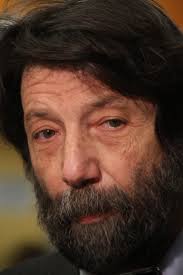
Massimo Cacciari, born on June 5, 1944, in Venice, Italy, is one of the most influential philosophers and political figures in contemporary Italy. Known for his profound insights into philosophy, politics, and aesthetics, Cacciari has also made significant contributions to Italian political life, particularly during his tenure as the Mayor of Venice. This article delves into the life, career, and intellectual legacy of Massimo Cacciari, providing detailed insights into his achievements, philosophical contributions, and the historical context that shaped his work.
Early Life and Academic Foundations
Massimo Cacciari was born into a family with a strong intellectual tradition. His father was a pediatrician, and his mother a homemaker, creating a nurturing environment that valued education and intellectual exploration. Cacciari attended the prestigious “Marco Polo” classical high school in Venice, where he developed a deep interest in philosophy and classical studies. This interest led him to enroll at the University of Padua, where he studied under the guidance of prominent scholars.
In 1967, Cacciari graduated with a degree in Philosophy, having written a thesis on Immanuel Kant’s “Critique of Judgment” under the supervision of Professor Dino Formaggio. His early academic work laid the foundation for a lifelong engagement with critical philosophy, particularly within the realms of aesthetics, metaphysics, and political theory.
Philosophical Career and Contributions
Cacciari’s philosophical career is marked by his deep engagement with the European philosophical tradition, particularly the works of Kant, Nietzsche, Heidegger, and Wittgenstein. He is widely recognized for his contributions to the study of “negative thought,” a concept that he explores in the context of modernity’s crisis of reason. Cacciari argues that modern rationality, rooted in the Enlightenment tradition, is fundamentally unable to grasp the ultimate meaning of reality, leading to a pervasive sense of alienation and disorientation in contemporary society.
In the 1970s, Cacciari began publishing a series of influential works that would establish his reputation as a leading philosopher. His writings from this period, including “Krisis: Saggio sulla crisi del pensiero negativo da Nietzsche a Wittgenstein” and “Pensiero negativo e razionalizzazione,” delve into the limitations of dialectical reason and the implications of negative thought for understanding the human condition. These works are characterized by their rigorous analysis and their engagement with a wide range of philosophical traditions, from German Idealism to existentialism.
Cacciari’s exploration of negative thought also extends to his critiques of modern political and social structures. In his book “Dialectic and Critique of Political Thought: A Study on Hegel,” Cacciari examines the contradictions inherent in modern political theory, particularly in the work of Hegel, and how these contradictions manifest in contemporary political life. His analysis is informed by a deep understanding of the historical development of Western philosophy and its impact on modern political institutions.
Political Involvement: The Mayor of Venice
In addition to his academic career, Massimo Cacciari has been a prominent figure in Italian politics. His political journey began in the 1960s, when he became involved in leftist activism. He was particularly influenced by the intellectual currents of Marxism, and he contributed to various radical publications, including “Classe Operaia” and “Contropiano.” However, Cacciari’s political views evolved over time, and he distanced himself from orthodox Marxism, instead embracing a more nuanced and critical approach to political theory.
Cacciari’s political career took a significant turn in 1993, when he was elected as the Mayor of Venice. His tenure as mayor, which lasted until 2000, was marked by his efforts to balance the preservation of Venice’s cultural heritage with the challenges of modern urban governance. Cacciari faced numerous challenges during his time in office, including the city’s economic difficulties, environmental issues related to rising sea levels, and the complex dynamics of tourism and local industry.
One of Cacciari’s most notable achievements as mayor was his advocacy for sustainable development and his emphasis on the importance of cultural and historical preservation. He worked to protect Venice’s unique architectural and artistic heritage while also promoting policies that aimed to address the city’s environmental vulnerabilities. Cacciari’s approach to governance was deeply informed by his philosophical insights, particularly his belief in the need for a more reflective and critical approach to political decision-making.
In 2005, Cacciari returned to the political scene by running for mayor of Venice again. Despite facing opposition from within his own political coalition, he managed to secure a narrow victory in the runoff election. His second term as mayor was characterized by continued efforts to address the city’s environmental challenges and to promote a vision of Venice that balanced tradition with innovation.
Academic and Literary Legacy
Throughout his career, Massimo Cacciari has maintained a strong presence in academia, holding various teaching positions and contributing to the intellectual life of Italy and beyond. In 1980, he was appointed as a professor of Aesthetics at the University Institute of Architecture in Venice, where he influenced generations of students with his deep understanding of philosophy and his ability to connect abstract concepts with real-world issues.
Cacciari has also been a prolific writer, with numerous books and essays to his name. His works span a wide range of topics, from philosophy and politics to art and architecture. Some of his most influential books include “Icone della legge,” “L’Angelo necessario,” and “Dell’Inizio,” each of which explores different aspects of his philosophical thought.
In addition to his philosophical and political writings, Cacciari has also made significant contributions to the study of urbanism and architecture. His interest in the built environment is evident in his writings on the relationship between architecture and philosophy, where he explores how space and structure influence human thought and behavior. His work in this area has earned him recognition not only as a philosopher but also as a thinker who bridges the gap between the humanities and the social sciences.
Impact on Italian Intellectual Life
Massimo Cacciari’s influence extends far beyond his own writings and political career. He has been a central figure in Italian intellectual life for decades, engaging in public debates and contributing to the discourse on critical issues facing Italy and the broader European context. His ability to articulate complex ideas in a clear and accessible manner has made him a sought-after commentator on topics ranging from philosophy and politics to culture and society.
Cacciari’s impact is also evident in his role as a mentor and teacher. Many of his students have gone on to become prominent figures in their own right, carrying forward his legacy of critical thought and intellectual rigor. His teaching style, characterized by its emphasis on dialogue and critical inquiry, has left a lasting impression on those who have had the opportunity to study under him.
Historical Context and Philosophical Influences
To fully appreciate Massimo Cacciari’s contributions, it is essential to understand the historical context in which he developed his ideas. Cacciari came of age during a period of significant social and political upheaval in Italy, marked by the rise of radical political movements, the student protests of the 1960s, and the challenges posed by the modernization of Italian society. These experiences shaped his intellectual outlook and his commitment to engaging with the pressing issues of his time.
Cacciari’s philosophical influences are diverse, drawing on a wide range of thinkers from different traditions. His engagement with German philosophy, particularly the works of Nietzsche, Heidegger, and Wittgenstein, is central to his thought. However, he also draws on Italian and French thinkers, including Gramsci, Foucault, and Agamben, to develop a unique perspective that addresses the complexities of modern life.
One of the key themes in Cacciari’s work is the idea of crisis, both in terms of individual experience and broader social and political structures. He argues that modernity is characterized by a profound sense of crisis, rooted in the limitations of reason and the disintegration of traditional values. Cacciari’s exploration of this theme is not merely an abstract philosophical exercise but a reflection of his deep concern for the direction of contemporary society.
Legacy and Continuing Relevance
As Massimo Cacciari approaches his 80th year, his legacy as a philosopher, politician, and public intellectual is firmly established. His work continues to be relevant in a world that is increasingly grappling with the issues he has spent a lifetime exploring—issues such as the crisis of modernity, the challenges of political governance, and the role of culture in shaping human experience.
Cacciari’s ability to navigate the intersections of philosophy, politics, and culture has made him a unique figure in the intellectual landscape of Italy and beyond. His writings offer not only a critique of contemporary society but also a vision of how we might address the challenges of the future. In a time when the world is facing unprecedented challenges, from environmental crises to political instability, Cacciari’s insights remain as pertinent as ever.
In conclusion, Massimo Cacciari is a towering figure in contemporary Italian thought, whose contributions to philosophy, politics, and culture have left an indelible mark on the intellectual history of Italy. His work continues to inspire and challenge, offering a critical lens through which to understand the complexities of the modern world. As we look to the future, Cacciari’s legacy will undoubtedly continue to shape the way we think about the fundamental questions of human existence and the role of philosophy in addressing the challenges of our time.


