
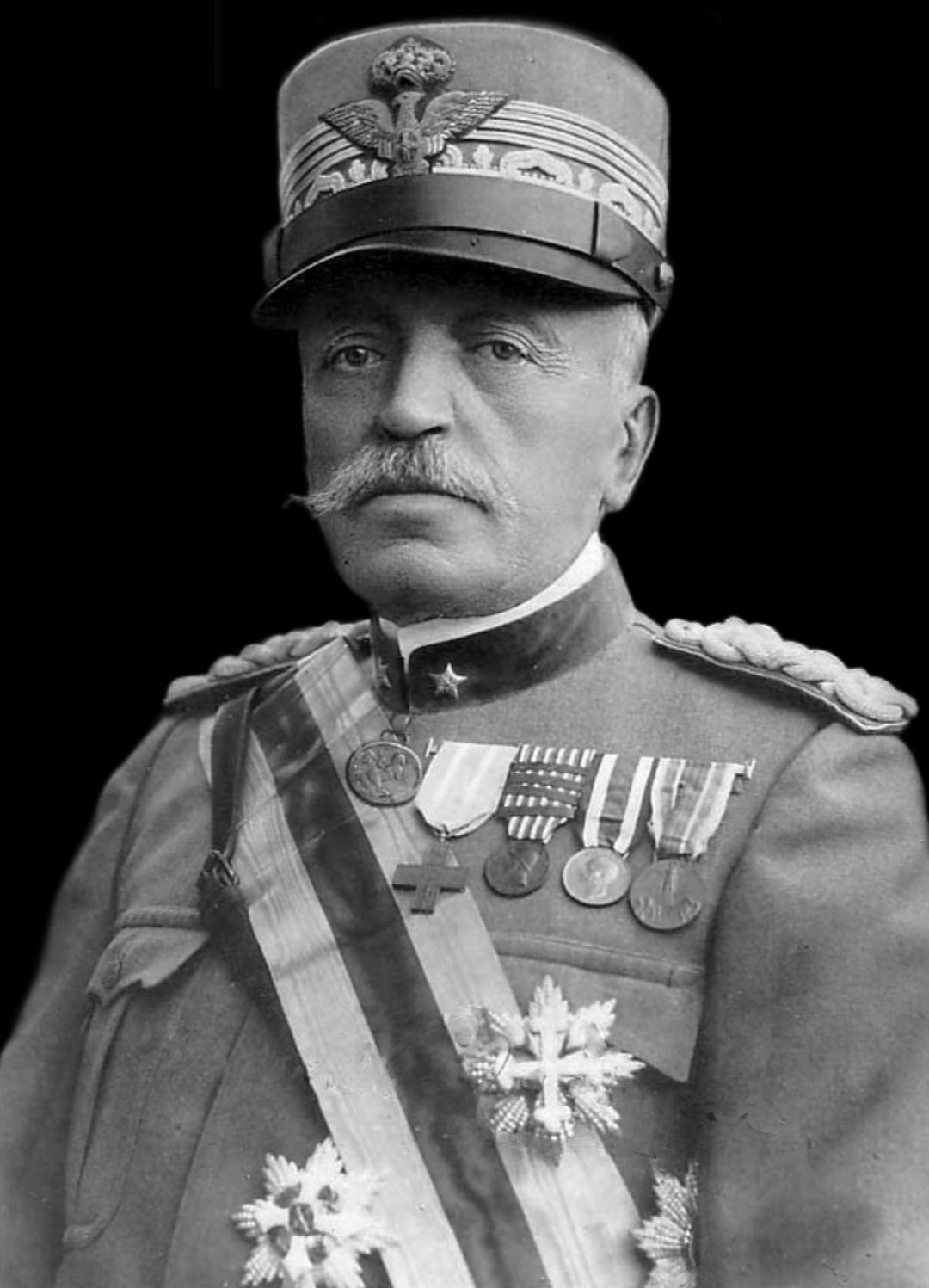
Luigi Cadorna stands as one of the most controversial and influential military figures in Italian history. Born on September 4, 1850, in Pallanza, Piedmont, Cadorna’s legacy is intertwined with the tumultuous events of World War I and the broader context of early 20th-century European military history. His name is often associated with both military brilliance and harsh command tactics, particularly during his time as the Chief of Staff of the Italian Army. Cadorna’s life story is a complex narrative of ambition, military strategy, and the inevitable consequences of leadership under extreme pressure.
Early Life and Military Beginnings
Luigi Cadorna was born into a military family, which heavily influenced his career path. His father, Raffaele Cadorna, was a distinguished general who played a crucial role in the Italian unification process. This familial background destined young Luigi for a career in the military from an early age.
At just ten years old, Cadorna was enrolled in the Collegio Militare in Milan, a prestigious military academy. His formative years were spent steeped in the discipline and rigor of military education. By the age of fifteen, he had advanced to the Military Academy of Turin, where he continued to excel, earning his commission as a Second Lieutenant in the General Staff.
Cadorna’s early military career saw rapid advancements, reflecting both his capability and the expectations placed upon him due to his family lineage. By 1868, he was a lieutenant, and two years later, he attended the School of War, solidifying his credentials as a rising star in the Italian military.
Rise Through the Ranks
Cadorna’s career progressed steadily as he took on various roles across Italy, each building his reputation as a competent and effective officer. In 1875, at the age of 25, he achieved the rank of Captain and was stationed in Rome. Five years later, he was promoted to Major, taking command of a battalion in Alba and later in Verona.
His promotions continued, and by 1892, Cadorna had reached the rank of Colonel, commanding the 10th Bersaglieri Regiment in Cremona and later in Naples. His leadership during this period further solidified his standing within the military hierarchy. He became known for his strict adherence to discipline and his unwavering commitment to military doctrine.
By 1898, Cadorna had ascended to the rank of Major General and took command of the Pistoia Brigade in Alessandria and then L’Aquila. His rise to prominence continued, and in 1905, he was appointed Lieutenant General, commanding army units in Ancona and Naples. In 1910, he took command of the Genoa Army Corps and was designated to lead the Second Army in the event of war.
Cadorna’s growing influence was recognized beyond the military, and in 1913, he was appointed as a Senator of the Kingdom of Italy, cementing his status as one of Italy’s most powerful military leaders.
World War I: Preparation and Command
As tensions in Europe escalated, the Italian government began preparing for the possibility of entering World War I. In 1914, following the death of General Alberto Pollio, Luigi Cadorna was appointed as the Chief of the General Staff of the Italian Army, a position that placed him at the forefront of Italy’s military efforts.
Cadorna’s appointment came at a critical juncture. Italy had not yet entered the war, and there was significant debate within the government and military about the best course of action. Cadorna, along with General Vittorio Zupelli, devised a comprehensive plan to prepare the Italian military for conflict. This plan included a massive reorganization of forces, the acquisition of new equipment, and the mobilization of Italy’s industrial base to support the war effort.
When Italy officially entered the war on May 24, 1915, Cadorna was ready. He launched a series of offensives against the Austro-Hungarian Empire along the Isonzo River and in the Julian Alps. Over the next 30 months, Cadorna directed the Italian military with a single-minded focus on achieving victory, often at great human cost.
Military Strategy and Leadership Style
Cadorna’s approach to military command was characterized by his insistence on strict discipline and his belief in the efficacy of frontal assaults. His strategies reflected the conventional military thinking of the time, which often emphasized attrition over maneuver. Cadorna believed that with enough pressure, the Austro-Hungarian lines would eventually break, leading to a decisive victory.
However, this approach had significant drawbacks. The repeated assaults along the Isonzo resulted in high casualties for relatively small territorial gains. Cadorna’s leadership style was also marked by his detachment from the human cost of war. He was known for his harsh treatment of soldiers, including the use of decimations—the execution of one in ten men in units that were seen as lacking discipline or failing in their duties.
This relentless pursuit of victory, coupled with a lack of empathy for his troops, led to a growing sense of discontent within the Italian ranks. Despite these issues, Cadorna achieved some military successes, including the capture of Gorizia in 1916 during the Sixth Battle of the Isonzo and the victory at Bainsizza in 1917.
The Caporetto Disaster
Cadorna’s downfall came with the Battle of Caporetto in October 1917. The Austro-German forces launched a surprise offensive that overwhelmed the Italian lines, leading to a disastrous retreat. The Italian army, already exhausted and demoralized, collapsed under the weight of the attack. The defeat at Caporetto exposed significant weaknesses in the Italian command structure, as well as the inadequacies of Cadorna’s leadership.
On October 27, 1917, Cadorna, faced with the collapse of his forces, issued a notorious communiqué blaming the defeat on the “cowardice” and “treason” of his troops rather than on any strategic or tactical failures. This response further alienated him from both his soldiers and the Italian government.
In the wake of the defeat, Italy’s allies, particularly France and Britain, insisted on a change in military leadership as a condition for providing military aid. On November 9, 1917, Cadorna was replaced by General Armando Diaz. The defeat at Caporetto and Cadorna’s subsequent dismissal marked the end of his military career and led to a period of intense criticism and scrutiny of his wartime leadership.
Post-War Years and Literary Contributions
Following his dismissal, Cadorna retreated from public life but continued to defend his record. In 1919, he published his memoirs, “La guerra al fronte fino all’arresto sulla linea del Piave e del Grappa” (“The War on the Front Until the Halt on the Piave and Grappa Lines”), in which he attempted to justify his decisions and actions during the war. He followed this with “Altre pagine sulla guerra mondiale” (“Other Pages on the World War”) and “Le pagine polemiche” (“The Polemical Pages”) in 1925, further elaborating on his perspective of the war and particularly on the events at Caporetto.
In addition to his memoirs, Cadorna also wrote on military theory. His earlier works, such as “Istruzione tattica” (“Tactical Instruction”) in 1898 and “Da Weissemburg a Sedan nel 1870” (“From Weissemburg to Sedan in 1870”) in 1902, were studies on military tactics and strategies. These works reflected his deep understanding of military doctrine and his efforts to instill these principles within the Italian army.
Rehabilitation and Later Life
Despite the widespread criticism of his wartime leadership, Cadorna’s reputation underwent a rehabilitation in the post-war period, largely driven by nationalist elements within Italy. The rise of Fascism and the political shifts of the 1920s played a significant role in reshaping public perceptions of Cadorna.
On November 4, 1924, Benito Mussolini appointed Cadorna as a Marshal of Italy, a symbolic gesture that placed him alongside General Armando Diaz in recognition of their roles during the war. This honor marked a significant rehabilitation of Cadorna’s image, aligning him with the new fascist regime.
In 1925, Cadorna was also appointed to the Italian Senate, further cementing his restored status within the Italian state. Despite these honors, Cadorna remained a polarizing figure, admired by nationalists but still viewed critically by others who remembered the human cost of his military strategies.
Luigi Cadorna died on December 21, 1928, in Bordighera, Liguria, at the age of 78. His legacy remains complex, reflecting both his contributions to Italian military history and the controversies that surrounded his leadership during World War I.
SEO Considerations: Optimizing Content for Search Visibility
When discussing Luigi Cadorna, it’s crucial to integrate SEO strategies that ensure the content reaches a wide audience. Keywords such as “Luigi Cadorna biography,” “Italian general Luigi Cadorna,” “Caporetto disaster,” and “World War I Italian military history” should be strategically included throughout the article. Additionally, addressing various search intents—from those looking for a brief overview of his life to those seeking detailed military analysis—will help attract a diverse readership.
Balancing keyword density with engaging and informative content is essential for maintaining both readability and search engine optimization. Detailed insights into Cadorna’s military strategies, the historical context of his actions, and his post-war legacy will cater to a broad audience, including history enthusiasts, military scholars, and general readers interested in World War I.
Historical Context: Italy in World War I
Luigi Cadorna’s military career cannot be fully understood without considering the broader context of Italy’s involvement in World War I. Italy’s entry into the war in 1915 was the result of complex diplomatic negotiations and a desire to assert its national interests. The Italian front, particularly along the Isonzo River, was one of the most grueling and static fronts of the war, characterized by trench warfare, high casualties, and limited territorial gains.
Cadorna’s strategies were reflective of the broader military thinking of the time, which often prioritized attrition and frontal assaults over more flexible and adaptive tactics. The failure of these strategies at Caporetto highlighted the limitations of such an approach and forced a reevaluation of Italy’s military leadership and strategy.
Conclusion: Luigi Cadorna’s Complex Legacy
Luigi Cadorna remains a figure of intense debate in the history of Italian military leadership. His contributions to Italy’s military organization and his role in the early stages of World War I are undeniable, yet his rigid command style and the catastrophic defeat at Caporetto have left a lasting stain on his legacy.
As history continues to reassess his impact, Cadorna’s life serves as a powerful reminder of the complexities of military leadership in times of extreme national crisis. His story is a testament to the challenges of command, the consequences of strategic decisions, and the enduring impact of leadership on the course of history.


