
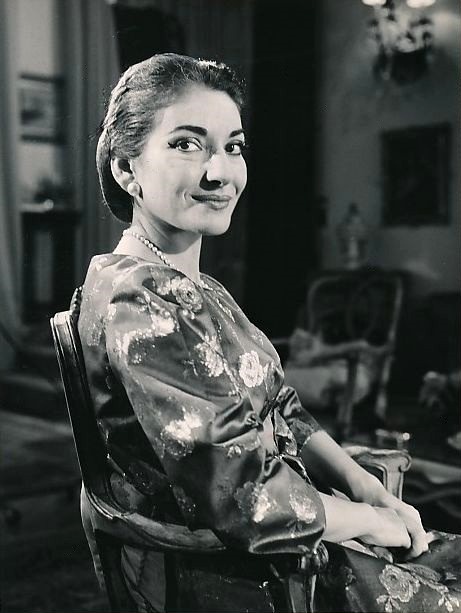
Maria Callas, born Maria Anna Cecilia Sofia Kalogeropoulos on December 2, 1923, in New York City, remains one of the most celebrated and enigmatic figures in the world of opera. Often referred to as “La Divina,” her extraordinary voice and dramatic artistry have left an indelible mark on the music world. This detailed exploration will cover Callas’s early life, career milestones, and the lasting impact of her work.
Early Life and Background
Maria Callas’s early years were marked by both privilege and tragedy. Born to Greek immigrant parents Georges Kalogheropoulos and Evangelia Dimitriadis, Callas’s birth was shrouded in some mystery, with discrepancies regarding the exact date. Her family lived on Fifth Avenue in New York, a testament to their relative affluence.
The Kalogeropoulos family experienced profound loss before Maria’s birth. Her older brother, Vasily, had died from typhus at a young age, which deeply affected her parents. As a result, Maria’s birth was met with less enthusiasm, and her father did not initially register her. Despite this rocky start, Maria’s early life was relatively stable, though not without its hardships. At the age of five, she suffered a severe accident when she was hit by a car in Manhattan, resulting in a prolonged coma.
Maria had an older sister, Jacqueline, often referred to as Jackie, who was favored by the family and received musical training that Maria could only observe from behind a door. Despite this, Maria’s innate talent became apparent early on. At the age of eleven, she performed on the radio program “L’ora del dilettante,” singing “La Paloma” and winning second place. This early success foreshadowed her future prominence.
Education and Early Career
Callas’s formal education in music began at the Conservatorio di Atene in Greece, where she studied from 1937. During this period, she endured the harsh conditions of the German occupation and the subsequent struggle for a better life after the war. Her early career in Greece included notable performances in operas such as “Cavalleria Rusticana” and “Tosca,” the latter of which became a staple in her repertoire.
In 1947, Callas made a pivotal decision to leave Greece and move to Italy, a country that would significantly shape her career. Arriving with just $50 and few belongings, she was accompanied by Luisa Bagarotzy, the wife of an American impresario, and the singer Nicola Rossi-Lemeni. In Italy, she met Giovanni Battista Meneghini, a wealthy industrialist who became her husband in 1949. The marriage, characterized by a significant age difference, was more of a practical arrangement than a romantic one.
Italy proved to be the launchpad for Callas’s international career. She performed in Verona, Milan, and Venice, captivating audiences with her powerful interpretations of roles such as “Gioconda,” “Tristan und Isolde,” “Norma,” and “Aida.” Her talent caught the attention of influential figures in the opera world, including the esteemed conductor Arturo Toscanini.
Rise to Stardom
The 1950s were marked by Callas’s meteoric rise in the opera world. She became renowned for her extraordinary vocal range and dramatic intensity. Her performances in major opera houses around the world, including London, Vienna, Berlin, Paris, and New York, solidified her reputation as one of the greatest sopranos of her time.
During this period, Callas developed a reputation not only for her vocal prowess but also for her distinctive dramatic style. Her interpretation of roles was deeply personal and emotionally charged, setting her apart from her contemporaries. Her partnership with influential figures such as Luchino Visconti and Franco Zeffirelli further enhanced her status.
Personal Life and Controversies
Callas’s personal life was as dramatic as her professional career. In 1959, she divorced Meneghini and soon after became involved with the Greek shipping magnate Aristotle Onassis. Their relationship, which Callas described as “ugly and violent,” was tumultuous and marked by both passion and strife. The relationship was further complicated by Onassis’s subsequent marriage to Jacqueline Kennedy, which deeply affected Callas.
The couple’s tragic loss of their infant son, Omero, who lived only a few hours, added to the personal turmoil Callas experienced. This period marked the beginning of a gradual decline in her career, as her personal struggles began to overshadow her professional achievements.
Decline and Legacy
By the mid-1960s, Callas’s career was in decline. The end of her relationship with Onassis and the public nature of his marriage to Jacqueline Kennedy had a profound impact on her. Her voice, once a symbol of unparalleled beauty and power, began to lose its former brilliance. She withdrew from the opera scene and retreated to Paris.
Maria Callas passed away on September 16, 1977, at the age of 53. Her death was marked by a small, private funeral, and her ashes were scattered in the Aegean Sea. Despite the end of her career and the personal difficulties she faced, Callas’s legacy remains intact through her recordings and the profound impact she had on the world of opera.
Lasting Impact and Influence
Maria Callas’s influence extends beyond her operatic performances. She revolutionized the art of singing and acting in opera, merging vocal excellence with dramatic interpretation in a way that had rarely been seen before. Her unique approach to role interpretation and her ability to convey deep emotional truths through music set new standards for opera singers.
Callas’s recordings continue to be celebrated for their artistic excellence. Her performances of operas such as “Tosca,” “Norma,” and “La Traviata” are considered definitive, and her interpretations are studied by aspiring singers and opera enthusiasts alike.
In addition to her musical legacy, Callas’s life story has become a subject of fascination. Her dramatic personal life, marked by intense love affairs and personal struggles, has been the focus of numerous biographies, documentaries, and films.
Conclusion
Maria Callas remains a towering figure in the world of opera. Her exceptional talent, combined with her dramatic life story, has cemented her status as one of the most influential sopranos of the 20th century. Despite the personal and professional challenges she faced, Callas’s contributions to music continue to inspire and captivate audiences around the world.
Her legacy endures through her recordings and the ongoing appreciation of her remarkable artistry. Maria Callas’s life and career offer a profound insight into the power of music and the complexities of a life lived in the spotlight.


