
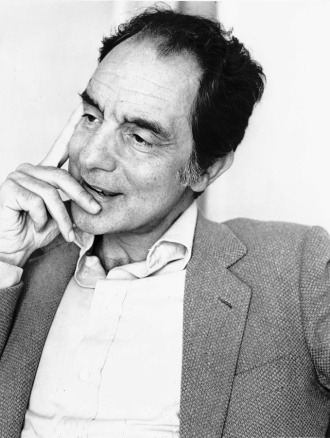
Italo Calvino remains one of the most celebrated figures in Italian literature, known for his inventive storytelling, profound philosophical insights, and his ability to blend reality with the fantastical in ways that continue to captivate readers around the globe. Born on October 15, 1923, in Santiago de Las Vegas, Cuba, Calvino’s literary journey is a testament to his multifaceted talents and intellectual depth. His life and works provide a rich tapestry that reflects the cultural, political, and social dynamics of the 20th century.
Early Life and Cultural Influences
Italo Calvino’s early life was shaped by a unique confluence of cultural and intellectual influences. His father, Mario Calvino, was an agronomist of Sanremese origin, stationed in Cuba to direct an agricultural experiment station and a school of agriculture after spending two decades in Mexico. His mother, Evelina Mameli, a native of Sassari, was a botanist and worked as an assistant in botany at the University of Pavia. This scientific and international background provided a foundation for Calvino’s later explorations of complex themes in his writing.
In 1927, the Calvino family moved back to Italy, settling in Sanremo, where Italo began his formal education. His early schooling took place at the Valdesi schools, and his academic journey continued at the prestigious Ginnasio-Liceo “G. D. Cassini”. It was during these formative years that Calvino developed an interest in literature, sparked by his reading of Rudyard Kipling’s “The Jungle Book.” This early fascination with exotic worlds and adventure stories would later evolve into a lifelong passion for storytelling.
The Impact of World War II
The outbreak of World War II was a pivotal moment in Calvino’s life, marking the end of his youth and the beginning of his engagement with the broader political and social issues of his time. His initial ideological stance was ambiguous, torn between a desire to preserve a local identity and a burgeoning anarchistic sentiment. Between the ages of 16 and 20, Calvino wrote short stories, plays, and poems, drawing inspiration from Eugenio Montale, a poet who remained a lifelong influence.
Calvino’s political awakening deepened through his friendship with Eugenio Scalfari, a high school classmate who later became a prominent journalist and founder of the newspaper La Repubblica. Their intense correspondence during this period fostered Calvino’s anti-fascist sentiments and his literary interests, guiding him toward authors such as Elio Vittorini, Carlo Pisacane, and Johan Huizinga.
Education and Resistance
In 1941, Calvino enrolled in the Faculty of Agriculture at the University of Turin, following in his father’s footsteps. However, the escalating conflict in Europe and the death of a young resistance fighter motivated Calvino to join the Italian Communist Party (PCI). Alongside his brother Floriano, Calvino fought for 20 months in the harsh conditions of the Italian Resistance against Nazi-fascist forces.
This period of his life was marked by intense personal and ideological growth, although critics have often noted that his alignment with the Communist Party was more pragmatic than ideologically driven. For Calvino, the PCI represented the most organized and active resistance force at the time.
Literary Beginnings: “The Path to the Nest of Spiders”
The end of the war saw Calvino’s transition from resistance fighter to writer. In 1946, he became associated with the Einaudi publishing house, initially selling books on installment plans. Under the mentorship of Cesare Pavese and literary critic Giansiro Ferrata, Calvino wrote his first novel, “Il sentiero dei nidi di ragno” (“The Path to the Nest of Spiders”), published in 1947. This novel, a reflection on the war and the partisan movement, introduced Calvino to the Italian literary scene as a powerful new voice capable of blending realism with a deeper, almost allegorical, understanding of the human condition.
Calvino’s involvement with Einaudi grew as he took on roles in the press office and later as a literary editor. Here, he formed lasting intellectual relationships with some of Italy’s most prominent literary figures, including Natalia Ginzburg, Norberto Bobbio, and Franco Venturi.
Political Disillusionment and Literary Innovation
By the early 1950s, Calvino’s writing began to reflect a shift from his early realist style to a more fantastical and allegorical approach. His experiences in the post-war political landscape, particularly his growing disillusionment with the Communist Party following events like the Hungarian Revolution of 1956, led to a gradual withdrawal from direct political engagement. This disillusionment is mirrored in his literary work, which became increasingly focused on the imaginative and the surreal.
In 1952, Calvino published “Il visconte dimezzato” (“The Cloven Viscount”), the first in a trilogy of allegorical novels that also includes “Il barone rampante” (“The Baron in the Trees”) and “Il cavaliere inesistente” (“The Nonexistent Knight”). These works, collectively known as “I nostri antenati” (“Our Ancestors”), marked a significant departure from his earlier, more straightforward narratives, and established Calvino as a master of literary invention.
Calvino’s role at Einaudi also expanded during this period. He became the head of the literary section of the “Piccola Biblioteca Scientifico-Letteraria” and was instrumental in shaping the editorial style that Einaudi became known for. His ability to balance literary creativity with editorial rigor made him a key figure in the Italian publishing world.
International Recognition and Further Works
The late 1950s and 1960s were a period of intense creativity and international recognition for Calvino. He spent six months in the United States, a trip that profoundly influenced his work, particularly in his exploration of the relationship between reality and fiction. During this time, he published “Le cosmicomiche” (“Cosmicomics”) in 1965, a collection of short stories that combined scientific concepts with fantastical narratives. This was followed by “Ti con zero” (“T Zero”) in 1967, further exploring themes of time, space, and the limits of human understanding.
Calvino’s fascination with semiotics and the structure of narrative led to the publication of “Il castello dei destini incrociati” (“The Castle of Crossed Destinies”) in 1973 and “Le città invisibili” (“Invisible Cities”) in 1972. These works are characterized by their intricate narrative structures and philosophical depth, showcasing Calvino’s ability to push the boundaries of traditional storytelling.
In 1964, Calvino’s personal life took a significant turn when he married an Argentinian woman and moved to Paris. This move, along with the birth of his daughter in 1965, infused his life with new energy and a renewed sense of purpose. During this period, Calvino continued to publish prolifically, including his acclaimed novel “Se una notte d’inverno un viaggiatore” (“If on a Winter’s Night a Traveler”) in 1979. This novel, with its unique narrative structure and metafictional elements, remains one of his most celebrated works.
Theoretical Explorations and Late Works
Throughout the 1970s and early 1980s, Calvino’s work increasingly reflected his engagement with literary theory and his interest in the mechanics of storytelling. He became involved in the Oulipo group, a collective of writers and mathematicians exploring the use of constrained writing techniques. This theoretical approach is evident in his later works, such as “Palomar” in 1983, which examines the relationship between perception and reality through a series of vignettes.
Calvino’s commitment to exploring the possibilities of narrative culminated in his “Lezioni americane” (“Six Memos for the Next Millennium”), a series of lectures prepared for delivery at Harvard University in 1985. These lectures, which were published posthumously, encapsulate Calvino’s literary philosophy, emphasizing values such as lightness, quickness, exactitude, visibility, and multiplicity—qualities that he believed would define literature in the coming century.
Legacy and Influence
Italo Calvino passed away on September 19, 1985, in Siena, Italy, after suffering a cerebral hemorrhage. He was 61 years old. His death marked the loss of one of the most innovative and influential writers of the 20th century. Calvino’s work continues to be studied and admired for its intellectual rigor, imaginative breadth, and its ability to blend the real with the surreal.
Calvino’s influence extends beyond the literary world into popular culture, philosophy, and even science. His exploration of narrative structure and his innovative use of literary forms have inspired countless writers, filmmakers, and theorists. His works have been translated into numerous languages, ensuring that his legacy endures on a global scale.
SEO Considerations: Optimizing Content for Search Visibility
When discussing Italo Calvino, it is crucial to incorporate SEO strategies that enhance the visibility of the content for search engines. Keywords such as “Italo Calvino biography,” “Italian writer Italo Calvino,” “Calvino’s literary contributions,” and “If on a Winter’s Night a Traveler” should be strategically included throughout the article. Addressing various search intents, from those seeking a brief overview of his life to those interested in in-depth literary analysis, will broaden the article’s appeal.
Balancing keyword density with engaging and informative content is essential to maintaining both readability and search engine optimization. Providing comprehensive insights into Calvino’s literary themes, his intellectual background, and his impact on global literature will attract a diverse audience, including students, literary scholars, and general readers.
Historical Context: Italian Literature and Post-War Intellectualism
Italo Calvino’s work cannot be fully appreciated without considering the broader context of Italian literature and post-war intellectualism. Calvino emerged as a significant literary figure during a time of great social and political upheaval in Italy. The aftermath of World War II, the rise and fall of fascism, and the complexities of the Cold War period all played a role in shaping his worldview and, consequently, his writing.
Calvino’s engagement with the Italian Resistance and his early affiliation with the Italian Communist Party reflect the political and ideological currents of his time. However, his eventual disillusionment with organized politics and his turn towards the exploration of universal human experiences underscore the broader intellectual trends of the mid-20th century, where literature became a means of exploring existential and philosophical questions.
Conclusion: Italo Calvino’s Enduring Legacy
Italo Calvino’s literary legacy is one of innovation, intellectual depth, and an unceasing curiosity about the world. His works continue to inspire and challenge readers, offering a unique blend of realism and fantasy that defies easy categorization. Whether through his early explorations of post-war realities or his later, more abstract investigations into the nature of storytelling, Calvino remains a towering figure in world literature.
As readers and scholars continue to engage with his work, Calvino’s contributions to literature will undoubtedly endure, offering new generations insights into the power of imagination, the complexities of human experience, and the infinite possibilities of narrative.


