
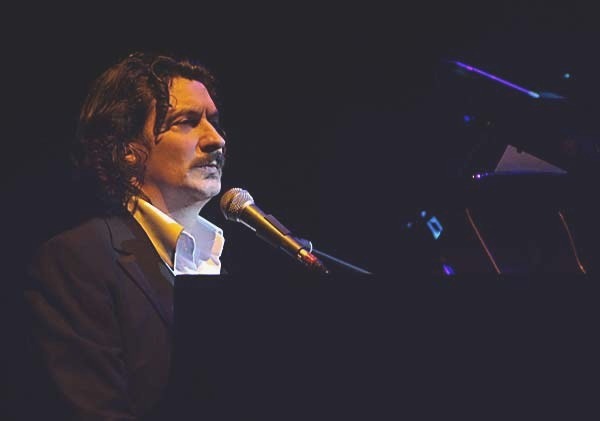
Sergio Cammariere, born on November 15, 1960, in Crotone, Italy, is a highly acclaimed pianist, composer, and singer whose work is characterized by a blend of jazz, classical, and Italian singer-songwriter traditions. Over the years, Cammariere has established himself as one of the most respected and innovative figures in the Italian music scene, known for his emotive performances and his ability to seamlessly integrate various musical genres into his compositions. This article delves into his life, career highlights, and the influences that have shaped his unique musical style.
Early Life and Musical Influences
Cammariere was born into a culturally rich environment that would later profoundly influence his musical journey. Growing up in Crotone, a city in the Calabria region of southern Italy, Cammariere was exposed to a diverse array of musical traditions. His early fascination with music was nurtured by his family, who recognized his talent and encouraged him to pursue formal training.
His initial forays into music were marked by a deep appreciation for classical music, which he studied rigorously. However, it was the discovery of jazz that truly captivated Cammariere and set the course for his future career. The improvisational nature of jazz, combined with its emotional depth, resonated with Cammariere’s artistic sensibilities, leading him to explore the works of legendary jazz musicians alongside his classical studies.
Cammariere’s musical influences are vast and varied, ranging from the Italian cantautori (singer-songwriters) like Luigi Tenco and Fabrizio De André, to jazz greats such as Keith Jarrett and Bill Evans. This eclectic mix of influences is evident in his music, which often blends the lyrical quality of Italian songwriting with the complex harmonies and improvisational elements of jazz.
The Breakthrough: “Dalla Pace del Mare Lontano”
Cammariere’s career took a significant leap forward in 1997 when he participated in the prestigious Premio Tenco, an award dedicated to the memory of Luigi Tenco, a seminal figure in Italian music. His performance at the event garnered widespread acclaim, earning him the IMAIE Award for Best Musician and Performer of the Year. This recognition marked the beginning of Cammariere’s rise to fame in the Italian music industry.
In January 2002, Cammariere released his debut album Dalla Pace del Mare Lontano (From the Peace of the Distant Sea), which proved to be a critical and commercial success. The album, produced by Biagio Pagano for Via Veneto Jazz, featured lyrics by Roberto Kunstler and contributions from renowned Italian jazz musicians such as Fabrizio Bosso on trumpet, Luca Bulgarelli on double bass, and Amedeo Ariano on drums. The music was a reflection of Cammariere’s diverse influences, with elements of jazz, classical music, and Italian songwriting interwoven throughout the tracks.
The album’s success was underscored by numerous accolades, including the Targa Tenco for Best First Work, the Carosone Award, and the De André Award for Best Artist of the Year. Dalla Pace del Mare Lontano remained at the top of the Italian music charts for several weeks, eventually achieving double platinum status. The album’s success also led to an extensive tour, during which Cammariere further honed his skills as a live performer, captivating audiences with his emotive performances and technical prowess on the piano.
The Sanremo Experience and National Recognition
Cammariere’s participation in the 2003 Sanremo Music Festival marked another pivotal moment in his career. He performed the song Tutto Quello che un Uomo (All That a Man), co-written with Roberto Kunstler, which resonated deeply with both the jury and the audience. The song earned Cammariere third place in the competition, as well as the Critics’ Award and the Award for Best Musical Composition. This success at Sanremo catapulted Cammariere into the national spotlight, solidifying his status as one of Italy’s most talented and innovative musicians.
Following his success at Sanremo, Cammariere continued to receive numerous accolades, including being named “Person of the Year” by several Italian media outlets. His debut album returned to the top of the charts, and his subsequent tours were met with enthusiastic responses from audiences across Italy. The release of his first DVD, Sergio Cammariere in Concerto – Dal Teatro Strehler di Milano, further cemented his reputation as a formidable live performer.
Collaborations and Musical Evolution
Cammariere’s career has been marked by a series of notable collaborations with some of the most respected names in Italian and international music. In 2004, he collaborated with Italian singer-songwriter Samuele Bersani on the song Se Ti Convingerai from the album Caramella Smog, and with Ornella Vanoni on the song L’Azzurro Immenso, which was included in the album Ti Ricordi? No Non Mi Ricordo, a project with Gino Paoli.
These collaborations allowed Cammariere to explore new musical territories, incorporating elements of Brazilian music and bossa nova into his work. This influence is particularly evident in his 2008 Sanremo entry L’Amore Non si Spiega (Love Cannot Be Explained), a tribute to the bossa nova genre, performed as a duet with the legendary Brazilian singer Gal Costa.
In November 2004, Cammariere released his second album, Sul Sentiero (On the Path), which continued the musical journey he began with his debut album. The album featured 12 tracks, including two instrumental pieces, and was characterized by its delicate balance of orchestral jazz, Italian songwriting, South American rhythms, and blues. The album’s title track became a signature piece for Cammariere, showcasing his virtuosic piano playing and his ability to convey deep emotion through his music.
Film Scoring and Theatrical Endeavors
Cammariere’s talents extend beyond the world of recorded music into film scoring and theatrical composition. In 2007, he composed the soundtrack for Mimmo Calopresti’s film L’Abbuffata (The Feast), which earned him the award for Best Music at the Montpellier Mediterranean Film Festival. This foray into film scoring marked a new chapter in Cammariere’s career, allowing him to apply his musical skills to a different medium and reach new audiences.
In 2010, Cammariere collaborated with trumpeter Fabrizio Bosso to create the score for three silent films by Charlie Chaplin: Charlot a Teatro (Charlie at the Theater), Charlot alla Spiaggia (Charlie at the Beach), and Charlot Vagabondo (The Vagabond). The music, a blend of ragtime, swing, and blues, captured the whimsical and nostalgic spirit of Chaplin’s films while showcasing Cammariere’s ability to create evocative and imaginative soundscapes.
Cammariere also contributed to the soundtrack of Ritratto di Mio Padre (Portrait of My Father), a documentary directed by Maria Sole Tognazzi about her father, the renowned Italian actor Ugo Tognazzi. The film, which opened the 2010 Rome International Film Festival, featured a touching and introspective score that highlighted Cammariere’s sensitivity as a composer.
Theatrical Contributions
In addition to his work in film, Cammariere has also made significant contributions to the world of theater. In 2011, he composed the original songs for Teresa la Ladra (Teresa the Thief), a play directed by Francesco Tavassi and based on the novel Memorie di una Ladra by Dacia Maraini. The play, which premiered at the Auditorium Parco della Musica in Rome, featured songs co-written by Cammariere and Maraini, and showcased his ability to create music that complements and enhances the dramatic narrative.
Cammariere’s theatrical work is characterized by its emotional depth and its ability to convey complex themes through music. His compositions for the stage often draw on his extensive knowledge of jazz, classical music, and Italian songwriting, creating a rich and immersive auditory experience for the audience.
Recent Projects and Continued Success
In 2009, Cammariere released his fourth album, Carovane (Caravans), which featured 13 new tracks, including two instrumental pieces. The album was a continuation of Cammariere’s exploration of jazz, infused with new rhythms and sounds from around the world. The use of exotic instruments such as the sitar, tabla, and moxeno, alongside traditional jazz instruments, gave the album a unique and dreamlike quality that resonated with listeners.
The following year, Cammariere composed the music for three Charlie Chaplin silent films, in collaboration with Fabrizio Bosso. The project, which included compositions for piano and trumpet, was well-received and showcased Cammariere’s ability to blend different musical styles to create a cohesive and evocative score.
In 2011, Cammariere composed the music for the play Teresa la Ladra, directed by Francesco Tavassi and starring Mariangela D’Abbraccio. The play, based on Dacia Maraini’s novel Memorie di una Ladra, featured original songs by Cammariere that complemented the dramatic narrative and added depth to the characters’ emotions.
Legacy and Impact
Sergio Cammariere’s contributions to Italian music and culture are significant and far-reaching. His ability to blend different musical genres, from jazz and classical to Italian songwriting and South American rhythms, has resulted in a body of work that is both innovative and deeply rooted in tradition. Cammariere’s music is characterized by its emotional depth, technical precision, and a unique ability to convey complex themes through melody and harmony.
Throughout his career, Cammariere has remained true to his artistic vision, consistently pushing the boundaries of his craft while maintaining a deep respect for the musical traditions that have influenced him. His work as a composer, pianist, and singer has earned him a place among the most respected figures in Italian music, and his contributions to film and theater have further solidified his reputation as a versatile and innovative artist.
Cammariere’s music continues to resonate with audiences around the world, offering a rich and immersive listening experience that transcends cultural and linguistic boundaries. His legacy is one of creativity, passion, and a deep commitment to the art of music, ensuring that his influence will be felt for generations to come.


