
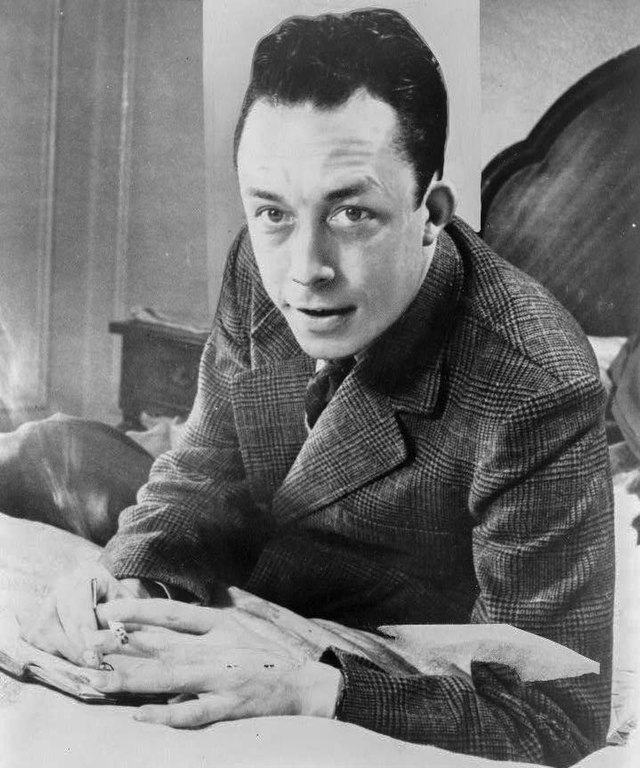
Albert Camus, born on November 7, 1913, in Mondovi, Algeria (now Dréan), is one of the most influential writers and philosophers of the 20th century. His works, characterized by their deep exploration of existential themes, have left an indelible mark on literature and philosophy. Camus was awarded the Nobel Prize in Literature in 1957, a recognition of his contributions to modern thought and his unique literary voice. This article delves into the life, fame, and enduring legacy of Albert Camus, providing detailed insights and exploring the nuances of his work and influence.
Early Life and Education
Albert Camus was born into a humble family in Algeria, a French colony at the time. His father, a supplier of grapes to local wineries, died in the Battle of the Marne during World War I when Camus was just a year old. This left Camus to be raised by his mother and grandmother, with the latter playing a particularly strict role in his upbringing. Despite the challenges of growing up in a single-parent household, Camus excelled academically, thanks in part to the support of his schoolteachers.
One of the most significant influences in his early life was his teacher Jean Grenier, who encouraged him to pursue higher education. Camus won a scholarship to the University of Algiers, where he studied philosophy. However, his academic journey was disrupted by a diagnosis of tuberculosis, a disease that would affect him throughout his life. The illness forced him to take his exams as an external candidate, but he eventually graduated with a degree in philosophy in 1936.
The Beginnings of a Literary Career
Camus’s early career was shaped by his involvement in journalism and his growing interest in political philosophy. In 1934, he joined the Communist Party, motivated more by a response to the Spanish Civil War than by a deep commitment to Marxist ideology. His alignment with the communists was short-lived, as he quickly became disillusioned with the party’s dogmatic approach and its inability to achieve true unity among people.
His first marriage, to Simone Hie in 1934, also ended quickly due to her addiction to prescription drugs. This personal turmoil did not deter Camus from pursuing his intellectual interests. He began working for various local newspapers in Algeria, but his outspoken criticism of the colonial government led to his dismissal. This marked the beginning of Camus’s lifelong commitment to speaking out against injustice, regardless of the personal cost.
World War II and the Resistance
In 1940, Camus moved to France, where he continued his journalistic career, writing for Paris-Soir and other publications. These were the years of Nazi occupation, and Camus’s experience during this period had a profound impact on his philosophical development. Initially an observer, Camus soon became an active member of the French Resistance, joining the underground movement and writing for the clandestine newspaper Combat. His work during this time was characterized by a passionate denunciation of totalitarianism and a defense of human dignity.
Camus’s involvement in the Resistance also brought him into contact with other intellectuals, including Jean-Paul Sartre. Although they collaborated on various projects during the war, their relationship would later become strained due to ideological differences.
Major Literary Works
Albert Camus’s literary output is vast, spanning novels, essays, and plays. His works often grapple with the themes of absurdity, existentialism, and rebellion. Among his most famous novels is The Stranger (L’Étranger), published in 1942, which explores the dispassionate existence of its protagonist, Meursault, and his subsequent confrontation with the absurdity of life.
Another significant work is The Plague (La Peste), published in 1947, which uses the allegory of a plague sweeping through a town to explore themes of suffering, solidarity, and the human condition. The novel is often interpreted as a reflection on the Nazi occupation of France and the moral choices individuals must make in times of crisis.
Camus’s 1951 essay The Rebel (L’Homme révolté) further developed his philosophical ideas, particularly his critique of totalitarian regimes and his belief in the importance of personal and collective rebellion against oppression. This work led to a public break with Sartre, as it criticized the Marxist ideology that Sartre had come to embrace.
In addition to his novels and essays, Camus was also a prolific playwright. His plays, such as Caligula (1944) and The Misunderstanding (1944), continue to be performed around the world, contributing to his reputation as a master of multiple literary forms.
The Nobel Prize and Later Life
In 1957, at the age of 44, Albert Camus was awarded the Nobel Prize in Literature, becoming one of the youngest recipients of the prestigious award. The Nobel Committee recognized Camus for his “important literary production, which with clear-sighted earnestness illuminates the problems of the human conscience in our time.” This honor cemented his status as one of the leading intellectuals of his era.
Despite this recognition, Camus continued to grapple with the complexities of human existence and the challenges of living in a world marked by absurdity and conflict. He remained committed to his ideals, refusing to align himself with any particular ideology or political movement. This independence often put him at odds with his contemporaries, but it also allowed him to maintain a consistent moral and philosophical stance.
Death and Legacy
Tragically, Albert Camus’s life was cut short on January 4, 1960, when he died in a car accident near the town of Villeblevin, France. Ironically, Camus had previously expressed his belief that dying in a car accident would be the most absurd way to end a life, and at the time of his death, he had an unused train ticket in his pocket, suggesting that he had considered taking the train instead.
Camus’s death at the age of 46 deprived the world of one of its most profound and original thinkers. However, his legacy lives on through his writings, which continue to inspire and challenge readers around the world. His exploration of the absurd, his advocacy for human dignity, and his commitment to intellectual honesty have made him a timeless figure in both literature and philosophy.
The Philosophy of Absurdism
At the heart of Camus’s work is the concept of the absurd, a philosophical idea that life is inherently meaningless, and that the human desire for order and meaning is ultimately futile. This concept is most famously articulated in his 1942 essay The Myth of Sisyphus, in which Camus compares the human condition to that of the Greek mythological figure Sisyphus, who is condemned to roll a boulder up a hill only for it to roll back down each time he reaches the top.
For Camus, the recognition of the absurd is not a cause for despair but a call to embrace life fully, with all its inherent contradictions and lack of meaning. He advocates for a life lived with passion and integrity, where individuals create their own meaning through their actions and relationships with others.
This philosophy of absurdism has resonated with readers and thinkers across generations, influencing a wide range of disciplines, from literature and art to psychology and political theory. Camus’s insistence on the importance of personal freedom and responsibility continues to inspire those who seek to live authentically in an often confusing and chaotic world.
Camus and Existentialism
Although often associated with existentialism, Albert Camus himself rejected the label, distancing his ideas from those of existentialist thinkers like Jean-Paul Sartre. While both Camus and Sartre explored themes of freedom, alienation, and the human condition, Camus’s focus on the absurd set him apart from the existentialist tradition.
Unlike Sartre, who emphasized the role of individual choice in creating meaning, Camus believed that the absurd condition of life rendered such efforts ultimately futile. However, he did not advocate for nihilism; instead, he urged individuals to confront the absurd with courage and to find meaning in the struggle itself.
This distinction between Camus’s absurdism and Sartre’s existentialism highlights the uniqueness of Camus’s thought and his contribution to 20th-century philosophy. His works continue to be studied for their profound insights into the human experience and their challenge to traditional philosophical categories.
The Enduring Appeal of Camus
Albert Camus’s works have maintained their relevance and appeal for over half a century, and his influence shows no signs of waning. His exploration of the absurd, his commitment to human dignity, and his critique of totalitarianism resonate with readers and thinkers in an age marked by existential uncertainty and political turmoil.
In recent years, there has been a renewed interest in Camus’s ideas, particularly in the context of contemporary issues such as the rise of authoritarianism, the search for meaning in a post-religious world, and the ongoing struggle for human rights. His works offer valuable insights into these challenges, reminding us of the importance of intellectual and moral integrity in the face of adversity.
Albert Camus remains a towering figure in literature and philosophy, whose legacy continues to inspire and challenge us to think deeply about the human condition and our place in the world. His life and work are a testament to the power of ideas to shape our understanding of ourselves and the world around us, and his influence will undoubtedly continue to be felt for generations to come.


