
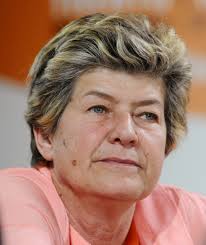
Susanna Camusso is a prominent figure in Italian labor and political history, known for her long-standing commitment to workers’ rights and her significant role within Italy’s largest trade union, the Confederazione Generale Italiana del Lavoro (CGIL). Born on August 14, 1955, in Milan, Camusso has spent over four decades advocating for the rights of workers across various sectors. Her journey from a young student activist to becoming the first woman to lead the CGIL is a testament to her determination, resilience, and dedication to social justice. This article delves into the life, career, and impact of Susanna Camusso, offering insights into her contributions to labor rights and her influence on Italian society.
Early Life and Education
Susanna Camusso was born into a family that valued education and intellectual engagement. Growing up in Milan, a city known for its industrial base and strong labor movement, Camusso was exposed to the dynamics of workers’ rights and social justice from an early age. She pursued a degree in Ancient Literature at the University of Milan, a choice that reflected her deep interest in history and culture. However, her academic pursuits were soon overshadowed by her growing involvement in the labor movement.
At the age of 20, while still a university student, Camusso began her involvement in union activities. She was particularly focused on issues related to the right to education and became involved with the Federazione Lavoratori Metalmeccanici (FLM), the Federation of Metalworkers, in Milan. This early exposure to the challenges faced by workers, especially in the metalworking industry, shaped her future career and ignited her passion for labor rights.
Rise in the Labor Movement
Camusso’s dedication to the labor movement quickly propelled her into leadership roles. In 1977, at the age of 22, she became a local leader for the FIOM (Federazione Impiegati Operai Metallurgici), the Federation of Metalworkers’ Employees and Workers. Her work with FIOM involved addressing the concerns of workers in the automotive and steel industries, two critical sectors in Italy’s economy. Her ability to navigate the complexities of these industries and her commitment to improving the lives of workers earned her respect within the union.
Over the next two decades, Camusso continued to rise through the ranks of FIOM, eventually serving as a leader at both the regional and national levels. Her work during this period was characterized by her focus on protecting workers’ rights in an era of industrial change and economic challenges. She played a key role in negotiating labor agreements that aimed to secure better wages, working conditions, and job security for workers in the face of increasing globalization and technological advancements.
Leadership in the CGIL
Camusso’s leadership abilities and deep understanding of labor issues led to her appointment as the regional secretary of FLAI (Federazione Lavoratori Agro Industria), the Federation of Agro-Industrial Workers, in the early 2000s. Her work with FLAI involved advocating for the rights of workers in the agricultural and food processing industries, sectors that often faced precarious working conditions and low wages.
In 2008, Camusso took a significant step in her career when she was elected to the National Secretariat of the CGIL, Italy’s largest trade union. In this role, she was responsible for overseeing various sectors, including production policies, cooperation, craftsmanship, and agriculture. Her ability to manage such diverse areas demonstrated her versatility and deep knowledge of labor issues across different industries.
In June 2010, Camusso was elected as the Deputy Secretary General of the CGIL, a position that placed her in charge of coordinating the union’s cross-departmental work. Her effectiveness in this role soon led to her election as the Secretary General of the CGIL in November 2010, succeeding Guglielmo Epifani. Camusso made history as the first woman to lead the CGIL, a significant achievement in a country where labor unions had traditionally been dominated by men.
Achievements as Secretary General
As the leader of the CGIL, Susanna Camusso faced the daunting task of guiding the union through a period of economic turmoil and political change. Italy, like many other European countries, was grappling with the effects of the global financial crisis, which had led to high unemployment rates, austerity measures, and widespread social unrest.
Camusso’s tenure as Secretary General was marked by her fierce opposition to austerity policies that she believed disproportionately affected workers and the most vulnerable in society. She was a vocal critic of government measures that aimed to reduce public spending by cutting jobs, wages, and social services. Under her leadership, the CGIL organized numerous strikes and protests against these policies, advocating instead for measures that would protect jobs, stimulate economic growth, and promote social justice.
One of Camusso’s significant achievements was her role in the campaign against the “Jobs Act” introduced by Prime Minister Matteo Renzi’s government in 2014. The legislation aimed to reform Italy’s labor market by making it easier for employers to hire and fire workers. Camusso and the CGIL argued that the reforms would undermine job security and workers’ rights, particularly for young and temporary workers. The CGIL’s opposition to the Jobs Act included organizing large-scale demonstrations and collecting signatures for a referendum to repeal key parts of the law.
Despite facing criticism from both the government and some sectors of the business community, Camusso remained steadfast in her defense of workers’ rights. Her leadership style was characterized by her willingness to engage in tough negotiations and her commitment to ensuring that the voices of workers were heard in the corridors of power.
Advocacy for Civil Rights
In addition to her work on labor issues, Susanna Camusso has been a strong advocate for civil rights and gender equality. Throughout her career, she has been involved in various initiatives aimed at promoting women’s rights, both within the labor movement and in broader society.
Camusso is a prominent member of the women’s movement in Italy and has been a vocal supporter of campaigns against gender-based violence and discrimination. She was one of the founders of the “Usciamo dal Silenzio” (Let’s Break the Silence) movement, which sought to bring attention to issues such as domestic violence, sexual harassment, and the underrepresentation of women in leadership positions.
As the leader of the CGIL, Camusso also championed policies aimed at achieving gender equality in the workplace. She advocated for measures to close the gender pay gap, improve maternity leave provisions, and promote women’s participation in traditionally male-dominated industries. Her commitment to these issues was reflected in the CGIL’s efforts to address the unique challenges faced by women workers, particularly those in precarious or low-paying jobs.
Camusso’s advocacy extended to the LGBTQ+ community as well. She has been a staunch supporter of LGBTQ+ rights, recognizing the importance of creating inclusive workplaces where all individuals, regardless of their sexual orientation or gender identity, are treated with dignity and respect. Her support for these causes has helped to broaden the scope of the labor movement in Italy, ensuring that it addresses the needs and rights of all workers, not just those in traditional industries.
Legacy and Impact
Susanna Camusso stepped down as Secretary General of the CGIL in 2019, passing the baton to her successor, Maurizio Landini. Her tenure as the first female leader of Italy’s largest trade union left a lasting impact on the labor movement and on Italian society as a whole.
Camusso’s legacy is one of principled leadership, characterized by her unwavering commitment to social justice and her belief in the power of collective action to bring about positive change. She is widely respected for her ability to navigate the complexities of labor relations, her advocacy for the rights of marginalized groups, and her role in defending workers’ rights during some of the most challenging times in recent history.
Beyond her contributions to the labor movement, Camusso’s work has had a broader influence on the discourse around social justice and civil rights in Italy. Her advocacy for gender equality, LGBTQ+ rights, and the protection of vulnerable workers has helped to shape the national conversation on these issues, inspiring others to continue the fight for a more just and equitable society.
Current Endeavors and Future Prospects
Even after stepping down from her leadership role at the CGIL, Susanna Camusso has continued to be an influential figure in Italian politics and civil society. She remains active in various advocacy groups and continues to speak out on issues related to labor rights, social justice, and gender equality.
Camusso’s experience and expertise have also made her a sought-after commentator on labor issues in Italy and beyond. She frequently contributes to discussions on the future of work, the impact of technology on employment, and the challenges posed by globalization and economic inequality.
As Italy and the world face new and evolving challenges, from the rise of the gig economy to the ongoing struggle for workers’ rights in a rapidly changing global landscape, Susanna Camusso’s insights and leadership will undoubtedly continue to be valuable. Her career serves as a powerful reminder of the importance of standing up for what is right, even in the face of adversity, and of the enduring power of solidarity in the fight for social justice.
In conclusion, Susanna Camusso’s life and career are emblematic of a deep commitment to labor rights, civil rights, and social justice. Her leadership in the CGIL, her advocacy for gender equality, and her support for marginalized communities have left an indelible mark on Italian society. As she continues to engage with the issues of our time, Camusso remains a beacon of hope and a source of inspiration for those who seek to create a fairer and more just world.


