
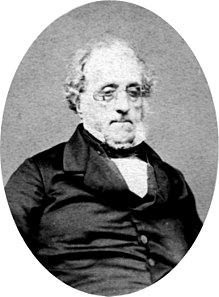
Gino Capponi, born on September 13, 1792, in Florence, was a prominent Italian nobleman, intellectual, and politician whose life spanned significant historical transformations in Italy. His influence on culture, politics, and education marked him as one of the most esteemed figures of his time. Capponi’s life was a blend of noble heritage, scholarly pursuits, and a deep commitment to the political and cultural reawakening of Italy.
This article delves into the life of Gino Capponi, exploring his early years, rise to prominence, and lasting legacy.
Early Life and Noble Heritage
Gino Capponi was born into an ancient and noble Florentine family, whose roots date back to the 13th century. His family had a significant influence in Florence, with ancestors who served as priors and gonfaloniers—positions of considerable power within the city’s republican government. The Capponi family’s wealth and influence were largely built on commerce and banking, industries that had elevated their status over centuries.
Capponi’s lineage traced back to Girolamo Capponi, who died in 1526. This noble heritage set the stage for Gino’s future roles in both the cultural and political spheres of Italy.
Education and Early Influences
As a young man, Gino Capponi was provided with an education befitting his noble status. His intellectual curiosity was evident from a young age, and he immersed himself in the study of literature, history, and politics. The educational environment in which Capponi was raised allowed him to engage with some of the most important thinkers and writers of the time.
In 1816, after completing his studies, Capponi embarked on a grand tour across Italy and Europe, a rite of passage for young men of his social standing. This experience broadened his perspective, exposing him to the political and cultural movements that were reshaping Europe. Upon his return to Florence in 1820, Capponi was ready to apply his knowledge and insights to his homeland.
Rise to Fame: Cultural and Political Contributions
Capponi’s return to Florence marked the beginning of his active engagement in Italy’s cultural and political life. In 1821, he became the inspiration behind “L’Antologia,” a cultural and political journal founded by his close friend Giovan Pietro Vieusseux. The publication quickly became a platform for liberal ideas and intellectual discourse, reflecting Capponi’s own moderate liberal views.
Capponi’s collaboration with Vieusseux was just the beginning. In 1827, he co-founded “Il giornale agrario toscano,” a journal focused on agricultural issues in Tuscany, alongside “Guida dell’educatore” in 1836, and the “Archivio storico italiano” in 1842. These publications played a crucial role in shaping the intellectual and cultural landscape of Italy during a period of significant political change.
Capponi’s connections with prominent literary and cultural figures of the time further elevated his standing. He maintained friendships with luminaries such as Alessandro Manzoni, Giacomo Leopardi, and Vincenzo Gioberti. These relationships not only influenced his own work but also contributed to the broader cultural revival in Italy during the 19th century.
The Political Dimension: Advocacy and Leadership
While Capponi was deeply involved in cultural pursuits, his political activities were equally significant. A committed patriot, Capponi’s moderate liberalism drove him to engage in the political restructuring of Italy. In 1848, a year marked by revolutions across Europe, Capponi briefly served as the President of the Council, where he contributed to the reform of the State Council and the Senate.
Despite losing his sight in 1854, Capponi remained an influential figure in Italian politics. His blindness did not hinder his commitment to the cause of Italian unification. In 1858, he actively supported the annexation of Tuscany to the Kingdom of Piedmont, a critical step in the unification process.
In 1860, Capponi was appointed as a senator of the Kingdom of Sardinia, a position he held until 1864. His role as a senator placed him at the heart of the political transformation that led to the formation of the Kingdom of Italy. Capponi’s political career was marked by his ability to balance his noble heritage with a genuine commitment to the liberal ideals of his time.
Literary Contributions and Intellectual Legacy
Capponi’s literary contributions are among his most enduring legacies. His works reflect his deep intellectual engagement with the cultural and political issues of his time. In 1841, he began writing extensively, producing works that spanned various subjects, from pedagogy to history.
One of his most notable works is the “Frammento sull’educazione,” published in 1845, a treatise that showcased his progressive views on education. Capponi believed in the power of education as a tool for societal improvement, a reflection of his broader liberal philosophy.
His historical works, such as “Sulla dominazione dei longobardi in Italia” (1844 and 1859) and “Storia della Repubblica di Firenze” (1875), further solidified his reputation as a historian. These works not only provided historical insights but also served as a means of promoting national identity during a time of political upheaval.
Personal Life and Final Years
Gino Capponi’s personal life was marked by his deep commitment to his family and his country. Despite the challenges he faced, including his blindness, Capponi remained a steadfast figure in both the cultural and political spheres until his death.
Capponi passed away on February 3, 1876, in Florence at the age of 84. His death marked the end of an era, but his contributions to Italian culture and politics left an indelible mark on the nation’s history.
Gino Capponi’s Enduring Legacy
Gino Capponi’s life is a testament to the power of intellectual and political engagement in shaping a nation’s future. His contributions to Italy’s cultural and political life were profound, influencing generations of thinkers, writers, and politicians.
Capponi’s legacy continues to be felt today, particularly in the fields of education and history. His works remain a source of inspiration for those who study the cultural and political history of Italy during the 19th century. Moreover, his commitment to the liberal ideals of moderation and national unity offers valuable lessons in a time of political polarization.
In conclusion, Gino Capponi was more than just a nobleman; he was a visionary who understood the importance of culture, education, and politics in shaping the future of his country. His life and work exemplify the rich tapestry of Italian history, where intellectual rigor and political activism combine to inspire future generations.


