
Introduction
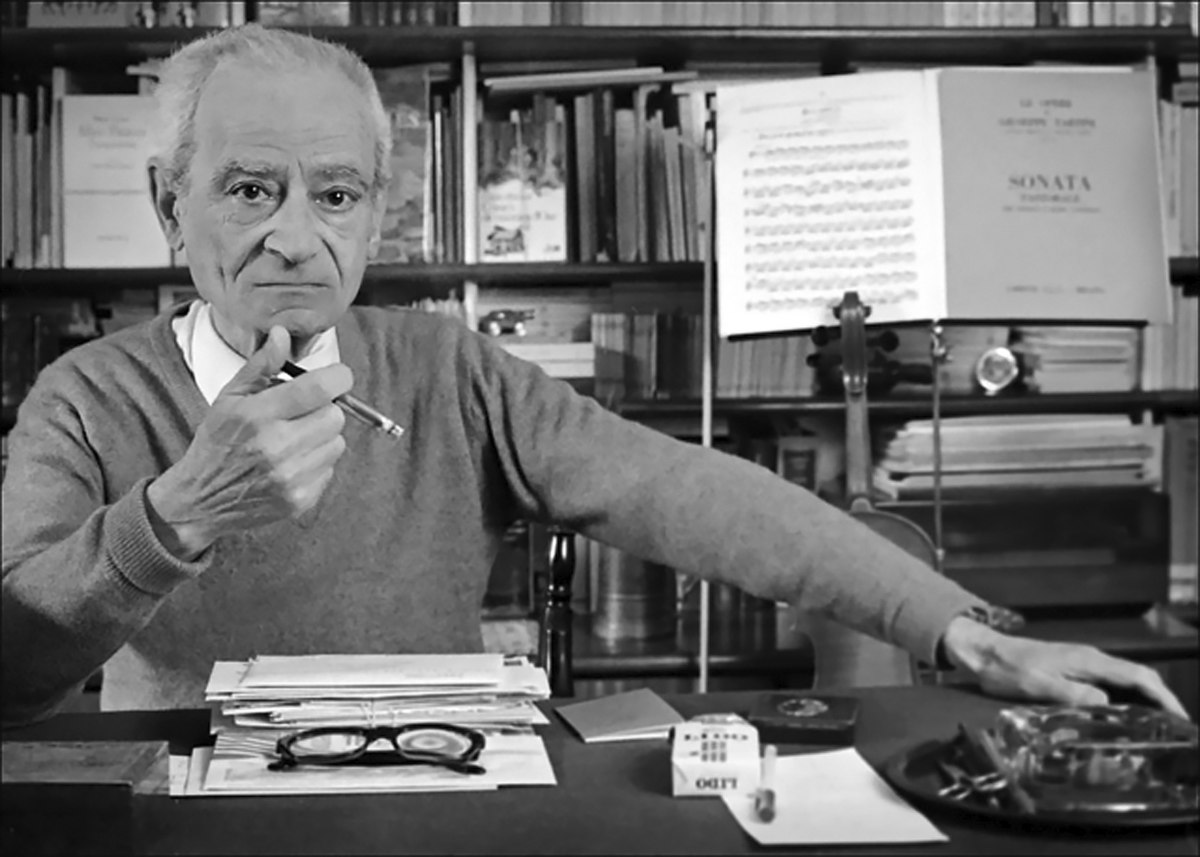
Giorgio Caproni is a name that stands tall among the most influential Italian poets of the 20th century. Born on January 7, 1912, in Livorno, Italy, Caproni’s work reflects a profound engagement with the human condition, blending linguistic precision with deep emotional resonance. His poetry, often characterized by a synthesis of the colloquial and the refined, captures the complexities of everyday life while reaching for the metaphysical. This article delves into Caproni’s life, tracing his journey from humble beginnings to becoming one of Italy’s most revered literary figures. It will explore his literary achievements, the historical context that shaped his work, and his enduring legacy in the world of poetry.
Early Life and Education
Giorgio Caproni was born into a modest family; his father, Attilio Caproni, worked as an accountant, while his mother, Anna Picchi, was a seamstress. Despite their limited means, Caproni’s parents instilled in him a love for literature from a young age. His father’s library introduced him to the world of books, and it was here that Caproni discovered an anthology of early Italian poets, including the Sicilian and Tuscan poets, which ignited his passion for poetry. At the tender age of seven, Caproni also delved into Dante Alighieri’s “Divine Comedy,” a work that would profoundly influence his later poetic output, particularly in collections such as “Il seme del piangere” and “Il muro della terra.”
The outbreak of World War I marked a tumultuous period for the young Caproni. His father was called to serve in the military, leaving the family to endure financial hardships. These early experiences of war, displacement, and economic struggle left an indelible mark on Caproni’s psyche, themes that would later surface in his poetry.
In 1922, a significant event in Caproni’s life occurred—the family relocated to Genoa, a city that Caproni would later refer to as his “true city.” This move had a profound impact on him, both personally and creatively. Genoa, with its rich cultural heritage and vibrant literary scene, became a source of inspiration for the young poet.
The Formative Years and Early Literary Pursuits
After completing his middle school education, Caproni enrolled at the “Giuseppe Verdi” Music Institute, where he studied the violin. However, by the age of eighteen, he had abandoned his aspirations of becoming a musician, choosing instead to focus on literature. Caproni briefly attended the University of Turin, where he enrolled in a teacher training program, but he soon dropped out to pursue his passion for writing.
It was during these formative years that Caproni began experimenting with poetry. He was deeply influenced by the works of contemporary poets such as Eugenio Montale, Giuseppe Ungaretti, and Cesare Pavese. Caproni was particularly struck by Montale’s “Ossi di seppia,” which he claimed became a permanent part of his being. Despite his early attempts at poetry, Caproni was often dissatisfied with his work, frequently discarding his poems in frustration.
In 1931, Caproni submitted some of his early poems to the Genoese literary magazine “Circolo,” but they were rejected by the editor, Adriano Grande, who encouraged him to be patient, implying that poetry might not be his calling. Undeterred, Caproni continued to write and, in 1933, he published his first poems, “Vespro” and “Prima luce,” in two literary journals. During his military service in Sanremo, he forged friendships with other literary figures, including Giorgio Bassani, Fidia Gambetti, and Giovanni Battista Vicari. These relationships helped Caproni establish himself in the Italian literary community, and he began contributing reviews and literary critiques to various magazines and newspapers.
The Emergence of a Poet
The year 1936 was pivotal for Caproni, both personally and professionally. His fiancée, Olga Franzoni, tragically passed away due to septicemia, an event that left Caproni devastated. This personal loss became the catalyst for his first major poetic work, “Come un’allegoria,” a collection of poems published in Genoa by Emiliano degli Orfini. The pain and sorrow of Olga’s death are palpable in Caproni’s verses, particularly in poems such as “Sonetti dell’anniversario” and “Il gelo della mattina.”
In 1938, Caproni published “Ballo a Fontanigorda,” another significant collection of poems, and that same year, he married Lina Rettagliata. The couple briefly moved to Rome, but their stay was short-lived, lasting only four months. In 1939, Caproni was drafted into the Italian army, and shortly afterward, his first child, Silvana, was born.
As World War II loomed, Caproni found himself sent to the front lines, first in the Maritime Alps and later in Veneto. The war years were a time of great personal and creative upheaval for Caproni. In 1943, he published “Cronistoria,” a collection that marked his first major publication with a national publisher, Vallecchi, in Florence.
The war had a profound impact on Caproni’s life and work. From September 8, 1943, until the Liberation in 1945, Caproni spent nineteen months in the Trebbia Valley, in the heart of partisan territory. These experiences deepened his sense of the fragility of human existence and the complexities of morality, themes that would resonate throughout his later poetry.
Post-War Life and Literary Achievements
After the war, Caproni returned to Rome, where he would live until 1973. During this time, he worked as an elementary school teacher, a profession he pursued alongside his literary endeavors. Rome became a hub of intellectual activity for Caproni, who formed close relationships with prominent writers such as Carlo Cassola, Franco Fortini, Vasco Pratolini, and Pier Paolo Pasolini. These connections enriched Caproni’s literary output and provided him with a supportive community of like-minded individuals.
Caproni’s post-war poetry reflects his engagement with the existential questions raised by the war. In 1948, he joined the Italian Socialist Party and participated in the first “World Congress of Intellectuals for Peace” in Warsaw. His political involvement during this period was a testament to his commitment to social justice and his belief in the power of art to effect change.
In 1949, Caproni returned to his hometown of Livorno, where he rediscovered his love for the city of his birth. This rekindled connection with Livorno is evident in his later works, where the city often serves as a backdrop for his exploration of memory, identity, and loss.
Throughout the 1950s, Caproni’s literary career flourished. In 1951, he translated Marcel Proust’s “Time Regained,” a monumental task that further cemented his reputation as a leading figure in Italian literature. His poetry continued to gain recognition, and in 1952, he won the prestigious Viareggio Prize for “Stanze della funicolare.” Seven years later, he published “Il passaggio di Enea,” another significant collection, and in 1959, he won the Viareggio Prize again for “Il seme del piangere.”
The Later Years: A Poetic Legacy
The 1960s and 1970s were a period of intense literary activity for Caproni. During these years, he published several important collections, including “Congedo del viaggiatore cerimonioso e altre prosopopee” (1965), “Il muro della terra” (1975), and “Il franco cacciatore” (1982). His poetry from this period is marked by a deepening of his existential concerns, as well as a stylistic refinement that blends popular language with high culture.
In 1976, Caproni’s first major anthology, “Poesie,” was published, compiling his work from 1932 to 1978. This collection solidified his place as one of the foremost poets of his generation. The 1980s saw the publication of more of Caproni’s work, culminating in the release of “Il conte di Kevenhuller” in 1986, a collection that further explored themes of alienation, loss, and the search for meaning in an increasingly fragmented world.
Caproni’s work was celebrated not only for its thematic depth but also for its linguistic innovation. His poetry, which Garzanti’s “Enciclopedia della Letteratura” described as combining “popular language and high culture in an anxious and dissonant syntax,” captures the tension between the mundane and the sublime. His “domestic epic” elevates the everyday experiences of life, transforming them into something universal and profound.
The Final Years and Posthumous Recognition
Giorgio Caproni passed away on January 22, 1990, in his home in Rome. His death marked the end of a prolific and influential career, but his work continued to resonate with readers and critics alike. In 1991, the collection “Res amissa” was published posthumously, featuring poems that Caproni had been working on up until his death. One of the most famous poems from this collection, “Versicoli quasi ecologici,” was later included in the Italian high school final exam in 2017, a testament to Caproni’s enduring relevance in Italian culture.
Caproni’s legacy is one of profound introspection, linguistic innovation, and a relentless exploration of the human condition. His work remains a touchstone for those seeking to understand the complexities of life, memory, and identity. The themes he explored—war, loss, love, and the search for meaning—continue to resonate with readers, making him a timeless figure in the world of poetry.
Conclusion
Giorgio Caproni’s life and work offer a rich tapestry of experiences and insights that continue to inspire and challenge readers today. From his early years in Livorno to his later life in Rome, Caproni’s poetry reflects a deep engagement with the world around him, capturing both its beauty and its pain. His ability to blend the personal with the universal, the colloquial with the refined, has left an indelible mark on Italian literature.
As one of the most significant poets of the 20th century, Caproni’s work invites us to contemplate the human experience in all its complexity. His legacy endures, not only in the pages of his poetry but also in the hearts and minds of those who continue to find solace and inspiration in his words.


