
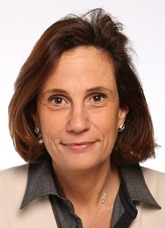
Ilaria Capua, born on April 21, 1966, in Rome, Italy, is a distinguished virologist whose contributions to science have garnered both national and international acclaim. Her work has been particularly influential in the fields of veterinary medicine and human health, with a focus on viral diseases, including influenza and more recently, COVID-19. Beyond her scientific achievements, Capua has also ventured into politics, becoming a significant figure in public health policy. This article explores Ilaria Capua’s life, career, and impact, providing a comprehensive overview of her contributions to science and society.
Early Life and Academic Formation
Ilaria Capua was born into an intellectually stimulating environment, which played a crucial role in shaping her future career in science. Her early education laid a strong foundation for her academic pursuits, and she demonstrated a keen interest in the sciences from a young age. Capua’s passion for veterinary medicine led her to enroll at the University of Perugia, where she earned her degree in Veterinary Medicine with honors in 1989.
Determined to further her expertise, Capua pursued specialized studies in Animal Health and Hygiene at the University of Pisa, where she graduated in 1991. Her academic journey did not stop there; she continued her studies, eventually earning a Ph.D. from the University of Padua. These qualifications equipped her with the knowledge and skills necessary to embark on a groundbreaking career in virology.
Groundbreaking Work in Virology
Ilaria Capua’s contributions to virology, particularly in the study of influenza viruses, have had a profound impact on global health. In the early 2000s, she developed the “Differentiating Vaccinated from Infected Animals” (DIVA) strategy, a pioneering approach to combating avian influenza. The DIVA strategy enables the differentiation between animals that have been vaccinated and those that have been infected with the virus. This innovation revolutionized the way outbreaks of avian influenza were managed, allowing for more effective vaccination campaigns and better control of the disease.
One of Capua’s most notable contributions to science occurred in 2006 when she made the bold decision to publicly share the genetic sequence of the H5N1 avian influenza virus. At the time, the prevailing practice was to keep such data proprietary, accessible only to a select group of researchers. Capua, however, believed that open access to this information was crucial for the global scientific community to effectively combat the virus. Her decision to release the data into the public domain was a groundbreaking move that challenged the status quo and promoted the concept of “open-source science.”
This act of transparency earned Capua international recognition and highlighted the importance of collaboration in scientific research. Her efforts were lauded by the global scientific community, and she was subsequently named one of the “Revolutionary Minds” by the magazine Seed. In addition, Scientific American included her in its list of the world’s top 50 scientists, cementing her reputation as a leading figure in virology.
Challenges and Controversies in Politics
Ilaria Capua’s transition from science to politics was marked by both achievements and challenges. In 2013, she entered the political arena as a candidate for the Italian Parliament. Running with the centrist party Scelta Civica (Civic Choice), founded by former Prime Minister Mario Monti, Capua was elected to the Chamber of Deputies, representing the Veneto 1 district. Her scientific background made her an ideal candidate for addressing public health issues, and she quickly rose to prominence within the Italian political landscape.
During her time in Parliament, Capua served as Vice President of the XII Commission (Social Affairs) from May 2013 until July 2015. In this role, she worked on policies related to health and social welfare, drawing on her expertise in virology to inform her legislative efforts. However, her political career was abruptly interrupted by a legal controversy that would have a lasting impact on her life.
In 2014, Capua was accused of being involved in an illicit scheme to traffic viruses for profit, a charge that stemmed from allegations of corruption, abuse of office, and illegal trafficking. The accusations were based on a misinterpretation of her scientific work and were later proven to be entirely unfounded. Despite the eventual dismissal of all charges in 2016, the ordeal took a significant toll on Capua, both personally and professionally.
The legal battle and the intense media scrutiny that accompanied it led Capua to resign from her parliamentary seat in September 2016. Disillusioned by the experience, she decided to leave Italy and relocate to the United States, where she could resume her scientific career without the burden of the false accusations that had plagued her in her home country.
A New Chapter in the United States
Upon moving to the United States, Ilaria Capua took on a leadership role at the Emerging Pathogens Institute at the University of Florida. As the head of the institute’s department, she continued her research on emerging infectious diseases, focusing on the intersection of human, animal, and environmental health. Capua’s work in the United States has been instrumental in advancing the “One Health” approach, a holistic perspective that emphasizes the interconnectedness of human, animal, and environmental health.
In addition to her research, Capua became the director of the One Health Center of Excellence at the University of Florida. Under her leadership, the center has become a hub for interdisciplinary research, promoting collaboration among scientists, veterinarians, public health experts, and environmentalists. The One Health approach, which Capua has long championed, is increasingly recognized as essential for addressing complex global health challenges, including pandemics, antimicrobial resistance, and environmental degradation.
The Impact of COVID-19 and Public Engagement
The COVID-19 pandemic brought Ilaria Capua back into the spotlight, as her expertise in virology became more relevant than ever. Throughout the pandemic, Capua has been a vocal advocate for science-based policies and public health measures. She has frequently appeared in the media, providing expert analysis and explanations to help the public understand the complexities of the virus and the importance of vaccination and other preventive measures.
Capua’s ability to communicate complex scientific concepts in an accessible and engaging manner has made her a trusted voice during the pandemic. Her efforts to educate the public about COVID-19 have been widely praised, and she has become a leading figure in the global fight against misinformation and pseudoscience.
In addition to her media appearances, Capua has authored several books aimed at demystifying science and making it more accessible to the general public. Her 2012 book I virus non aspettano (Viruses Don’t Wait) provides insights into her experiences as a virologist and the challenges of combating infectious diseases. Following her legal ordeal, she published Io, trafficante di virus (I, Virus Trafficker) in 2017, a memoir that details her scientific journey and the miscarriage of justice she endured. In 2019, she released Salute circolare (Circular Health), which advocates for a revolutionary approach to health that integrates human, animal, and environmental well-being.
In 2021, in response to the ongoing pandemic, Capua published Il virus spiegato ai ragazzi (The Virus Explained to Kids), a book designed to help younger audiences understand the nature of viruses and the importance of public health measures. This work reflects her commitment to education and her belief in the power of knowledge to drive positive change.
Personal Life and Legacy
Ilaria Capua’s personal life is marked by her dedication to both her family and her career. She is married to Richard John William Currie, a Scottish manager in the veterinary field, and the couple has a daughter born in 2004. Despite the challenges she has faced, including the legal controversy that nearly derailed her career, Capua has remained resilient and focused on her work. Her experiences have shaped her into a strong advocate for scientific integrity and transparency.
Capua’s contributions to science and public health extend far beyond her research. Her advocacy for open-source science, her promotion of the One Health approach, and her efforts to engage the public in scientific discourse have all had a lasting impact on the field of virology and beyond. As a trailblazer in her field, Capua has set a powerful example for future generations of scientists, showing that it is possible to challenge the status quo and make a difference on a global scale.
Conclusion
Ilaria Capua’s life and career are a testament to her unwavering commitment to science, public health, and education. From her pioneering work in virology to her advocacy for open-source science and the One Health approach, Capua has made significant contributions to the understanding and management of infectious diseases. Her resilience in the face of adversity, particularly during her legal ordeal, has only strengthened her resolve to continue her work and make a positive impact on the world.
As we look to the future, Ilaria Capua’s influence will undoubtedly continue to grow, particularly as the world grapples with ongoing and emerging health challenges. Her legacy as a scientist, educator, and public health advocate is secure, and her work will continue to inspire and guide future generations in the pursuit of knowledge and the betterment of global health.


