
Introduction
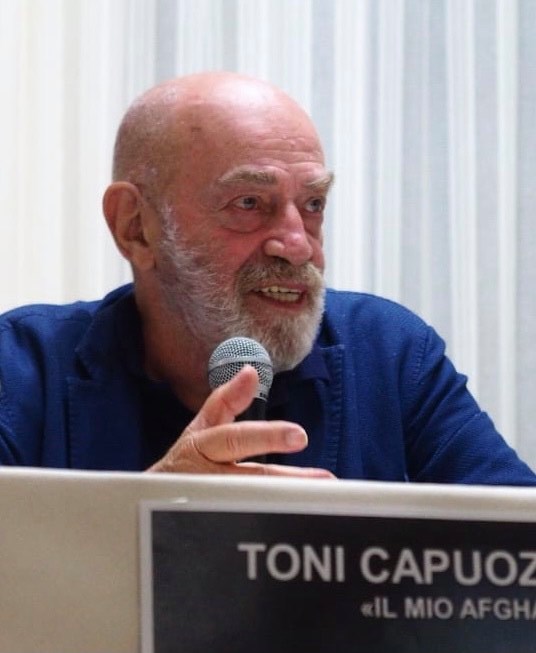
Toni Capuozzo is a name that resonates within the realm of journalism, particularly in Italy, where he has made significant contributions through his work as a journalist, television host, and author. Born on December 7, 1948, in Palmanova, a small town in Friuli Venezia Giulia, Italy, Capuozzo’s career spans several decades and includes notable achievements in various fields of media. This article delves into his life, exploring his rise to fame, career milestones, and personal experiences that have shaped him into the respected figure he is today.
Early Life and Education
Antonio “Toni” Capuozzo was born to a Triestine mother and a Neapolitan father who worked as a police officer. Growing up in Cervignano del Friuli, Capuozzo was exposed to a blend of cultural influences from both the north and south of Italy, which would later inform his worldview and journalistic style.
Capuozzo attended the prestigious “Paolo Diacono” High School in Cividale, where he earned his classical diploma. The 1960s were a period of social and political upheaval in Italy, and like many of his peers, Capuozzo became actively involved in the student protests of 1968. These experiences took him to Germany and France, further broadening his understanding of the world. After completing his high school education, he enrolled at the University of Trento, where he graduated with a degree in Sociology.
Early Career and the Beginnings of Journalism
Following his university studies, Capuozzo worked briefly as a factory worker in Marghera, near Venice. His passion for social justice led him to organize soldiers’ movements in Sicily, highlighting his early inclination towards activism and advocacy.
In 1979, Capuozzo began his career in journalism with the newspaper “Lotta Continua,” a publication associated with the Italian far-left movement of the same name. It was here that he formed a close friendship with Adriano Sofri, a prominent figure in the movement. During this time, Capuozzo focused on Latin American issues, and in the early 1980s, he secured an exclusive interview with the famed Argentine writer Jorge Luis Borges during the Falklands War.
This period was crucial for Capuozzo’s development as a journalist, as he honed his skills in investigative reporting and storytelling. His work caught the attention of other media outlets, leading to collaborations with “Epoca,” “Panorama Mese,” and “Reporter.” In 1983, he was awarded the “Premio Salone del Mare di Viareggio,” marking the first of many accolades he would receive throughout his career.
Transition to Television
Capuozzo’s transition from print journalism to television was a significant turning point in his career. He began working with Giovanni Minoli’s “Mixer,” a popular investigative journalism program, where he covered organized crime and the mafia. His work on this program earned him widespread recognition and established him as a credible and respected journalist in Italy.
In the early 1990s, Capuozzo became a correspondent for Mediaset’s news programs, focusing on international conflicts. His reports from war zones in the former Yugoslavia, Somalia, the Middle East, and Afghanistan were widely acclaimed for their depth and insight. His ability to convey the human side of these conflicts made him a trusted source of information for the Italian public.
In 1996, Capuozzo published his first book, “Il Giorno dopo la guerra” (“The Day After the War”), which reflected on the aftermath of various conflicts he had covered. The book was well-received and further solidified his reputation as an expert on international affairs. In 1999, he won the “Premio Saint Vincent” for a report on the tragic events of the Foibe massacres, and his coverage of the Kosovo conflict earned him the “Premio Speciale Ilaria Alpi,” named after the Italian journalist killed in Somalia.
The 2000s: Fame and Further Achievements
The 2000s were a period of continued success for Capuozzo. In 2001, he became the curator and host of “Terra!,” a weekly investigative program on Tg5, Mediaset’s flagship news program. His role as vice-director of Tg5 further increased his influence in Italian journalism.
Capuozzo’s work during this time earned him numerous awards, including the “Premio internazionale Targa d’oro della Pace” in Sarajevo in 2002, the “Premio Max David,” and several other prestigious honors. His ability to tackle complex and often controversial subjects with sensitivity and accuracy made “Terra!” a must-watch program for those interested in in-depth journalism.
One of the most poignant stories from Capuozzo’s career occurred in 2007 when he revealed that during the war in Sarajevo, he had rescued a seven-month-old boy who had lost a leg in a bombing and was orphaned. Capuozzo took the child into his care and raised him until he was five years old, highlighting his compassion and dedication to the victims of war.
In 2007, Capuozzo also published “Occhiaie di riguardo,” a collection of articles he had written for the newspaper “Il Foglio.” The book was another success, showcasing his ability to weave together personal insights with broader social and political commentary. Over the next few years, Capuozzo continued to receive accolades for his work, including the “Premio Oriana Fallaci” and the “Premio Maria Grazia Cutuli,” named after the Italian journalist killed in Afghanistan.
Expanding Horizons: Books and Theater
In addition to his work in television, Capuozzo expanded his horizons into writing and theater. In 2008, he published “Adios,” a book that earned him the “Premio Maria Grazia Cutuli” and several other literary awards. The book was praised for its exploration of the human cost of war and its reflection on the experiences of those who have lived through conflict.
Capuozzo’s foray into theater came in 2009 when he collaborated with musician Luigi Maieron and writer Mauro Corona to create the show “Tre uomini di parola” (“Three Men of Words”). The show, which raised funds for a hospital in Herat, Afghanistan, was a testament to Capuozzo’s commitment to humanitarian causes and his ability to connect with audiences on a personal level.
The 2010s: Continued Influence and Legacy
The 2010s saw Capuozzo continue to make an impact in journalism and beyond. In 2011, he staged another theater production, “Pateme tene cient’anni,” and received several awards, including the “Premio Ischia inviato speciale” and the “Premio Giorgio Lago.”
In 2012, Capuozzo published “Le guerre spiegate ai ragazzi” (“Wars Explained to Children”), a book aimed at helping young people understand the complexities of global conflicts. The book was well-received and demonstrated Capuozzo’s commitment to educating the next generation about the realities of war.
Capuozzo’s influence extended beyond his role at Tg5. After stepping down as vice-director in 2013, he continued to work as a freelance journalist, contributing to various Mediaset programs and maintaining a presence in the media through his column “Mezzi Toni” on Tgcom24.
Throughout his career, Capuozzo has been recognized for his contributions to journalism and his dedication to uncovering the truth. His work has earned him numerous awards and honors, including the “Premio Maurizio Laudi,” the “Premio Strillaerischia,” and the “Premio Paolo Diacono.”
Conclusion
Toni Capuozzo’s life and career are a testament to the power of journalism to inform, educate, and inspire. From his early days as a student activist to his role as a respected journalist and television host, Capuozzo has consistently demonstrated a commitment to truth and justice. His work has not only shaped the way Italians understand global conflicts but has also highlighted the human side of war, offering a voice to those who might otherwise go unheard.
As he continues to contribute to the field of journalism, Capuozzo’s legacy is assured. His dedication to his craft, his ability to convey complex issues with clarity and compassion, and his willingness to go beyond the headlines to find the human story behind the news make him a true giant in the world of journalism.


