
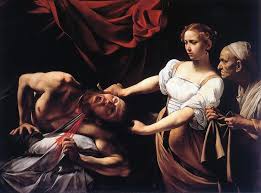
Michelangelo Merisi, better known as Caravaggio, is one of the most significant and controversial artists in the history of Western art. Born on September 29, 1571, in the small town of Caravaggio in Lombardy, Italy, his name has become synonymous with the dramatic, emotionally charged style of painting that defined the Baroque era. Caravaggio’s life and work were marked by both brilliance and turbulence, making him a compelling figure not only for art historians but also for those interested in the complex interplay between creativity and personal turmoil. This article explores the life, fame, and lasting impact of Caravaggio, offering detailed insights and historical context to better understand this enigmatic artist.
Early Life and Artistic Beginnings
Michelangelo Merisi was born into a relatively well-off family. His father, Fermo Merisi, was an architect employed by the powerful Sforza family, which provided the young Michelangelo with a certain level of social status and stability during his early years. However, this stability was short-lived. The plague of 1576 claimed the lives of several of his family members, including his father, leaving the young Merisi to navigate the world with limited guidance.
By 1584, at the age of 13, Caravaggio began his formal artistic training in Milan, where he was apprenticed to Simone Peterzano, a painter who had himself trained under the great Venetian master, Titian. This early education exposed Caravaggio to the techniques of the Renaissance, particularly the use of chiaroscuro (the contrast between light and dark), which would become a hallmark of his later work.
Caravaggio’s Move to Rome: The Road to Fame
In 1592, Caravaggio moved to Rome, a city that was the epicenter of the art world at the time. However, life in Rome was not immediately easy for the young artist. He found himself working for a variety of minor artists, painting backgrounds and still lifes—tasks that did not fully showcase his burgeoning talent. Despite these humble beginnings, Caravaggio’s fortunes began to change as his work caught the eye of influential patrons.
One of the pivotal moments in Caravaggio’s career came when he entered the household of Cardinal Francesco Maria del Monte. The cardinal was an influential figure in Rome, and his patronage provided Caravaggio with both financial support and access to the upper echelons of Roman society. It was under del Monte’s patronage that Caravaggio began to receive major commissions, including his famous series of paintings for the Contarelli Chapel in the Church of San Luigi dei Francesi.
The three paintings Caravaggio completed for the chapel—The Calling of Saint Matthew, The Martyrdom of Saint Matthew, and The Inspiration of Saint Matthew—are considered among his masterpieces. These works not only showcased his mastery of chiaroscuro but also his ability to imbue religious scenes with a raw, human emotion that was unprecedented in sacred art. The dramatic use of light and shadow, coupled with the intense realism of the figures, created a powerful impact on viewers and established Caravaggio as a leading artist of his time.
Artistic Style and Innovations
Caravaggio’s style was revolutionary for its time. While many of his contemporaries were still working within the idealized framework of the High Renaissance, Caravaggio broke with tradition by embracing naturalism and realism. He often used ordinary people as models for his religious scenes, bringing a gritty, relatable quality to his work that contrasted sharply with the polished, idealized figures found in the works of artists like Raphael.
This approach was not without controversy. Caravaggio’s depiction of religious figures as everyday people—sometimes even using prostitutes and beggars as models—was seen by some as irreverent or blasphemous. For example, his painting Death of the Virgin was rejected by the church for its portrayal of the Virgin Mary as a lifeless, almost unglamorous figure. Despite—or perhaps because of—this controversy, Caravaggio’s work attracted a great deal of attention and influenced many younger artists who sought to emulate his dramatic, realistic style.
The Dark Side of Genius: Caravaggio’s Turbulent Life
Caravaggio’s life was as dramatic and turbulent as his paintings. Known for his volatile temperament, he was frequently involved in violent altercations, which often landed him in legal trouble. His police records reveal a pattern of brawls, duels, and even a murder that forced him to flee Rome in 1606.
The incident that led to his flight occurred in May 1606, when Caravaggio killed Ranuccio Tomassoni in a duel. The exact reasons for the duel remain unclear, with theories ranging from a dispute over a woman to a disagreement over a tennis match. Regardless of the cause, the result was the same: Caravaggio was forced to flee Rome with a death sentence hanging over his head.
For the next four years, Caravaggio led the life of a fugitive, moving from city to city across Italy, including Naples, Malta, and Sicily. Despite his precarious situation, he continued to produce some of his most powerful work during this period. In Naples, he painted The Seven Works of Mercy, a complex composition that remains one of his most celebrated works. In Malta, he created The Beheading of Saint John the Baptist, which is notable not only for its dramatic intensity but also because it is the only painting Caravaggio ever signed.
Final Years and Mysterious Death
Caravaggio’s final years were marked by a desperate attempt to secure a papal pardon that would allow him to return to Rome. His powerful patrons worked behind the scenes to obtain this pardon, but it arrived too late. In 1610, while traveling from Naples back to Rome, Caravaggio fell ill and died under mysterious circumstances in Porto Ercole, a coastal town in Tuscany. He was just 38 years old.
The exact cause of Caravaggio’s death remains a subject of speculation. Some theories suggest he succumbed to malaria, while others propose he was murdered or died from complications of a wound sustained in a previous altercation. The mystery surrounding his death only adds to the legend of Caravaggio as a tormented genius.
Caravaggio’s Legacy: The Impact on Art and Culture
Caravaggio’s influence on the art world cannot be overstated. His innovative use of chiaroscuro and his commitment to realism inspired a generation of artists known as the Caravaggisti, who sought to emulate his dramatic style. Painters like Artemisia Gentileschi, Georges de La Tour, and Peter Paul Rubens were profoundly influenced by Caravaggio’s work.
Beyond the immediate impact on his contemporaries, Caravaggio’s legacy can be seen in the development of Baroque art, which emphasized emotion, movement, and contrast—elements that were central to Caravaggio’s style. His work also laid the groundwork for later developments in art, including the Realist movement of the 19th century.
In the modern era, Caravaggio’s life and work have continued to fascinate both scholars and the general public. His paintings are celebrated not only for their technical brilliance but also for their psychological depth and emotional power. Caravaggio’s ability to capture the complexity of human experience—its beauty, its violence, its spirituality—ensures that his work remains relevant and compelling, even centuries after his death.
Conclusion: The Enigmatic Genius of Caravaggio
Caravaggio’s life and art are a study in contrasts. He was a man of deep contradictions—capable of great violence and great beauty, a master of both light and shadow. His work challenges viewers to confront the darker aspects of the human condition while also offering moments of profound spiritual insight.
Today, Caravaggio is celebrated not just as a great artist, but as a pivotal figure in the history of Western art. His influence can be seen in the work of countless artists who followed him, and his paintings continue to captivate audiences around the world. As we reflect on Caravaggio’s life and legacy, we are reminded of the enduring power of art to express the full range of human experience, from the sublime to the tragic.


