
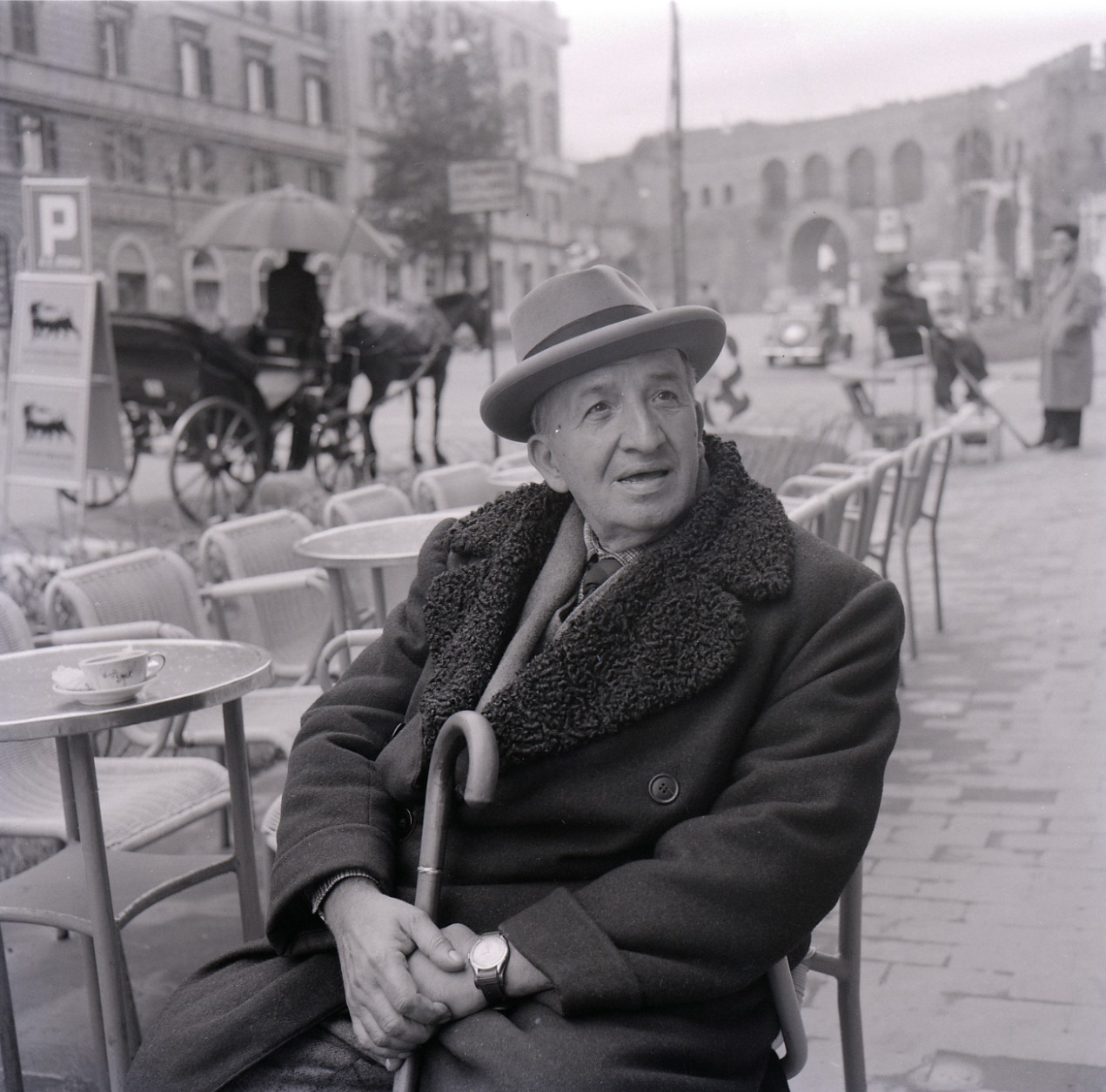
Vincenzo Cardarelli, born Nazareno Cardarelli on May 1, 1887, in Corneto Tarquinia, Italy, is a towering figure in the world of Italian literature. A poet, essayist, and journalist, Cardarelli’s life was marked by both personal hardships and immense literary success. His work, infused with a deep sense of melancholy, nostalgia, and a reflective tone, has left an indelible mark on 20th-century Italian literature. This article provides a comprehensive look at Cardarelli’s life, his rise to fame, and the highlights of his literary career, offering insights into the man behind the pen and the lasting impact of his contributions.
Early Life and Formative Years
Vincenzo Cardarelli was born into a humble family in the small town of Corneto Tarquinia, now known simply as Tarquinia, in the province of Viterbo. His father, Angelo Romagnoli, owned a modest café at the local railway station, earning him the nickname “il bisteccaro,” which in the local dialect referred to someone of modest means. Cardarelli’s early years were marked by a difficult family situation, particularly the absence of his mother, Giovanna, which left a lasting emotional scar on him. This absence, coupled with the challenges posed by his father’s modest earnings and the social stigmas attached to his family’s status, shaped much of the emotional depth found in Cardarelli’s poetry.
From a young age, Cardarelli showed a strong inclination toward the arts and literature, although his formal education was inconsistent due to his family’s economic struggles. His father, who had hoped that Vincenzo would take up a trade, prevented him from pursuing regular studies. Despite these challenges, Cardarelli’s passion for literature grew, and he eventually left Tarquinia at the age of seventeen, following the death of his father in 1906, to seek better opportunities in Rome.
Early Career and Literary Pursuits
Upon moving to Rome, Cardarelli began working a series of odd jobs, including serving as an errand boy for a socialist lawyer, working in the secretariat of the Metallurgists Federation, and eventually finding a position as a proofreader and theater critic at the socialist newspaper Avanti!. During this period, Cardarelli began writing under various pseudonyms, including Calandrino and Simonetta, contributing to the literary world while refining his voice and style.
In 1914, Cardarelli made the significant decision to move to Florence, a city that was, at the time, a hub for literary and artistic innovation. Here, he collaborated with the influential magazine La Voce, where he began to gain recognition for his writing. It was also during this time that he began working on his first major literary work, Prologhi (1914). His early poetry was deeply influenced by prominent Italian poets like Giacomo Leopardi and Giovanni Pascoli, reflecting themes of precariousness, melancholy, and an acute awareness of the transient nature of life—elements that would become hallmarks of his literary voice.
The First World War and the 1920s: A Period of Transition
The outbreak of World War I in 1914 interrupted Cardarelli’s plans to further his studies in Germany, where he had hoped to pursue an academic career as a professor. Stranded in Lugano, Switzerland, for five months due to the war, Cardarelli focused on revising his Prologhi. Despite his physical limitations—he had a deformity in his left hand, which exempted him from military service—Cardarelli faced significant financial hardships during the war years.
After the war, Cardarelli distanced himself from La Voce and its contributors, choosing instead to establish his own literary magazine, La Ronda, in 1919. La Ronda became a platform for Cardarelli’s passionate advocacy for a return to classical forms of literature, a stance inspired by his deep admiration for the modernity of Leopardi. Unlike many of his contemporaries, La Ronda and its contributors, including Cardarelli, steered clear of active political engagement, maintaining a focus on literature and aesthetics rather than the fascist ideology that was beginning to gain momentum in Italy.
During this period, Cardarelli published several significant works, including Viaggi nel tempo (1920), a collection that combined elements of travel writing with literary criticism. The volume’s second part, titled Rettorica, showcased Cardarelli’s evolving style, which was increasingly influenced by the musicality and emotional depth of French poets like Charles Baudelaire, Paul Verlaine, and Arthur Rimbaud.
The early 1920s also saw the publication of Favole della Genesi (1921), a collection of biblical fables, and Favole e memorie (1925), both of which further solidified Cardarelli’s reputation as a leading voice in Italian literature.
The 1930s and 1940s: Maturity and Recognition
By the late 1920s and early 1930s, Vincenzo Cardarelli had become an established literary figure in Italy. His work during this period reflected a deepening of his thematic concerns, particularly the intersection of memory, time, and the human condition. In 1928, he traveled to Russia as a correspondent for the Roman newspaper Il Tevere, documenting his observations of Soviet society in the aftermath of the October Revolution. These experiences were later compiled into the volume Viaggio d’un poeta in Russia, which offered a nuanced and often critical perspective on the Soviet experiment.
In 1929, Cardarelli published Il sole a picco, a work that revisited many of the themes from his earlier collections, blending personal recollections with broader cultural reflections. The book’s melancholic tone and its exploration of mythic elements, particularly those connected to his native Etruscan homeland, resonated deeply with readers.
As the 1930s progressed, Cardarelli continued to write prolifically, producing a series of prose works, including Parole all’orecchio, Parliamo dell’Italia, and La fortuna di Leopardi. These works further cemented his status as a leading intellectual of his time, admired not only for his literary talents but also for his keen insights into Italian culture and history.
However, as World War II loomed on the horizon, Cardarelli’s life became increasingly marked by personal turmoil. The war years exacerbated his already fragile emotional state, leading to periods of deep depression and isolation. Despite these challenges, Cardarelli remained a central figure in Rome’s literary circles, often seen frequenting the cafés of Via Veneto, where he would sit for hours, lost in thought.
The Post-War Years: Final Works and Legacy
The end of World War II brought significant changes to Italy, and to Cardarelli’s life. In 1945, he briefly returned to his native Tarquinia, seeking to reconnect with the landscape and memories of his childhood. However, the experience proved disillusioning, as the realities of post-war Italy clashed with the idealized memories of his youth.
In the final years of his life, Cardarelli’s writing became increasingly introspective, as evidenced by works like Villa Tarantola (1948), which won the prestigious Premio Strega. The book is a poignant reflection on memory, loss, and the passage of time, themes that had preoccupied Cardarelli throughout his career. His financial situation during this period was precarious, leading some of his friends, including the artists Carrà, De Pisis, and Giorgio Morandi, to sell their works to support him.
Cardarelli’s later publications included Solitario in Arcadia (1947), Poesie Nuove (1947), and Il viaggiatore insocievole (1953). These works, characterized by their reflective tone and lyrical beauty, were a fitting conclusion to a life spent in the service of literature.
Vincenzo Cardarelli passed away on June 18, 1959, in Rome, at the age of 72. In accordance with his wishes, he was buried in Tarquinia, the town that had shaped so much of his identity and his work.
Legacy: The Enduring Influence of Vincenzo Cardarelli
Vincenzo Cardarelli’s legacy as one of Italy’s foremost poets and writers is secure. His work, marked by a deep engagement with themes of time, memory, and the human experience, continues to resonate with readers and scholars alike. Cardarelli’s ability to blend personal reflection with broader cultural commentary has ensured that his poetry and prose remain relevant, even decades after his death.
His influence can be seen in the work of later Italian poets and writers who have drawn inspiration from his introspective style and his commitment to exploring the complexities of the human condition. Today, Vincenzo Cardarelli is remembered not only as a masterful poet but also as a figure who captured the essence of a rapidly changing Italy during the first half of the 20th century.
Cardarelli’s life was a testament to the power of literature to provide solace, insight, and a means of grappling with the often overwhelming forces of history and personal experience. As we continue to explore his work, we are reminded of the enduring relevance of his insights and the timeless quality of his writing.


