
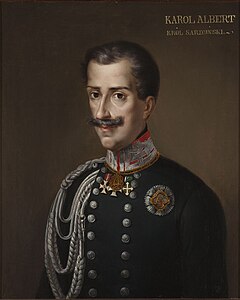
Carlo Alberto di Savoia, also known as Charles Albert of Savoy, remains a pivotal figure in the history of Italy, renowned for his role in the Italian Risorgimento—a period of intense nationalistic and revolutionary movements aimed at unifying Italy. His life, marked by significant political and military achievements, offers a fascinating glimpse into the complex history of 19th-century Italy. This comprehensive exploration delves into Carlo Alberto’s age, his rise to prominence, key achievements, and his enduring legacy.
Early Life and Background
Carlo Alberto di Savoia was born on October 2, 1798, in Turin, the capital of the Kingdom of Sardinia. As a member of the House of Savoy, Carlo Alberto was born into a noble family with a significant historical and political heritage. His father was Duke Victor Emmanuel I of Savoy, and his mother, Maria Teresa of Austria, was a member of the Habsburg dynasty.
Raised in an environment steeped in tradition and political influence, Carlo Alberto was educated in both military and diplomatic matters. His early education was under the guidance of tutors who prepared him for his future role in governance. The political climate of the time, marked by revolutionary movements and the struggle for Italian unification, significantly shaped his outlook and ambitions.
Path to Power
Carlo Alberto’s path to power began with his appointment as the King of Sardinia in 1831, following the abdication of his father. His accession to the throne was marked by a commitment to modernize the kingdom and address the growing demands for reform and unification. Carlo Alberto’s reign was characterized by a series of significant political and military efforts aimed at achieving these goals.
One of his first major reforms was the introduction of the “Statuto Albertino” (Albertine Statute) in 1848, which was a constitutional framework that granted civil liberties and established a parliamentary system. This statute was a landmark achievement, reflecting Carlo Alberto’s vision for a more democratic and progressive governance structure. The Statuto Albertino became the cornerstone of the Italian constitutional framework and remained in effect until 1948.
Role in the Italian Risorgimento
Carlo Alberto played a crucial role in the Italian Risorgimento, a period of intense nationalistic fervor aimed at unifying the fragmented Italian states into a single nation. His involvement in the Risorgimento was driven by a desire to strengthen and unify Italy, which was then divided into multiple independent states and kingdoms.
In 1848, Carlo Alberto took a decisive step by leading the Kingdom of Sardinia into the First Italian War of Independence against the Austrian Empire, which dominated northern Italy. The war was a significant event in the Risorgimento, with the aim of expelling Austrian influence and achieving Italian unification. Carlo Alberto’s leadership in the conflict was marked by both military engagements and diplomatic efforts.
Despite initial successes, the war did not achieve the desired outcomes, and the Kingdom of Sardinia faced several setbacks. The conflict ended with the Treaty of Milan in 1848, which ceded some territories to Austria and effectively brought the war to an end. Carlo Alberto’s performance in the war was met with mixed reactions, and his efforts to achieve unification faced significant challenges.
Achievements and Challenges
Throughout his reign, Carlo Alberto faced numerous challenges, both domestic and international. His efforts to modernize the Kingdom of Sardinia and achieve Italian unification were met with resistance from various quarters, including conservative factions and foreign powers.
One of the significant achievements of Carlo Alberto’s reign was the establishment of a constitutional monarchy with the Statuto Albertino. This reform was instrumental in shaping the political landscape of Italy and laid the groundwork for future developments in Italian governance. The Statuto Albertino provided a framework for civil liberties, parliamentary representation, and legal reforms, contributing to the modernization of the kingdom.
However, Carlo Alberto’s reign was also marked by setbacks and difficulties. His involvement in the First Italian War of Independence was met with mixed results, and the failure to achieve decisive victories against Austria led to criticism and dissatisfaction. Additionally, the political landscape of Italy was fraught with complexities, with various factions and interests competing for influence.
Legacy and Historical Context
Carlo Alberto’s legacy is closely intertwined with the broader historical context of the Italian Risorgimento. His reign was a critical period in the struggle for Italian unification, and his efforts to modernize the Kingdom of Sardinia and promote democratic reforms were significant contributions to the movement.
The Risorgimento was a complex and multifaceted process, involving numerous leaders, political movements, and military conflicts. Carlo Alberto’s role in this period was characterized by both achievements and challenges, reflecting the complexities of the unification process.
Despite facing setbacks and difficulties, Carlo Alberto’s contributions to the Italian Risorgimento are remembered as a crucial part of the movement for Italian unification. His commitment to constitutional reform and his efforts to strengthen the Kingdom of Sardinia were instrumental in shaping the future of Italy.
Personal Life and Later Years
Carlo Alberto’s personal life was marked by his marriage to Maria Theresa of Austria, with whom he had several children. His family life was an important aspect of his personal and political identity, and his marriage to Maria Theresa strengthened diplomatic ties between the House of Savoy and the Habsburg dynasty.
In 1849, facing mounting criticism and political pressure, Carlo Alberto abdicated the throne in favor of his son, Victor Emmanuel II. His abdication marked the end of his reign and a shift in the political landscape of the Kingdom of Sardinia.
Carlo Alberto spent his later years in exile, living in various locations across Europe. He lived out his final years in Porto, Portugal, where he passed away on July 28, 1849. His death marked the end of a significant chapter in Italian history and the beginning of a new era under his son’s leadership.
Conclusion
Carlo Alberto di Savoia’s life and reign were marked by significant achievements, challenges, and contributions to the Italian Risorgimento. His efforts to modernize the Kingdom of Sardinia and promote Italian unification were pivotal in shaping the future of Italy. Despite facing difficulties and setbacks, his legacy is remembered as a key figure in the struggle for Italian independence and unity.
From his early life in Turin to his role in the Italian Risorgimento and his later years in exile, Carlo Alberto’s story is a testament to his commitment to reform and his enduring impact on Italian history. His contributions to the establishment of a constitutional monarchy and his efforts in the unification process continue to be remembered and celebrated as a crucial part of Italy’s journey to nationhood.
In summary, Carlo Alberto di Savoia’s life and achievements reflect the complexities and challenges of the Italian Risorgimento. His role as a leader and reformer remains an important part of Italy’s historical narrative, and his legacy continues to be honored as a key figure in the country’s path to unification and modernization.


