
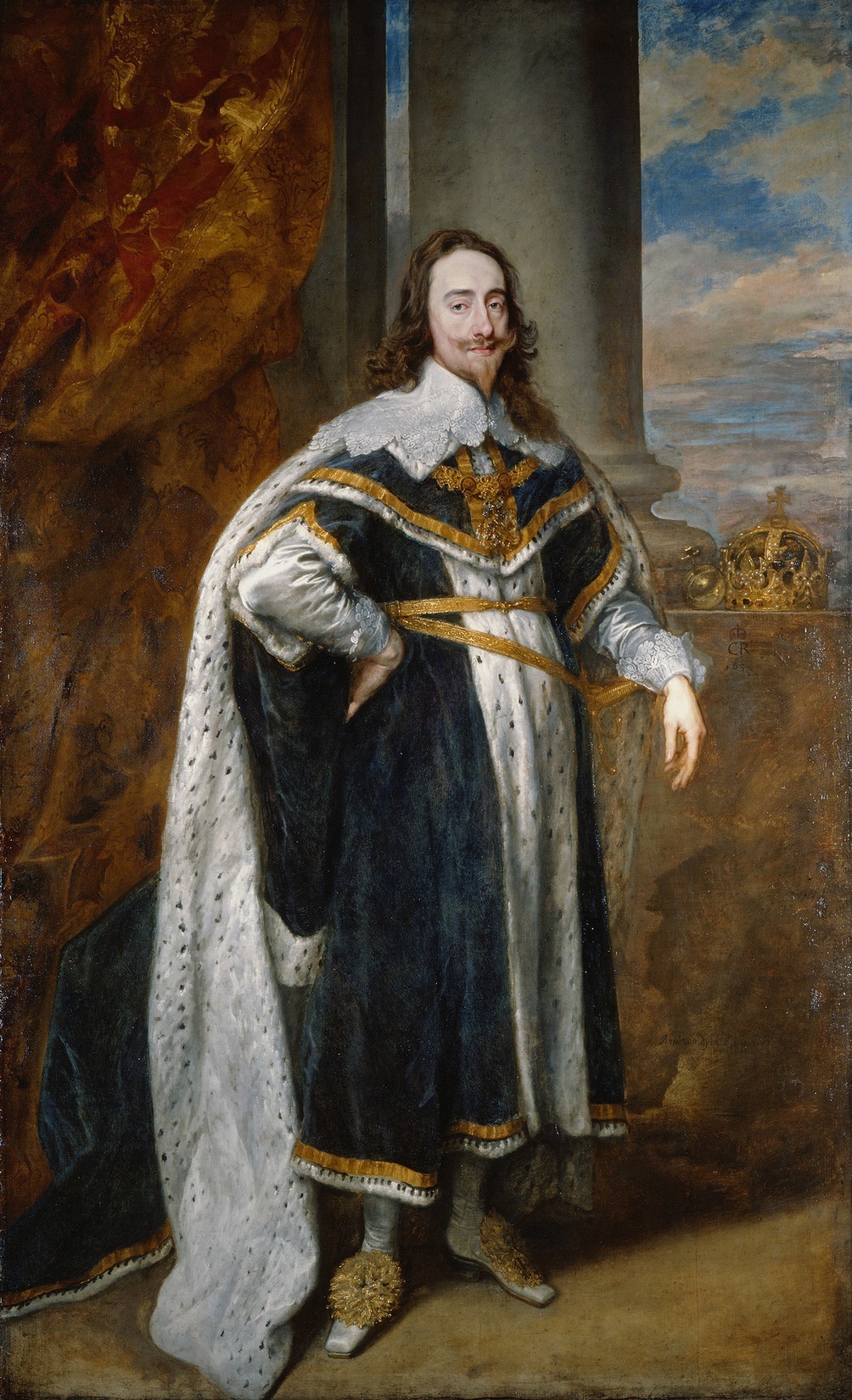
Carlo I Stuart, also known as Charles I of England, was a monarch whose reign and eventual execution left a profound impact on British history. Born on November 19, 1600, in Dunfermline, Scotland, Carlo was the second son of James VI of Scotland (later James I of England) and Anne of Denmark. His life and reign were marked by a series of conflicts with Parliament that culminated in the English Civil War and ultimately led to his execution. This article explores his life, the key events of his reign, and the legacy he left behind.
Early Life and Ascension to the Throne
Carlo I Stuart was born into a time of relative stability in Scotland but grew up in the shadow of his older brother, Henry Frederick, Prince of Wales. Carlo’s early life was not without challenges; he suffered from physical ailments, including rickets, which delayed his development and made him somewhat of a concern at court. Despite these challenges, he was groomed for leadership, particularly after the death of his older brother in 1612, which left Carlo as the heir to the throne.
In 1616, at the age of 16, Carlo was created Prince of Wales, a title that signified his position as the future king. His education was carefully managed, focusing on preparing him for the complexities of rule in a kingdom that spanned multiple nations—England, Scotland, and Ireland. The union of these crowns under his father, James I, set the stage for the challenges Carlo would face during his reign.
Marriage and Early Reign
Carlo ascended to the throne on March 27, 1625, following the death of his father. Just two months later, in May 1625, he married Henrietta Maria of France, a Catholic princess. This marriage was politically significant but also controversial, as it stoked fears among the Protestant English populace and Parliament that Carlo would be sympathetic to Catholic causes. This early decision set the tone for much of his reign, where religious tension played a significant role in his conflicts with Parliament.
Carlo’s relationship with Parliament was strained from the outset. His belief in the divine right of kings—a doctrine that held that monarchs were appointed by God and were therefore above earthly challenges—clashed with the growing power and assertiveness of Parliament. This conflict was exacerbated by Carlo’s attempts to govern without Parliament, a period known as the Personal Rule (1629-1640), during which he sought to finance his government through controversial means, including forced loans and the revival of obsolete taxes.
The Road to Civil War
Carlo’s reign was marred by his ongoing struggles with Parliament, which were rooted in both religious and political differences. His efforts to impose Anglican practices on Scotland led to the Bishops’ Wars (1639-1640), which further strained his relationship with his subjects and depleted his financial resources. In need of funds, Carlo was forced to call the Short Parliament in April 1640, which he promptly dissolved when it refused to grant him the necessary subsidies.
The Long Parliament, convened later in 1640, was less easily dismissed. It became a hotbed of opposition to Carlo’s policies, passing measures that limited the king’s powers and demanded greater parliamentary control over the military. In 1641, tensions escalated when Carlo attempted to arrest five members of Parliament who he believed were leading the opposition against him. This act was seen as a blatant abuse of power and led to a complete breakdown in relations between the king and Parliament.
The situation deteriorated further when the Irish Rebellion of 1641 broke out, leading to fears of a Catholic uprising in England. Parliament, mistrustful of Carlo, took control of the army, leading to an open conflict between the royalists, who supported the king, and the Parliamentarians. This marked the beginning of the English Civil War in 1642.
The English Civil War
The English Civil War was a brutal and divisive conflict that pitted the forces of King Carlo I against those of Parliament. The war was not only a battle for political control but also a struggle over the future of England’s religious identity. The royalists, or Cavaliers, were largely composed of the traditional aristocracy and those loyal to the Church of England, while the Parliamentarians, or Roundheads, were often Puritans who sought greater religious reform.
Initially, the royalists enjoyed some military successes, but as the war dragged on, the Parliamentarians, under the leadership of figures like Oliver Cromwell, gained the upper hand. The war culminated in a series of defeats for Carlo, most notably at the Battle of Naseby in 1645. By 1646, Carlo was forced to surrender to the Scots, who handed him over to Parliament the following year.
Even in captivity, Carlo attempted to regain power by negotiating with various factions, including the Scots, with whom he tried to form an alliance. These efforts ultimately failed, and in 1648, the second phase of the Civil War broke out, which ended in another defeat for the royalists.
Trial and Execution
In January 1649, Carlo I Stuart was put on trial for high treason against the people of England. The trial was unprecedented; never before had a reigning monarch been tried and executed by his own subjects. The charges against him included accusations of attempting to establish an unlimited and tyrannical power and waging war against Parliament and the people.
Carlo’s trial was a foregone conclusion. The outcome was largely decided by the political realities of the time, and on January 27, 1649, he was found guilty and sentenced to death. On January 30, 1649, Carlo was executed outside the Banqueting House in Whitehall, London. He faced his death with composure, reportedly wearing two shirts to prevent the cold from causing him to shiver and appear afraid.
Carlo’s execution sent shockwaves throughout Europe. To many, he became a martyr, particularly among those who believed in the divine right of kings. His death marked the end of the English monarchy for a brief period, as England was declared a republic under the leadership of Oliver Cromwell.
Legacy and Historical Significance
The legacy of Carlo I Stuart is complex and multifaceted. On one hand, his stubbornness and belief in absolute monarchy led to one of the most turbulent periods in British history. His conflicts with Parliament set the stage for the modern British constitutional system, where the powers of the monarchy are limited by law and balanced by an elected Parliament.
On the other hand, Carlo’s trial and execution highlighted the shifting power dynamics of the time, where the authority of kings was no longer unquestioned. His death marked the rise of a new political order, where the concept of rule by the people began to take root, even if it would take several more decades for democratic principles to fully emerge in Britain.
Carlo’s personal qualities—his dignity in the face of adversity, his deep religious convictions, and his ultimate sacrifice—have led some to view him as a tragic figure. His canonization as a martyr by the Anglican Church further cements this view, making him a symbol of the struggle between royal authority and parliamentary governance.
SEO Considerations
For those researching Carlo I Stuart, key phrases to focus on include “Carlo I Stuart biography,” “Charles I of England,” “English Civil War,” and “divine right of kings.” Additionally, terms like “trial and execution of Charles I,” “English monarchy history,” and “impact of the English Civil War” are crucial for attracting readers interested in the broader historical context.
To optimize for search engines, it is important to maintain a keyword density of around 1-2%, ensuring that relevant terms such as “Carlo I Stuart’s reign,” “English monarchy,” and “British history” are integrated naturally throughout the text. This will help improve the article’s visibility while ensuring it remains informative and engaging for readers.
In conclusion, Carlo I Stuart was a monarch whose reign and fate were pivotal in the shaping of modern Britain. His life and death underscore the complex relationship between monarchy and the emerging power of Parliament, a dynamic that would continue to evolve in the centuries that followed. While his reign ended in tragedy, the legacy of Carlo I Stuart continues to influence discussions on governance, the rule of law, and the balance of power between rulers and their subjects.


