
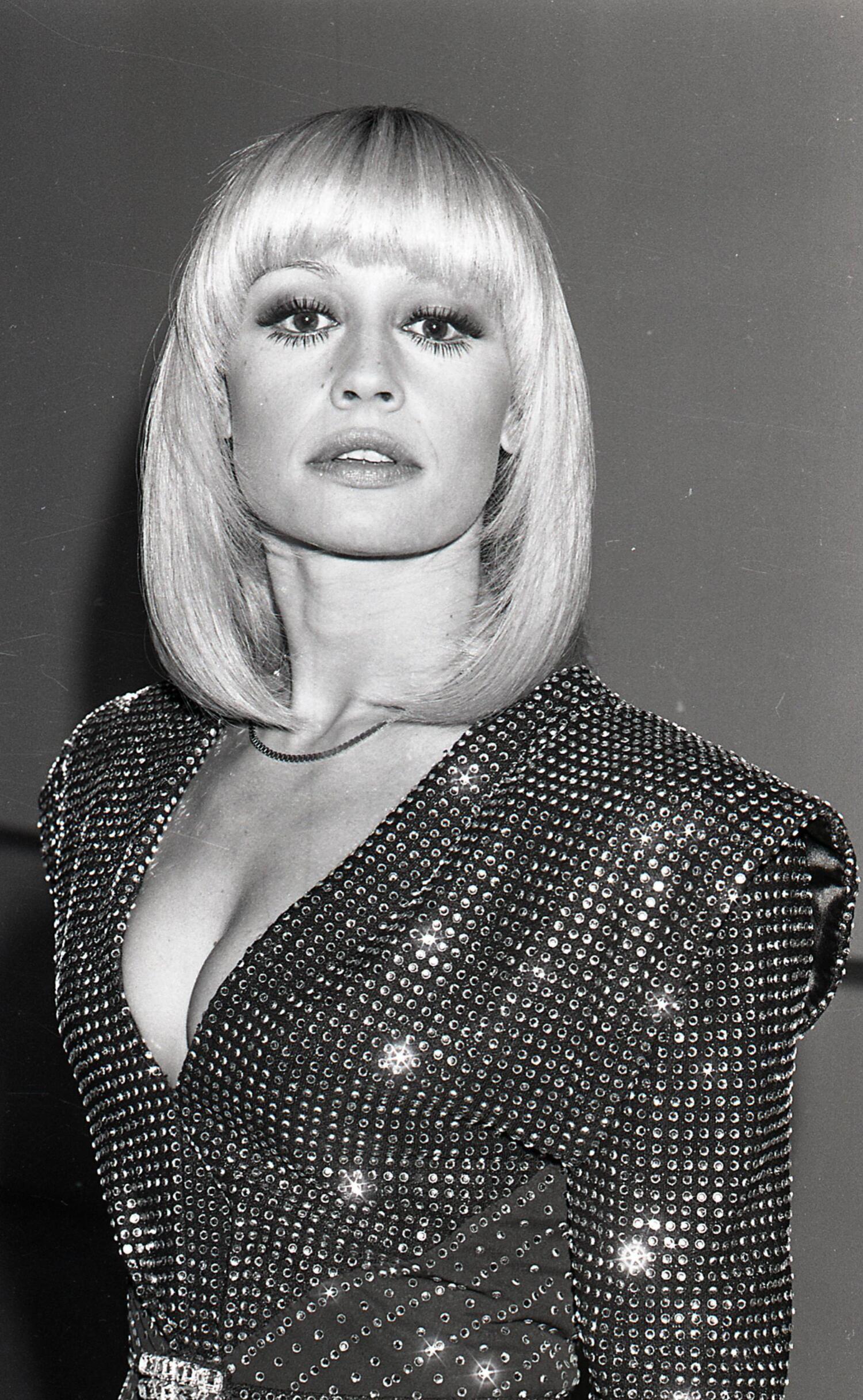
Raffaella Carrà, born Raffaella Maria Roberta Pelloni on June 18, 1943, in Bologna, Italy, was much more than just an entertainer. She was a cultural icon, a trailblazer in television and music, and a beloved figure across multiple generations. Her influence extended beyond Italy, reaching international audiences, especially in Spain and Latin America, where she became a symbol of joy, freedom, and unbridled energy. Her life, marked by remarkable achievements and enduring popularity, reflects the spirit of an artist who broke barriers and redefined the role of women in the entertainment industry.
Early Life and Introduction to the Arts
Raffaella Carrà’s early life set the stage for her later success. Growing up in Bellaria-Igea Marina near Rimini, she displayed a precocious talent for the arts. At the tender age of eight, she moved to Rome to study under Jia Ruskaia, the founder of the National Academy of Dance. This early training instilled in her the discipline and grace that would become hallmarks of her performances.
Her first taste of the entertainment world came with her debut in the film “Tormento del Passato,” where she was credited under her birth name, Raffaella Pelloni. However, it was clear that the world of cinema and television was where she was destined to shine. She pursued further education at the Centro Sperimentale di Cinematografia in Rome, where she honed her skills as an actress.
The Beginnings of a Storied Career: Cinema to Television
Raffaella Carrà’s first significant role in cinema came in 1960 with the film “La lunga notte del ’43,” directed by Florestano Vancini. This was followed by several notable appearances in films such as “I Compagni” by Mario Monicelli, where she acted alongside the legendary Marcello Mastroianni, and “Il colonnello Von Ryan,” where she shared the screen with Frank Sinatra. Despite her growing success in cinema, it was television that would catapult her to stardom.
Carrà’s breakthrough on television came in 1970 with the show “Io, Agata e tu,” where she performed a three-minute dance that captivated audiences. This performance marked the birth of the vibrant, energetic style that would define her career as a showgirl. Later that year, she co-hosted “Canzonissima” with Corrado Mantoni, where her performance of the song “Ma che musica maestro!”—complete with a now-iconic outfit that exposed her midriff—caused a scandal but also solidified her status as a trendsetter and media sensation.
The Rise of a Television Icon
The 1970s were a golden era for Raffaella Carrà, who quickly became a household name in Italy. She was a pioneer in many ways, breaking the mold of traditional female roles on television. Her boldness and charisma were on full display when she introduced the dance “Tuca Tuca” on “Canzonissima” in 1971, a performance that was both playful and provocative, further pushing the boundaries of what was acceptable on Italian television.
In 1974, Carrà co-hosted “Milleluci” with the iconic singer Mina. This show was a landmark in Italian television, bringing together two of the most influential women in entertainment at the time. Carrà’s ability to captivate audiences with her singing, dancing, and magnetic personality made her an unstoppable force in the industry. Her solo career continued to flourish with shows like “Ma che sera” in 1978 and “Fantastico 3” in 1982, where she again teamed up with Corrado Mantoni.
In 1984, she launched “Pronto, Raffaella?,” a daytime show that revolutionized Italian television. This program was particularly significant because it marked the first time Carrà worked closely with Gianni Boncompagni, her former partner and a key figure in her career. The show’s success was unprecedented, and in 1984, Carrà was named “European Female Television Personality of the Year” by the European TV Magazines Association.
Expanding Her Influence: From Italy to Spain and Beyond
By the mid-1980s, Raffaella Carrà had firmly established herself as one of Italy’s most beloved television personalities. However, her ambitions extended beyond national borders. In 1987, she made the bold decision to leave RAI, Italy’s public broadcaster, and join Mediaset, where she launched “Raffaella Carrà Show” and “Il principe azzurro.” Although these programs did not achieve the same level of success as her previous works, they demonstrated her willingness to take risks and explore new opportunities.
Carrà returned to RAI in 1989 and continued to build her legacy with shows like “Fantastico 12,” where she co-hosted with Johnny Dorelli. However, it was her move to Spain in 1992 that marked a new chapter in her career. Hosting “Hola Raffaella” on TVE, the Spanish public broadcaster, she quickly won over the Spanish-speaking world with her charm and exuberance. The show was a massive success, earning Carrà a TP de Oro award, Spain’s equivalent of Italy’s Telegatto.
Her success in Spain solidified her international appeal, particularly in Latin America, where her music and television shows became immensely popular. This period marked the height of Carrà’s international fame, as she became a beloved figure in countries like Argentina, Mexico, and Chile.
Carràmba! and the 1990s Renaissance
Returning to Italy in 1995, Raffaella Carrà launched one of the most successful shows of her career, “Carràmba che sorpresa!” The program, which combined elements of a talk show, variety show, and reality TV, became a cultural phenomenon in Italy. The show’s format, which involved reuniting people with long-lost loved ones, struck a chord with audiences and garnered record-breaking ratings. “Carràmba che sorpresa!” ran for multiple seasons and cemented Carrà’s status as the queen of Italian television.
Her renewed popularity in Italy led to her being chosen to host the prestigious Sanremo Music Festival in 2001, a testament to her enduring appeal and versatility as a performer. The 1990s also saw Carrà embracing new roles, such as hosting “Domenica In” and “Buonasera Raffaella,” further showcasing her ability to connect with audiences across different formats and time slots.
The 2000s and Beyond: Continuing to Innovate
As the new millennium began, Raffaella Carrà continued to evolve as an entertainer. In 2004, she hosted “Sogni,” a precursor to the show “Il treno dei desideri,” which was later hosted by Antonella Clerici. Carrà’s ability to adapt to changing tastes and trends in television was a key factor in her longevity.
In 2006, she hosted “Amore,” a program dedicated to promoting international adoption, a cause she was deeply passionate about. The show reflected Carrà’s commitment to using her platform for positive social impact, and it resonated deeply with viewers. Her involvement in this cause was not just professional; she was personally invested in the welfare of children, having helped facilitate the adoption of over 150,000 children through her program.
Carrà’s influence extended to Spain once again in 2008, when TVE invited her to host three programs related to the Eurovision Song Contest. Her enduring popularity in Spain was a testament to her unique ability to bridge cultural divides and connect with diverse audiences.
The Final Years: A Legacy of Joy and Inclusivity
In her later years, Raffaella Carrà became an icon for the LGBTQ+ community, a role she embraced wholeheartedly. Her music and television shows, which often celebrated love, freedom, and self-expression, resonated with LGBTQ+ audiences. Carrà herself was always inclusive and supportive, although she admitted she never fully understood why she was so beloved by the gay community. In a statement, she humorously remarked, “The truth is, I’ll die without knowing why. I’ll leave it written on my tombstone: ‘Why did the gays love me so much?’”
Her status as a gay icon was solidified in 2017 when she served as the godmother of WorldPride in Madrid, an event that underscored her role as a symbol of joy and liberation. Her appeal crossed boundaries, making her a beloved figure not just in Italy and Spain, but across the world.
In November 2020, the British newspaper The Guardian described Raffaella Carrà as “the pop star who taught Europe the joy of sex,” a nod to her fearless embrace of sensuality and freedom in her performances. Carrà’s ability to challenge societal norms and embrace her sexuality made her a role model for many, especially women, who saw in her a figure of empowerment.
The Final Farewell
Raffaella Carrà passed away on July 5, 2021, in Rome at the age of 78. Her death was met with an outpouring of grief from fans around the world, many of whom had grown up watching her on television and listening to her music. Her former partner, director and choreographer Sergio Japino, revealed that she had been battling a long illness, which she faced with the same energy and determination that had characterized her entire life.
Carrà’s legacy is vast. She may not have had children of her own, but she often said she had “thousands of children,” referring to the countless lives she touched through her television programs and charitable work. Her influence continues to be felt, and in 2023, Disney+ released a three-part docuseries titled “Raffa,” which serves as a love letter to her career and enduring impact.
Conclusion
Raffaella Carrà’s life and career are a testament to the power of reinvention, resilience, and relentless creativity. From her early days in cinema to her dominance of Italian and Spanish television, Carrà was a trailblazer who broke down barriers and set new standards for what it meant to be an entertainer. Her ability to connect with audiences, regardless of language or cultural background, made her a global icon.
Carrà’s influence extended beyond entertainment; she was a symbol of empowerment, joy, and inclusivity. Her legacy lives on in the countless lives she touched, the barriers she broke, and the joy she brought to millions around the world. As the world continues to celebrate her contributions, Raffaella Carrà remains a shining example of how one person can truly make a difference through art, love, and an unwavering commitment to authenticity.


