
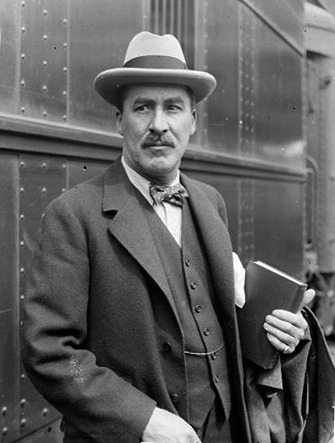
Howard Carter, born on May 9, 1874, in Kensington, London, is a name that resonates profoundly in the annals of archaeology. His most notable achievement—the discovery of the tomb of the Egyptian Pharaoh Tutankhamun—stands as one of the greatest archaeological discoveries of the 20th century. This article explores the life of Howard Carter, offering detailed insights into his early years, the monumental discovery that defined his career, and the legacy he left behind.
Early Life and Artistic Beginnings
Howard Carter was born into a modest family in London, with his father, Samuel John Carter, earning a living as an illustrator for Illustrated London News, a popular publication of the time. This artistic environment fostered young Howard’s talent in drawing and painting, skills that would later prove invaluable in his archaeological career.
Carter spent much of his childhood in Swaffham, Norfolk, where he honed his artistic abilities. His father’s connections in the art world introduced Howard to influential figures, one of whom was Baron William Amhurst Tyssen-Amherst, a prominent collector of Egyptian antiquities. This introduction sparked Carter’s fascination with ancient Egypt, setting him on a path that would ultimately lead to his groundbreaking discoveries.
The Journey to Egypt: Early Archaeological Work
Howard Carter’s journey into the world of archaeology began when he was introduced to Percy E. Newberry, a noted Egyptologist at the University of Liverpool. Newberry saw potential in the young Carter and recommended him as an artist for an expedition to Egypt funded by the British Museum. At the tender age of 17, Carter set sail for Cairo, where he would begin his lifelong love affair with the mysteries of ancient Egypt.
Upon arriving in Egypt, Carter joined the archaeological team led by Sir William Matthew Flinders Petrie, one of the most respected Egyptologists of the time. Under Petrie’s mentorship, Carter learned the intricacies of archaeological excavation and documentation, skills that would serve him well throughout his career. Over the next six years, Carter worked at several significant sites, including Beni Hasan, Hatnub, Tell el-Amarna, and the Temple of Hatshepsut in Thebes.
Carter’s work as a draftsman was crucial in recording the details of these ancient sites, but his growing expertise soon led to more significant responsibilities. By 1899, at just 25 years old, Carter was appointed as the Chief Inspector of Antiquities for Upper Egypt, a position that placed him in charge of some of the most important archaeological sites in the country, including Karnak, Luxor, Thebes, and the Valley of the Kings.
The Valley of the Kings: The Quest for Tutankhamun
The early 1900s marked a period of intense archaeological activity for Howard Carter. However, his promising career faced a significant setback in 1905 when a dispute between French tourists and Egyptian guards led to Carter’s suspension from his role as Chief Inspector. Despite this career blow, Carter chose to remain in Egypt, supporting himself by selling his watercolor paintings of Egyptian antiquities.
In 1908, fate intervened when Carter met Lord George Herbert, the 5th Earl of Carnarvon. Lord Carnarvon, an enthusiastic amateur Egyptologist, had obtained a concession to excavate in Luxor but needed an experienced archaeologist to lead the work. Gaston Maspero, the Director of Antiquities in Egypt, recommended Carter for the position. Thus began a fruitful partnership that would last for over a decade and culminate in the discovery of Tutankhamun’s tomb.
Carter and Carnarvon embarked on several excavations in various sites across Egypt, but their ultimate goal was to find the tombs of the still-missing Pharaohs of the 18th Dynasty, particularly those of Akhenaten and his successor, Tutankhamun. In 1917, Carter began a systematic excavation of the Valley of the Kings, dividing the area into sectors and exploring each one meticulously. Despite years of fruitless digging and mounting expenses, Carter remained convinced that a significant discovery was waiting to be unearthed.
By the summer of 1922, Lord Carnarvon had grown weary of the lack of progress and was ready to abandon the project. However, Carter persuaded him to fund one more season of excavation, promising that they were on the brink of a major discovery. This decision would prove to be one of the most pivotal moments in archaeological history.
The Discovery of Tutankhamun’s Tomb
On November 4, 1922, just two days after resuming excavation, Carter’s team uncovered the top of a staircase leading to a sealed door. The door bore the intact seals of the necropolis, indicating that the tomb within had remained undisturbed since its closure thousands of years earlier. Carter immediately sent word to Lord Carnarvon, who traveled from England to witness the historic event.
On November 26, 1922, Carter, accompanied by Lord Carnarvon, made a small breach in the door to peer inside. Holding a candle to the hole, Carter glimpsed a room filled with gold and other treasures. When Carnarvon asked if he could see anything, Carter famously replied, “Yes, wonderful things.” This was the antechamber of the tomb of Tutankhamun, a Pharaoh whose name would soon become known worldwide.
The subsequent opening of the tomb revealed a treasure trove of artifacts, including statues, chariots, weapons, and the iconic golden sarcophagus containing the mummified body of Tutankhamun himself. The discovery was unprecedented—not only for the sheer wealth of objects but also because it was the first time that a Pharaoh’s tomb had been found virtually intact.
The excavation of the tomb and the cataloging of its contents was an enormous task that would take nearly a decade to complete. Carter’s meticulous approach to the excavation and documentation ensured that the artifacts were preserved and studied with the utmost care. His work set new standards for archaeological methodology, particularly in the conservation and recording of artifacts.
The Legacy of Howard Carter
The discovery of Tutankhamun’s tomb was a global sensation, capturing the imagination of people around the world. It also reignited public interest in ancient Egypt, leading to a wave of Egyptomania that influenced everything from fashion to art and architecture.
Despite the immense significance of his discovery, Howard Carter’s later years were marked by relative obscurity. After the completion of the Tutankhamun project, Carter retired from active fieldwork and spent much of his time cataloging the thousands of artifacts he had uncovered. He never received the formal recognition he might have expected from his native Britain, nor did he have the opportunity to present his findings to the British royal family.
Carter’s contributions to archaeology, however, are undeniable. His discovery of Tutankhamun’s tomb not only provided an unprecedented glimpse into the life and death of an ancient Pharaoh but also changed the course of archaeology. His methods, particularly his attention to detail and his commitment to preserving the integrity of the site, became the gold standard for future archaeological endeavors.
Howard Carter passed away on March 2, 1939, at the age of 64. Although he did not live to see the full impact of his discovery, his work has left an enduring legacy in both the field of archaeology and popular culture. The treasures of Tutankhamun’s tomb, now housed in the Egyptian Museum in Cairo, continue to draw millions of visitors and remain some of the most famous and well-preserved artifacts from the ancient world.
The Curse of the Pharaohs: Myth or Reality?
One of the most enduring aspects of the Tutankhamun discovery is the so-called “Curse of the Pharaohs.” This idea was fueled by the untimely death of Lord Carnarvon just months after the tomb was opened. Stories circulated that a curse had been placed on anyone who disturbed the Pharaoh’s rest, leading to a series of mysterious deaths among those involved in the excavation.
While the curse made for sensational headlines and added to the mystique of the discovery, there is little evidence to support the idea that any supernatural force was at play. Most of the deaths attributed to the curse can be explained by natural causes, and many people who were closely involved with the excavation, including Howard Carter himself, lived for many years after the tomb was opened.
Conclusion
Howard Carter’s life is a testament to the power of persistence, passion, and the pursuit of knowledge. His discovery of Tutankhamun’s tomb remains one of the most significant archaeological achievements of all time, offering invaluable insights into the life of ancient Egypt’s royal family and the civilization that flourished along the Nile.
Carter’s legacy lives on through the treasures he unearthed and the standards he set in the field of archaeology. His work continues to inspire archaeologists and historians, and the story of his discovery continues to captivate the imagination of people around the world.
As we reflect on Howard Carter’s contributions, it is clear that his impact on the world extends far beyond the sands of the Valley of the Kings. He not only uncovered the past but also helped to preserve it for future generations, ensuring that the mysteries of ancient Egypt remain alive in the hearts and minds of people everywhere.


