
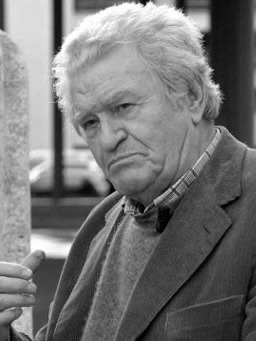
Pietro Cascella, born on February 2, 1921, in Pescara, Italy, is a name that resonates in the world of art and sculpture. Renowned for his monumental works that grace public spaces across Europe, Cascella’s legacy is deeply rooted in the traditions of Italian art, yet it also embodies the modernist impulses of the 20th century. This article delves into the life, achievements, and artistic contributions of Pietro Cascella, exploring how his work has left an indelible mark on the cultural landscape.
Early Life and Artistic Roots
Pietro Cascella was born into an artistic family, which played a significant role in shaping his future as an artist. His father, Tommaso Cascella, and his brother, Andrea Cascella, were both accomplished artists, which created an environment where creativity and artistic expression were highly valued. Growing up surrounded by art, Pietro’s early interest in painting was a natural progression, and it wasn’t long before he began to explore his own artistic path.
In 1938, at the age of 17, Cascella moved to Rome, where he enrolled in the Accademia di Belle Arti. Here, he studied under the guidance of Ferruccio Ferrazzi, a prominent Italian painter and sculptor. This formal education provided Cascella with the technical skills and theoretical knowledge that would underpin his later work. However, it was his experiences outside the classroom that truly shaped his artistic vision.
During his time in Rome, Cascella and his brother Andrea worked in a ceramic furnace in Valle dell’Inferno, a neighborhood in Rome. This hands-on experience with ceramics would later influence his work, particularly in the 1950s when he and Andrea began creating large-format ceramic pieces. These early explorations in materiality and form laid the foundation for Pietro Cascella’s later success as a sculptor.
Post-War Artistic Career: The Venice Biennale and Beyond
The 1940s and 1950s were a transformative period for Pietro Cascella. In 1943, at just 22 years old, he participated in the IV Quadriennale di Roma, marking his entry into the professional art world. His early success continued, and in 1948, he exhibited at the Venice Biennale, one of the most prestigious art exhibitions in the world. This participation in the Biennale signaled his arrival as a significant figure in the post-war Italian art scene.
The post-war years were a time of experimentation and renewal in European art, and Cascella was no exception. He began to explore new forms and materials, moving away from traditional painting towards sculpture. His work during this period was characterized by a focus on monumental forms and a deep engagement with the physical properties of materials like stone and marble.
In 1956, Cascella’s work was featured again at the XXVIII Venice Biennale, this time showcasing his growing interest in sculpture. This period also marked the beginning of his most ambitious project to date: the monument to the victims of Auschwitz. The project, which he conceived in collaboration with his brother Andrea and architect La Fuente, was initially planned in 1958 but was not completed until 1967, with Pietro ultimately taking the lead on the final design. This monument remains one of his most significant contributions to public art, symbolizing both the horrors of the Holocaust and the resilience of the human spirit.
Monumental Works and the Search for Permanence
The 1960s and 1970s were a period of prolific output for Pietro Cascella. His work became increasingly focused on large-scale public monuments, which allowed him to explore the relationship between art, architecture, and the environment. These works are characterized by their use of stone and marble, materials that Cascella favored for their durability and timelessness.
One of the defining features of Cascella’s work is his ability to blend the monumental with the intimate. His sculptures, often composed of massive, smoothed stone forms, invite viewers to engage with them on a tactile level. Despite their size, there is a human scale to his work, a sense of accessibility that encourages interaction rather than mere observation.
Cascella’s approach to sculpture was deeply influenced by his encounters with other artists and thinkers. His friendship with the Chilean surrealist painter Roberto Matta, for instance, inspired him to infuse his work with a sense of surrealism and abstraction. This influence can be seen in his “quadri-scultura” (painting-sculpture) pieces, where he combined elements of painting with three-dimensional forms, blurring the boundaries between different artistic disciplines.
Major Commissions and International Recognition
Pietro Cascella’s reputation as a master sculptor led to numerous commissions across Europe, where his work continues to stand as a testament to his artistic vision. Some of his most notable works from the 1970s include the “Arco della Pace” in Tel Aviv, “Omaggio all’Europa” in Strasbourg, and the “Monumento a Giuseppe Mazzini” in Milan. Each of these works reflects Cascella’s ability to convey profound themes through abstract, yet deeply symbolic forms.
The “Arco della Pace” (Arch of Peace) in Tel Aviv, for example, is a powerful statement on the desire for peace in a region often marked by conflict. Similarly, his “Omaggio all’Europa” (Homage to Europe) in Strasbourg serves as a reminder of the continent’s shared cultural heritage and the importance of unity in diversity.
In the 1980s, Cascella continued to receive prestigious commissions, further cementing his status as one of Italy’s leading sculptors. His work during this period includes the monument “Cento Anni di Lavoro allo Stabilimento Barilla” in Parma, which commemorates the centennial of the Barilla pasta factory. This piece, like many of Cascella’s works, is notable for its integration of form and function, serving as both a work of art and a symbol of industrial achievement.
Another significant work from this period is “La Nave” (The Ship) in Pescara, a monumental sculpture that pays homage to the city’s maritime heritage. This work, with its sweeping lines and powerful presence, exemplifies Cascella’s ability to create sculptures that are both site-specific and universally resonant.
Later Years and the Pursuit of Monumentality
As Pietro Cascella entered the later stages of his career, his focus on monumental sculpture only intensified. The 1990s saw the creation of some of his most ambitious projects, many of which were designed for public spaces in Italy. These works include the “Volta Celeste” in Arcore, Milan, a large-scale installation that combines elements of sculpture and architecture to create a space of reflection and contemplation.
One of his most significant works from this period is the “Agorà” at the University of Chieti, a vast sculptural installation that transforms an ordinary university courtyard into a dynamic and engaging public space. This work, like many of Cascella’s late pieces, reflects his belief in the transformative power of art and its ability to create spaces that foster community and dialogue.
Other notable works from the 1990s include the “Monumento della Via Emilia” in Parma, the “Porta della Sapienza” in Pisa, and the “Ara del Sole” in Ingurtosu, Sardinia. Each of these works demonstrates Cascella’s ongoing commitment to exploring the possibilities of stone and marble, as well as his interest in creating works that engage with their surroundings in meaningful ways.
Cascella’s final years were spent in the quietude of Verrucola, a castle in Fivizzano near Massa Carrara, where he continued to work until his death on May 18, 2008. This secluded setting, surrounded by the natural beauty of the Tuscan countryside, provided Cascella with the peace and solitude needed to create some of his most contemplative works.
Legacy and Influence
Pietro Cascella’s legacy as one of Italy’s most important sculptors is secure, thanks to his numerous public works that continue to inspire and engage audiences around the world. His sculptures, with their emphasis on form, material, and the interplay between art and environment, have influenced generations of artists and architects.
Cascella’s work is characterized by its timeless quality, a testament to his mastery of stone and marble. His sculptures are not merely objects of aesthetic beauty; they are also profound statements on the human condition, exploring themes of memory, history, and the passage of time. Through his work, Cascella sought to create art that would endure, both physically and emotionally, and his success in this regard is evident in the lasting impact of his sculptures.
Beyond his individual works, Cascella’s influence extends to the broader field of public art. His commitment to creating sculptures that enhance public spaces and foster community engagement has had a lasting impact on the way artists and architects approach the design of public spaces. His belief in the power of art to transform the built environment continues to resonate with those who seek to create spaces that are both functional and inspiring.
Conclusion
Pietro Cascella’s life and work embody the spirit of 20th-century Italian art, with its blend of tradition and innovation, monumentality and intimacy. From his early days as a painter in Rome to his later years as a master sculptor, Cascella remained committed to exploring the possibilities of art and its ability to connect people with their surroundings and with each other.
As we look back on Cascella’s contributions to the world of art, it is clear that his work will continue to inspire and challenge future generations. His sculptures, with their enduring presence and profound symbolism, remind us of the power of art to shape our world and our understanding of it. Pietro Cascella’s legacy is not just one of artistic achievement, but also one of vision and creativity, qualities that will continue to resonate for years to come.


