
Caterina Caselli is a name synonymous with Italian pop culture, not only as a singer but also as a producer, actress, and television presenter. Born on April 10, 1946, in Modena, Italy, Caselli has left an indelible mark on the Italian music scene. Her career spans over five decades, during which she has transitioned from a popular singer to a powerful music executive. This article delves into the life of Caterina Caselli, exploring her age, rise to fame, and key life highlights that have shaped her into the icon she is today.
Early Life and Tragic Beginnings
Caterina Caselli’s life story begins in Modena, a city in Northern Italy. Her early years were marked by tragedy; at the tender age of 14, she lost her father to suicide in 1960. This tragic event profoundly impacted her life, leading her to find solace in music. Music became more than just a passion for Caselli—it became a means of escape and a way to cope with her grief.
Despite the challenges, Caselli’s musical talent began to shine through. She started her journey in the music industry by playing the bass in local bands that performed in dance halls across the Emilia-Romagna region. Her big break came at the age of 17 when she participated in the “Voci nuove” (New Voices) competition in Castrocaro, reaching the semifinals. This achievement caught the attention of music producer Alberto Carisch, who signed her to his Milan-based label, MRC.
The Path to Stardom
Caterina Caselli’s initial foray into the music industry was met with mixed results. Her first single, “Sciocca / Ti telefono tutte le sere” (1964), was released under the MRC label. Despite being showcased on the popular television program “La fiera dei sogni,” hosted by Mike Bongiorno, the single failed to make a significant impact.
However, Caselli’s fortunes began to change when she signed with the CGD label, owned by the Sugar family. Her participation in the “Cantagiro” music festival with the song “Sono qui con voi,” an Italian version of “Baby Please Don’t Go” by Them, helped her gain more recognition. This was followed by the release of another single, “La ragazza del Piper,” which further established her presence in the Italian music scene.
The Breakthrough with “Nessuno mi può giudicare”
The turning point in Caterina Caselli’s career came in 1966 when she was chosen to perform the song “Nessuno mi può giudicare” at the Sanremo Music Festival. Originally intended for Adriano Celentano, the song was a last-minute addition to Caselli’s repertoire after Celentano opted to perform “Il ragazzo della via Gluck” instead. The decision proved to be fortuitous for Caselli, as “Nessuno mi può giudicare” became a massive hit.
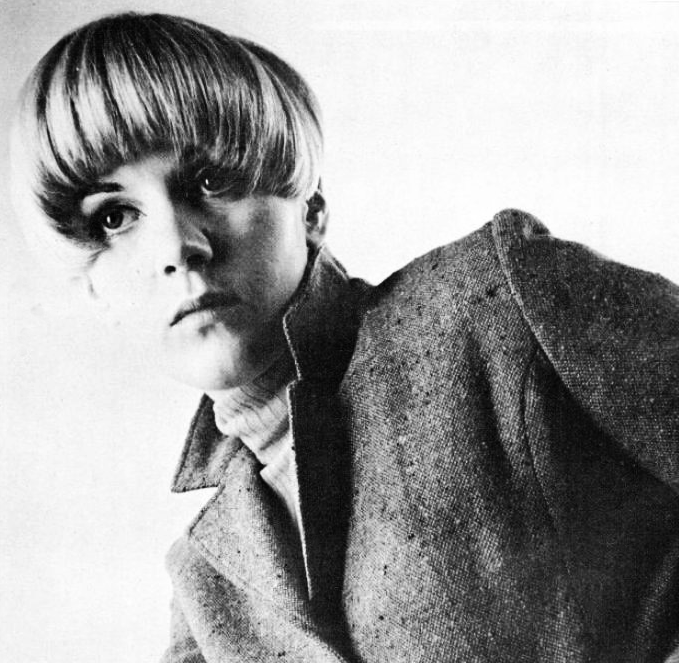
The song not only topped the charts in Italy but also sold over a million copies, establishing Caselli as one of the leading figures in the Italian pop music scene. Her unique appearance, characterized by her blond bob hairstyle, earned her the nickname “Casco d’oro” (Golden Helmet), a moniker that would stick with her throughout her career.
Caselli’s newfound fame extended beyond Italy, with the song being translated into Spanish and French. Her popularity soared, and she soon became a household name, not just as a singer but also as an actress. She starred in the film “Nessuno mi può giudicare,” which was based on the song, alongside well-known Italian actors such as Gino Bramieri and Nino Taranto.
The Golden Years: Late 1960s
The late 1960s were a golden period for Caterina Caselli. Following the success of “Nessuno mi può giudicare,” she continued to release hit after hit. In 1966, she recorded “Tutto nero,” a cover of The Rolling Stones’ “Paint It Black.” The same year, she won the Festivalbar competition with the song “Perdono,” further cementing her status as one of Italy’s top pop stars.
Her success was not limited to music alone. Caselli also made a name for herself in the film industry, starring in several “musicarelli” films, which were popular in Italy during the 1960s. These films were often based on popular songs and featured the singers themselves as the main actors. One of her notable films from this era was “Perdono,” which was inspired by her hit song of the same name.
In 1967, Caselli returned to the Sanremo Music Festival with the song “Il cammino di ogni speranza,” which she performed with the American duo Sonny & Cher. She also released “Sono bugiarda,” an Italian version of “I’m a Believer” by The Monkees. That same year, she co-hosted the television show “Diamoci del tu” with Giorgio Gaber, further expanding her presence in the Italian entertainment industry.
Transition to Production and Marriage
By the early 1970s, Caterina Caselli began to transition from performing to focusing on the business side of the music industry. In 1970, she married Piero Sugar, the son of Ladislao Sugar, who was the head of the CGD record label. This marriage marked a significant shift in her career as she gradually moved away from performing and started taking on more responsibilities as a music producer.
Despite stepping back from the limelight, Caselli continued to release music occasionally. She returned to the Sanremo Music Festival in 1971 with the song “Ninna nanna (cuore mio),” which she performed with the Italian band Dik Dik. That same year, she gave birth to her son, Filippo Sugar, who would later follow in her footsteps and become a prominent figure in the Italian music industry.
In 1975, after the release of her album “Una grande emozione,” Caselli officially retired from performing. She shifted her focus entirely to music production and talent scouting, founding the Ascolto label in 1977. Her label played a crucial role in launching the careers of several notable Italian artists, further solidifying her legacy in the music industry.
The 1980s and 1990s: A New Chapter
The 1980s and 1990s marked a new chapter in Caterina Caselli’s career as she fully embraced her role as a music producer and talent scout. Although her Ascolto label closed in 1982, she continued to work with CGD and later with Sugar Music, the family-owned label. Her keen ear for talent led to the discovery of several successful Italian artists, many of whom became major stars in their own right.
Caselli made a brief return to the stage in 1990, performing the song “Bisognerebbe non pensare che a te” at the Sanremo Music Festival. However, this was a short-lived comeback, as she soon returned to her work behind the scenes, where she continued to influence the Italian music scene through her production work.
The New Millennium and Continued Influence
As the new millennium began, Caterina Caselli continued to be a formidable force in the Italian music industry. In 1997, she ventured into acting once again, appearing in the film “Tutti giù per terra,” directed by Davide Ferrario. She played the role of the protagonist’s aunt, showcasing her versatility as an entertainer.
In 2009, Caselli participated in the “Artisti uniti per l’Abruzzo” project, contributing to the charity single “Domani 21/04.09,” which was recorded to raise funds for the victims of the earthquake in L’Aquila. This project brought together 56 Italian artists, and Caselli’s involvement highlighted her enduring commitment to using her talent for good causes.
In 2012, she returned to the stage for a special performance of “Insieme a te non ci sto più” at the “Concerto per l’Emilia” in Bologna, organized to support those affected by the Emilia earthquake. This performance marked a rare live appearance for Caselli, who had largely stayed out of the public eye in recent years.
In 2021, after years away from the spotlight, Caterina Caselli made a television appearance on “Che tempo che fa,” hosted by Fabio Fazio. She was there to promote her new biographical docufilm titled “Caterina Caselli – Una vita 100 vite,” directed by Renato De Maria. The film chronicles her extraordinary life and career, offering an intimate look at the woman behind the legend.
Conclusion: A Lasting Legacy
Caterina Caselli’s journey from a small-town girl in Modena to one of Italy’s most influential music figures is nothing short of remarkable. Her ability to reinvent herself, from a chart-topping singer to a successful producer and talent scout, has ensured her legacy in the Italian music industry. At 78 years old, Caselli continues to inspire new generations of musicians and remains a beloved figure in Italian pop culture.
Her story is a testament to resilience, creativity, and the enduring power of music. As the world changes, Caterina Caselli’s influence remains, proving that true talent and passion can leave a lasting impact on both a national and global scale.


