
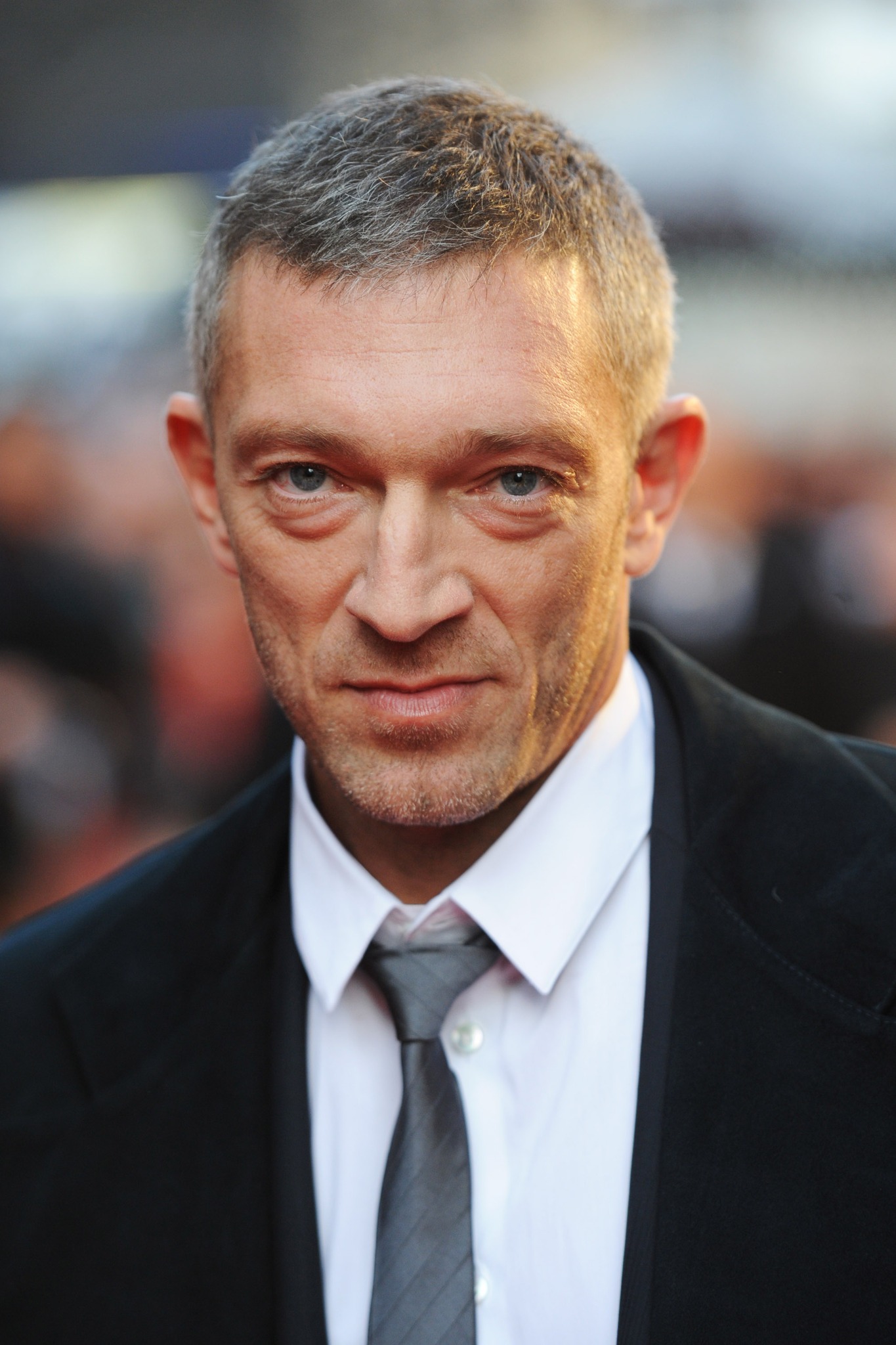
Vincent Cassel, born Vincent Crochon Cassel on November 23, 1966, in Paris, France, is one of the most dynamic and versatile actors of his generation. Known for his intense performances, striking looks, and the ability to portray a wide range of characters, Cassel has become a prominent figure in both European and Hollywood cinema. His career, spanning several decades, includes a variety of roles that showcase his talent and depth as an actor.
Early Life and Background
Vincent Cassel was born into a family deeply rooted in the arts. His father, Jean-Pierre Cassel, was a well-known actor, and his mother, Sabine Litique, was a journalist. Growing up in the vibrant and culturally rich neighborhood of Montmartre in Paris, Cassel was exposed to the world of cinema and theater from a young age. Despite this artistic environment, his path to acting was not straightforward.
As a teenager, Cassel exhibited a rebellious streak and a desire to explore different avenues. At the age of 17, he enrolled in a circus school, much to the surprise of his family. His father, despite being an actor, was initially reluctant to see his son follow in his footsteps, preferring that he explore other forms of artistic expression. Cassel’s experience in the circus, where he trained as an acrobat and clown, played a significant role in shaping his approach to performance. It helped him develop a strong physical presence and an ability to connect with audiences, skills that would later prove invaluable in his acting career.
Breakthrough in Cinema
Vincent Cassel’s entry into the world of cinema came in the early 1990s. His first major role was in the film “Les clés du Paradis” (1991), where he had a small part. However, it was his collaboration with director Mathieu Kassovitz that would propel him to stardom. In 1993, Cassel starred in Kassovitz’s film “Métisse,” marking the beginning of a fruitful professional relationship between the actor and the director.
The duo’s next collaboration, “La Haine” (1995), was a turning point in Cassel’s career. The film, which dealt with the social issues and tensions in the Parisian suburbs, featured Cassel in the lead role of Vinz, a young man caught up in the cycle of violence and anger. “La Haine” was both a critical and commercial success, earning Cassel a nomination for the César Award for Most Promising Actor. The film’s impact was profound, highlighting the issues of racial inequality and police brutality in France, and it remains a significant work in French cinema. Cassel’s portrayal of Vinz showcased his ability to embody complex and intense characters, setting the stage for his future roles.
Rise to International Fame
Following the success of “La Haine,” Vincent Cassel’s career continued to ascend, and he began to attract attention from international filmmakers. His ability to portray both charming and menacing characters made him a versatile actor, suitable for a wide range of roles.
In the late 1990s and early 2000s, Cassel appeared in several high-profile films that expanded his reach beyond European cinema. Notably, he starred in the French thriller “Les Rivières pourpres” (The Crimson Rivers) alongside Jean Reno. The film, which combined elements of mystery and horror, was a box office hit in France and further established Cassel as a leading man.
Cassel’s versatility was also evident in his work with celebrated director Luc Besson. He appeared in the Hollywood-style epic “Joan of Arc” (1999), where he played alongside Milla Jovovich. His ability to transition between European art films and big-budget Hollywood productions demonstrated his broad appeal and adaptability as an actor.
One of Cassel’s most prominent roles during this period was in “Ocean’s Twelve” (2004) and its sequel “Ocean’s Thirteen” (2007). In these films, Cassel played François Toulour, also known as “The Night Fox,” a master thief who becomes a key antagonist to George Clooney’s character, Danny Ocean. These films were highly successful and introduced Cassel to a broader international audience, showcasing his ability to play sophisticated, cunning, and charismatic characters.
Marriage to Monica Bellucci and Personal Life
Vincent Cassel’s personal life has often been in the spotlight, particularly his high-profile marriage to Italian actress Monica Bellucci. The two met on the set of the film “L’appartamento” (The Apartment) in 1996, and their on-screen chemistry quickly translated into a real-life romance. Cassel and Bellucci became one of the most glamorous and celebrated couples in European cinema, often appearing together on red carpets and in films.
The couple starred in several films together, including the controversial “Irréversible” (2002), directed by Gaspar Noé. The film, known for its brutal and unflinching portrayal of violence, was polarizing among critics and audiences, but Cassel’s performance was widely praised for its intensity and raw emotion.
Cassel and Bellucci married in 1999 and had two daughters, Deva, born in 2004, and Léonie, born in 2010. Despite their strong public image, the couple announced their separation in 2013, ending their marriage after more than a decade together. Their split was widely covered in the media, but both Cassel and Bellucci have maintained a respectful and amicable relationship, focusing on co-parenting their daughters.
In 2018, Vincent Cassel married model Tina Kunakey, who is significantly younger than him. The couple welcomed their daughter, Amazonie, in April 2019. Cassel’s second marriage and the birth of his third child marked a new chapter in his personal life, which continues to be of interest to fans and the media alike.
Recent Roles and Continued Success
Vincent Cassel has continued to build on his impressive body of work in recent years, taking on challenging and diverse roles that highlight his range as an actor. In 2010, he starred in the critically acclaimed film “Black Swan,” directed by Darren Aronofsky. In the film, Cassel played Thomas Leroy, a demanding ballet director whose manipulative tactics push the protagonist, played by Natalie Portman, to the brink of madness. “Black Swan” was a commercial success and received widespread critical acclaim, further cementing Cassel’s reputation as a versatile and compelling actor.
Cassel also collaborated with director David Cronenberg on the film “A Dangerous Method” (2011), where he portrayed Otto Gross, a real-life psychoanalyst who was a contemporary of Sigmund Freud and Carl Jung. The film, which explores the early days of psychoanalysis and the complex relationships between Freud, Jung, and their patients, showcased Cassel’s ability to bring depth and nuance to historical characters.
Another notable project was his portrayal of Jacques Mesrine, the infamous French gangster, in the two-part biographical film “Mesrine: Killer Instinct” (2008) and “Mesrine: Public Enemy Number One” (2008). Cassel’s portrayal of Mesrine was widely acclaimed, earning him the César Award for Best Actor. His performance captured the complexity of Mesrine’s character, blending charm and brutality in a way that made the films compelling and memorable.
Legacy and Impact
Vincent Cassel’s impact on cinema is significant, particularly in the way he has bridged the gap between European and Hollywood filmmaking. His ability to navigate different genres and industries, from gritty French dramas to high-budget Hollywood thrillers, has made him one of the most respected actors of his generation.
Cassel’s career is marked by his willingness to take risks and his commitment to his craft. Whether playing a sympathetic hero or a menacing villain, he brings a level of intensity and authenticity to his roles that resonates with audiences. His collaborations with renowned directors such as Mathieu Kassovitz, Luc Besson, David Cronenberg, and Darren Aronofsky have resulted in some of the most memorable performances in contemporary cinema.
Beyond his professional achievements, Cassel’s personal life and relationships have also contributed to his public image. His marriages, particularly to Monica Bellucci, have made him a fixture in the world of celebrity, but he has managed to maintain a level of privacy and dignity throughout his career.
Conclusion
Vincent Cassel’s life and career are a testament to the power of talent, versatility, and perseverance. From his early days in Paris to becoming an international film star, Cassel has continually challenged himself and his audiences with performances that are both powerful and nuanced. His ability to inhabit a wide range of characters, from troubled youths in the French suburbs to sophisticated thieves in Hollywood blockbusters, has made him a beloved figure in the world of cinema.
As he continues to take on new roles and explore different facets of his craft, Vincent Cassel’s legacy as one of the most talented and versatile actors of his time is secure. His work has left an indelible mark on both European and international cinema, and his influence will undoubtedly continue to be felt for years to come.


