
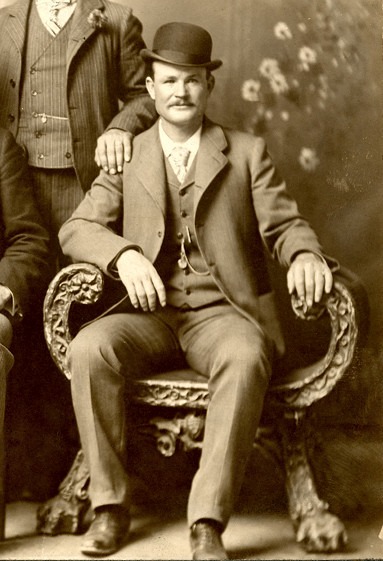
Butch Cassidy is a name that resonates with the legends of the American West, representing a blend of outlaw mystique and gentlemanly charm. Born Robert LeRoy Parker on April 13, 1866, in Beaver, Utah, Cassidy’s life became the stuff of folklore, punctuated by audacious train and bank robberies, a long pursuit by law enforcement, and an enigmatic end that still fuels speculation and myth.
Early Life and Influences
Robert LeRoy Parker was the first name that Butch Cassidy would answer to. Raised in a large family of thirteen children in the Mormon community of Beaver, Utah, his early years were steeped in the values and lifestyle of the American frontier. Despite the later criminal path he chose, these formative years on the family ranch in Circleville, Utah, imparted to him a sense of community and a work ethic that would ironically manifest in his meticulous planning of heists.
Cassidy’s introduction to a life of crime came through his association with Mike Cassidy, a seasoned cowboy and outlaw who taught him the tricks of the trade. This mentor relationship was pivotal in shaping young Robert’s future, leading him down a path of outlawry that he would walk for the rest of his life. By adopting the name Butch Cassidy, he honored his mentor while also crafting an identity that would become infamous across the United States.
The Rise of Butch Cassidy: From Ranch Hand to Outlaw Leader
Before he became the legendary outlaw, Cassidy tried his hand at various honest jobs. He worked as a butcher in Rock Springs, Wyoming, a role that earned him the nickname “Butch.” However, the pull of the outlaw life was too strong, and he soon found himself forming and leading a gang that would become known as the Wild Bunch.
The first recorded crime attributed to Cassidy and his gang was a failed attempt to rob the Rio Grande Railway in Denver, Colorado, on November 3, 1887. The heist failed when the railroad employee bravely refused to open the safe despite the gang’s threats. However, this setback did not deter Cassidy. His next attempt, on March 30, 1889, targeted the First National Bank of Denver. In a display of wit and audacity that would become his trademark, Cassidy tricked the bank manager into handing over $21,000 by convincing him that a nitroglycerin bottle (which was actually filled with water) would blow the place up if he didn’t comply.
Cassidy’s criminal career was marked by a series of successful robberies, the first of which took place on June 24, 1889, at the San Miguel Bank in Telluride, Colorado. Along with his partners Tom McCarty, Matt Warmer, and Bart Madden, Cassidy made off with $10,000—a substantial sum at the time. This robbery was notable not just for the amount of money stolen, but for the lack of violence involved, a hallmark of Cassidy’s approach to crime. He and his gang were meticulous in planning their heists, aiming to avoid bloodshed whenever possible.
The Wild Bunch and the Peak of Cassidy’s Criminal Career
As Cassidy’s notoriety grew, so did his gang. By 1896, he had gathered a group of criminals that would go down in history as the Wild Bunch. This group included the infamous Harry Longabaugh, better known as the Sundance Kid, and together they embarked on a spree of robberies that would cement their place in the annals of American criminal history.
The Wild Bunch was known for their well-coordinated and daring robberies, many of which targeted trains and banks across the western United States. One of their most notorious heists took place on August 29, 1900, when they robbed a Union Pacific train near Tipton, Wyoming. The gang made off with a significant amount of money, but the heist also led to Cassidy’s identification by multiple witnesses, which only intensified the manhunt for him and his associates.
The gang’s success was partly due to Cassidy’s leadership and his ability to plan and execute complex robberies with military precision. He was also known for his ability to evade capture, often escaping into the rugged terrain of the American West, where he and his gang could lay low until the heat died down.
A Legend in the Making: The Move to South America
By the early 1900s, the relentless pursuit by law enforcement was beginning to take its toll on Cassidy and his gang. In 1901, Cassidy, along with the Sundance Kid and Etta Place, a schoolteacher from Texas who was Sundance’s girlfriend, decided to flee to South America in search of a quieter life. They settled in Argentina, where they attempted to live as ranchers, but the allure of the outlaw life proved too strong.
Despite their efforts to go straight, the trio soon returned to their old ways, robbing banks and trains in South America just as they had in the United States. The most famous of these heists took place in 1905 when they robbed the Banco de Tarapacá y Argentino in Río Gallegos, Argentina, making off with a substantial sum of money.
Their South American exploits were cut short, however, as law enforcement from both North and South America began closing in on them. In 1908, Cassidy and the Sundance Kid were reportedly killed in a shootout with Bolivian soldiers in the small village of San Vicente. However, the details of their deaths remain shrouded in mystery, with some claiming that Cassidy and Sundance faked their deaths and lived out their days under assumed identities back in the United States.
The Legacy of Butch Cassidy
The life of Butch Cassidy has inspired numerous books, films, and television shows, most notably the 1969 film “Butch Cassidy and the Sundance Kid” starring Paul Newman and Robert Redford. This film romanticized the lives of Cassidy and his gang, portraying them as lovable rogues who were more interested in outsmarting their pursuers than in committing acts of violence.
Cassidy’s legacy as a “gentleman bandit” persists, largely due to the fact that he and his gang were known for their preference to avoid unnecessary bloodshed. While they were certainly criminals, they were not cold-blooded killers, and this distinction has helped to preserve their reputation as folk heroes in the eyes of many.
Moreover, Cassidy’s life and exploits have become emblematic of the Wild West, a time and place where the lines between right and wrong were often blurred, and where men like Cassidy could become legends in their own lifetimes. His story is a testament to the enduring appeal of the outlaw archetype in American culture, a figure who stands outside the law yet remains bound by his own code of honor.
Butch Cassidy in Popular Culture
The legend of Butch Cassidy has been kept alive not just through historical accounts, but also through popular culture. The 1969 film “Butch Cassidy and the Sundance Kid” remains one of the most iconic representations of his life, capturing the imagination of audiences with its blend of action, humor, and tragedy. The film’s success helped to cement Cassidy’s place in the pantheon of American folk heroes, alongside other outlaws like Jesse James and Billy the Kid.
In addition to films, Cassidy’s life has been the subject of numerous books and documentaries, each offering a different perspective on his exploits and the times in which he lived. These works often explore the complexities of his character, portraying him as a man who, despite his criminal activities, had a strong sense of loyalty to his friends and a deep understanding of the social and economic forces that shaped his world.
The Historical Context of Butch Cassidy’s Life
To fully understand the life and legacy of Butch Cassidy, it’s important to consider the historical context in which he lived. The late 19th and early 20th centuries were a time of great change in the United States, as the country transitioned from a frontier society to an industrialized nation. This period saw the closing of the American frontier, as settlers moved westward in search of land and opportunity, often clashing with Native American tribes and with each other.
For men like Cassidy, the changing landscape of the West presented both challenges and opportunities. The expansion of the railroads and the growth of towns and cities brought with it new targets for outlaws, but it also meant that law enforcement was becoming more organized and effective. Cassidy’s ability to navigate this changing environment, to adapt to new circumstances and continue his criminal activities despite the growing presence of law enforcement, is a testament to his skill and resourcefulness as an outlaw.
Conclusion
Butch Cassidy remains one of the most fascinating figures of the American West, a man whose life and exploits have captured the imagination of generations. From his early days as a ranch hand in Utah to his rise as the leader of the Wild Bunch, Cassidy’s life was one of adventure and intrigue, marked by daring heists, close escapes, and an enduring legacy as a “gentleman bandit.” His story is a reminder of a time when the West was still wild, and when men like Cassidy could carve out a place for themselves in the annals of American history.
Whether he died in a Bolivian shootout or lived out his days under an assumed identity, Butch Cassidy’s legend continues to live on, a testament to the enduring allure of the outlaw and the mythic power of the American West.


