
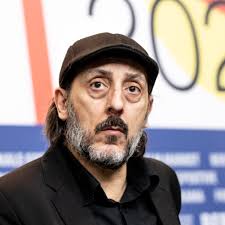
Massimo Ceccherini is a multifaceted Italian artist who has carved a significant niche in the entertainment industry. Born on May 23, 1965, in Florence, Italy, Ceccherini is best known as an actor, but his talents extend far beyond acting; he is also a director, screenwriter, and writer. His journey from a music and theater enthusiast to becoming one of the most iconic figures in Italian cinema is a tale of perseverance, talent, and a unique comedic style.
Early Life and Education
Massimo Ceccherini was born into a working-class family, with his father working as a painter. From a young age, Ceccherini demonstrated a profound passion for music and theater. He began playing the guitar and composing songs, participating in various music competitions. His early exposure to the arts set the stage for what would become a vibrant and dynamic career.
After completing high school at a classical lyceum, Ceccherini enrolled in the Faculty of Letters at the University of Florence. However, his academic pursuits were short-lived; after two years, he decided to leave the university to fully dedicate himself to his artistic career.
The Beginning of His Artistic Career
Ceccherini’s entry into the world of entertainment began in the realm of cabaret. In 1985, he formed a comedy duo with his friend Alessandro Paci. The pair quickly gained popularity, performing in local venues across Florence and Tuscany. Their success led to their participation in the popular television show “La Corrida,” hosted by the legendary Corrado Mantoni in 1987.
By the mid-1990s, Ceccherini had become a familiar face on Italian television, particularly through his appearances on the cabaret show “Aria Fresca,” hosted by Carlo Conti. This exposure laid the groundwork for his subsequent ventures into film and broader television fame.
Breakthrough in Cinema
Ceccherini made his cinematic debut in 1990 with the film “Benvenuti in Casa Gori,” directed by Alessandro Benvenuti. He continued to work with Benvenuti, appearing in “Zitti e Mosca” the following year. However, it was his role in the 1994 film “Cari Fottutissimi Amici,” directed by Mario Monicelli and starring Paolo Villaggio, that started to cement his reputation as a talented actor.
The true turning point in Ceccherini’s career came in 1996 with his role in “Il Ciclone,” directed by Leonardo Pieraccioni. The film was a massive success, breaking box office records and earning critical acclaim. Ceccherini’s performance as a comedic actor was widely praised, and he quickly became one of the most recognizable faces in Italian cinema of the 1990s and 2000s.
Collaborations and Continued Success
Following the success of “Il Ciclone,” Ceccherini continued to collaborate with Leonardo Pieraccioni, starring in several of his films, including “Fuochi d’Artificio” (1997), “Il Principe e il Pirata” (2001), and “Il Paradiso All’Improvviso” (2003). These films further solidified his status as a leading comedic actor in Italy.
Throughout the late 1990s and 2000s, Ceccherini maintained a steady presence in Italian cinema, appearing in films such as “Ti Amo in Tutte le Lingue del Mondo” (2005), “Una Moglie Bellissima” (2007), and “Io & Marilyn” (2009). His roles often highlighted his distinctive comedic style, characterized by irreverence and a boccaccesque humor that resonated with audiences.
Ceccherini’s versatility as an actor is evident in his work with other prominent directors as well. He appeared in Carlo Vanzina’s “Un’estate al Mare” (2008) and Neri Parenti’s “Amici Miei – Come Tutto Ebbe Inizio” (2011). In recent years, he has continued to take on diverse roles, including in Francesca Archibugi’s “Il Colibrì” (2022) and the upcoming “Pare Parecchio Parigi” (2024).
Behind the Camera: Directing and Screenwriting
In addition to his work as an actor, Massimo Ceccherini has also made significant contributions to Italian cinema as a director and screenwriter. He made his directorial debut with the film “Lucignolo” in 1999, followed by “Faccia di Picasso” (2000), “La Mia Vita a Stelle e Strisce” (2003), and “La Mia Mamma Suona il Rock” (2013). These films showcase his unique voice and vision, blending humor with poignant social commentary.
As a screenwriter, Ceccherini has collaborated with esteemed directors like Matteo Garrone, co-writing the screenplay for “Pinocchio” (2019) and “Io Capitano” (2023). The latter film has been nominated for an Academy Award, further demonstrating Ceccherini’s range and talent as a storyteller.
Television Appearances and Reality Shows
Beyond film, Massimo Ceccherini has also made his mark on Italian television. He co-hosted the prestigious Sanremo Music Festival in 2001 and served as a presenter for the popular satirical news show “Striscia la Notizia” in 2005. His television career also includes appearances on reality shows, most notably “L’Isola dei Famosi,” where he participated twice, in 2006 and again in 2017.
Personal Life
Massimo Ceccherini is married to Elena Labate, and while he tends to keep his personal life relatively private, his marriage is one of the few personal details that have been made public.
Legacy and Impact
Massimo Ceccherini’s contribution to Italian cinema and television is undeniable. His comedic style, characterized by its irreverence and boldness, has left a lasting impact on the Italian entertainment landscape. His collaborations with directors like Leonardo Pieraccioni and Matteo Garrone have produced some of the most memorable films in recent Italian cinema.
Ceccherini’s ability to transition from a successful career in cabaret to becoming a leading figure in Italian cinema speaks to his versatility and talent. As a director, screenwriter, and actor, he has consistently pushed the boundaries of comedy and storytelling, making him a true icon of Italian culture.
In summary, Massimo Ceccherini is more than just an actor; he is a cultural force whose work spans multiple facets of the entertainment industry. His life and career continue to inspire and entertain audiences, ensuring his place in the pantheon of Italian cinema greats.


