
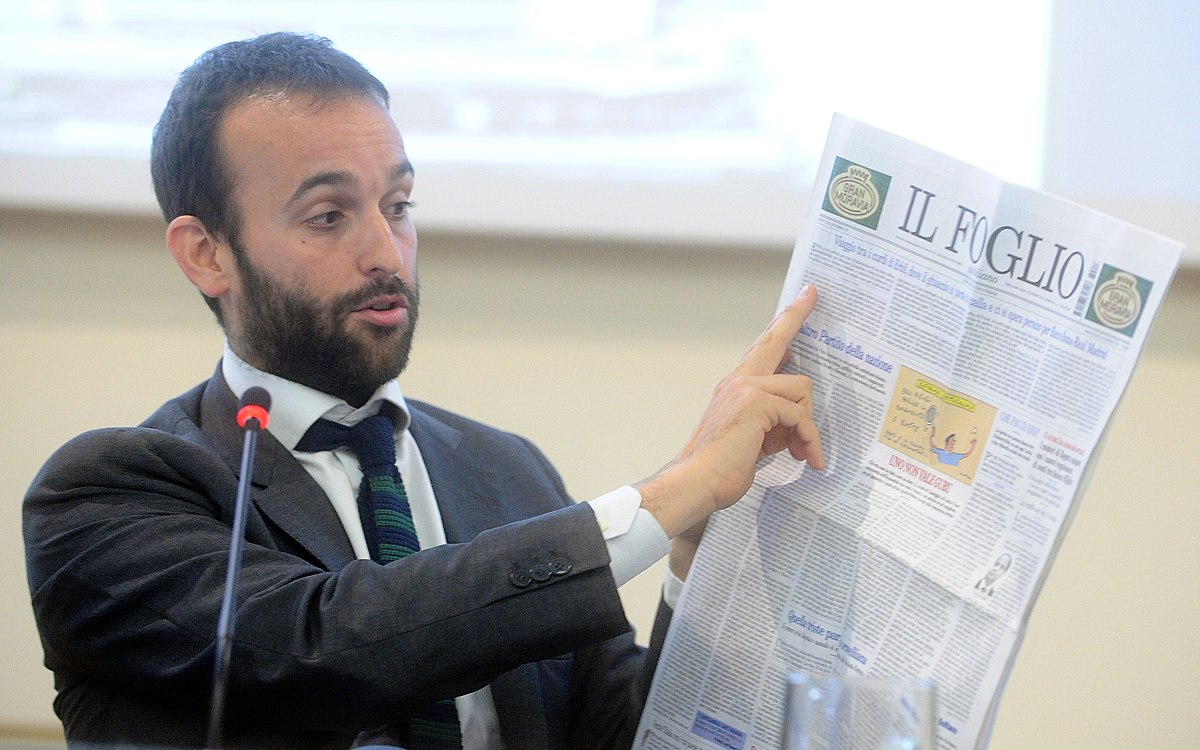
Claudio Cerasa is a prominent figure in Italian journalism, known for his incisive political analysis and his tenure as the editor-in-chief of Il Foglio, one of Italy’s most influential newspapers. Born on May 7, 1982, in Palermo, Sicily, Cerasa’s career has been marked by a rapid rise to prominence in the Italian media landscape. His work is characterized by a deep understanding of political dynamics, a commitment to journalistic integrity, and a willingness to engage in public debates on controversial issues. This article explores Cerasa’s life, his rise to fame, his significant contributions to journalism, and the impact he continues to have on Italian media.
Early Life and Background
Claudio Cerasa was born into a family with a strong journalistic background. His father, Giuseppe Cerasa, was an influential journalist in the Roman edition of La Repubblica, one of Italy’s leading newspapers. This early exposure to the world of journalism undoubtedly influenced Claudio’s career path, instilling in him a passion for writing and reporting from a young age.
Growing up in Palermo, Cerasa experienced firsthand the complex political and social environment of Sicily, a region known for its rich history but also its challenges with organized crime and political corruption. These experiences would later inform his work as a journalist, giving him a nuanced perspective on the issues facing Italy.
Cerasa moved to Rome during his youth, where he began his career in journalism. His early work included collaborations with La Gazzetta dello Sport, one of Italy’s most popular sports newspapers, where he demonstrated his ability to secure high-profile interviews, including one with the notoriously media-shy Roberto Mancini, a significant achievement that earned him recognition early in his career.
Entry into Journalism: Early Career and Challenges
Claudio Cerasa’s entry into the world of journalism was marked by his work with La Gazzetta dello Sport and Radio Capital, where he began working at just 19 years old. His time at Radio Capital provided him with valuable experience in broadcasting, allowing him to develop his skills as a communicator and commentator. Over the next few years, Cerasa continued to build his reputation, taking on various roles in different media outlets.
In 2005, Cerasa joined Il Foglio, a daily newspaper founded by Giuliano Ferrara, a prominent Italian journalist and politician. Initially starting as an intern, Cerasa quickly made a name for himself with his sharp analytical skills and his ability to tackle complex political issues. Within a few months, he was offered a permanent position at the newspaper, marking the beginning of a significant chapter in his career.
Rise to Prominence: Key Investigations and Editorial Work
One of the key moments in Cerasa’s early career at Il Foglio was his involvement in an investigation into the accusations of child abuse at a kindergarten in Rignano Flaminio. At a time when much of the media had already condemned the accused, Cerasa took a different approach, conducting a thorough investigation that ultimately led to the exoneration of the accused teachers and a janitor. The case was highly publicized, and Cerasa’s work was praised for its fairness and commitment to uncovering the truth.
Cerasa’s reputation continued to grow, and he began to focus more on political journalism. In 2008, he secured an exclusive interview with Walter Veltroni, the then-leader of the Democratic Party, where Veltroni discussed his plans for the upcoming elections and his decision not to ally with Antonio Di Pietro’s Italia Dei Valori. This interview further solidified Cerasa’s position as a leading political journalist.
As Cerasa’s profile grew, he was promoted to the role of managing editor at Il Foglio. In this role, he was responsible for overseeing the newspaper’s political coverage, particularly focusing on the internal dynamics of the Democratic Party. Cerasa was among the first journalists to recognize the potential of Matteo Renzi, following his rise from the president of the Province of Florence to a key figure in national politics.
Becoming Editor-in-Chief: Challenges and Controversies
In January 2015, Claudio Cerasa was appointed as the editor-in-chief of Il Foglio, taking over from Giuliano Ferrara. His appointment marked a new era for the newspaper, with Cerasa bringing a fresh perspective and a renewed focus on independent journalism. Under his leadership, Il Foglio continued to be a platform for in-depth political analysis, opinion pieces, and investigative journalism.
However, Cerasa’s tenure as editor-in-chief has not been without controversy. One of the most notable incidents occurred in June 2018, when Cerasa found himself at odds with the newspaper’s owner, Valter Mainetti. Mainetti, the president of Sorgente Group and the newspaper’s publisher, publicly expressed support for the then-governing coalition between the Five Star Movement and the League, a stance that was at odds with the editorial line of Il Foglio, which had been critical of the government. In an unusual move, Mainetti’s position was published on the front page of the newspaper, effectively challenging the editorial independence of Il Foglio.
Cerasa responded to the controversy by reaffirming the autonomy of the newspaper and its commitment to independent journalism, a stance that was widely supported by the journalistic community. This incident highlighted the challenges faced by editors in maintaining editorial independence, particularly when there are conflicts with ownership.
Contributions to Italian Journalism and Media
Throughout his career, Claudio Cerasa has made significant contributions to Italian journalism. His work is characterized by a commitment to uncovering the truth, a willingness to tackle difficult and controversial issues, and a dedication to maintaining the highest standards of journalistic integrity. Cerasa’s writing style is sharp and insightful, often delving into the complexities of Italian politics and society.
In addition to his work at Il Foglio, Cerasa has contributed to various other publications and media outlets. He has written for Il Sole 24 Ore’s monthly magazine, Rivista Studio, GQ, and Wired. His television appearances on shows such as Le Invasioni Barbariche and Porta a Porta have further expanded his influence, allowing him to engage with a broader audience on issues ranging from politics to social issues.
Cerasa is also an educator, teaching at the master’s program in Journalism and Radio-Television Journalism at Eidos Communication in Rome. His involvement in education reflects his commitment to nurturing the next generation of journalists, passing on his knowledge and experience to aspiring writers and reporters.
Literary Contributions: Books and Publications
In addition to his journalism, Claudio Cerasa is also an accomplished author. His books offer a deeper exploration of the political and social issues that have defined his career.
His first book, Ho visto l’uomo nero (2007), published by Castelvecchi, examines the legal and societal implications of the Rignano Flaminio case, shedding light on the complexities of the Italian justice system and the role of the media in shaping public perception.
In 2009, Cerasa published La Presa di Roma with Rizzoli, a book that provides an in-depth analysis of Roman politics, particularly focusing on the election of Gianni Alemanno as mayor of Rome. The book explores the dynamics of power in the capital and the broader implications for Italian politics.
Cerasa continued to delve into political analysis with Le catene della sinistra (2014), also published by Rizzoli. In this book, he critically examines the flaws and missteps of the Italian left, arguing that these have prevented it from becoming the dominant political force in the country. The book is a detailed exploration of the internal struggles within the left and offers insights into the broader challenges facing progressive movements in Italy.
His most recent book, Abbasso i tolleranti (2018), also published by Rizzoli, addresses the dangers of excessive tolerance towards those who seek to undermine freedom and democracy. The book argues for the need to defend democratic values against those who would use them to erode the very freedoms they stand for. This work reflects Cerasa’s ongoing engagement with the critical issues facing modern society and his commitment to defending the principles of liberal democracy.
Personal Life and Interests
Claudio Cerasa’s personal life is as dynamic as his professional career. He is married and has two children, balancing his demanding career with family life. Despite his busy schedule, Cerasa finds time to pursue his personal interests, which include a passion for music—particularly the punk rock band Green Day—and sports, being a dedicated fan of both Palermo and Inter Milan football clubs.
Cerasa is also active on social media, where he engages with his audience and shares his thoughts on current events. His presence on platforms like Twitter and Facebook allows him to interact directly with readers, offering insights and commentary on the issues of the day.
Impact and Legacy
Claudio Cerasa’s impact on Italian journalism is significant. As the editor-in-chief of Il Foglio, he has played a crucial role in shaping the newspaper’s editorial direction, maintaining its reputation for independent and rigorous journalism. His work has influenced public discourse in Italy, particularly in the areas of politics and media.
Cerasa’s commitment to journalistic integrity, his willingness to engage with difficult issues, and his dedication to nurturing the next generation of journalists ensure that his influence will be felt for years to come. In a media landscape that is increasingly fragmented and polarized, Cerasa’s work stands out for its commitment to truth and its focus on the complexities of Italian society.
Conclusion
Claudio Cerasa is a towering figure in Italian journalism, known for his sharp analysis, his commitment to independent journalism, and his willingness to tackle difficult and controversial issues. From his early days at La Gazzetta dello Sport to his current role as editor-in-chief of Il Foglio, Cerasa’s career is a testament to the power of journalism to shape public discourse and influence society. His books, articles, and media appearances continue to engage and inform audiences, making him one of the most influential voices in Italian media today.
As he continues to lead Il Foglio and contribute to the broader media landscape, Claudio Cerasa’s work will undoubtedly continue to shape the future of Italian journalism and inspire the next generation of journalists.


