
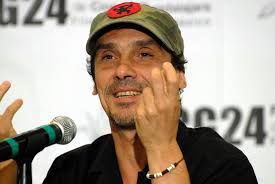
Manu Chao, born José Manuel Thomas Arthur Chao on June 21, 1961, in Paris, France, is a world-renowned musician, singer, and activist. Known for his eclectic music style that blends rock, reggae, ska, and various Latin rhythms, Manu Chao has become a symbol of cultural diversity and social activism. His work resonates with themes of migration, social justice, and the struggles of marginalized communities. Over the years, Chao has built a dedicated global fan base, not only through his music but also through his commitment to social causes and his nomadic, rebellious spirit.
Early Life and Musical Influences
Manu Chao’s upbringing was steeped in cultural and political diversity, which greatly influenced his later work. His parents were Spanish immigrants—his mother was from Bilbao, and his father, Ramón Chao, was a Galician journalist and writer who fled Francoist Spain. Growing up in a household that often hosted political exiles and refugees, Chao was exposed to a variety of ideas and perspectives from a young age. These experiences fostered a deep empathy for the underprivileged and a strong sense of social justice, themes that would later permeate his music.
In his youth, Chao was drawn to the underground music scene in Paris. He began his musical journey by playing in various bands, experimenting with different genres including punk, rockabilly, and reggae. His first notable band was Hot Pants, where he played rockabilly music, followed by collaborations with groups like Joint de Culasse and Los Carayos. These early ventures helped him develop a unique sound that blended his diverse musical influences with his own social and political consciousness.
The Rise of Mano Negra
In 1987, Manu Chao, along with his cousin Santi Casariego and other musicians, formed the band Mano Negra, a name inspired by an Andalusian anarchist group. Mano Negra quickly gained recognition for their energetic performances and their ability to mix a variety of musical styles, including rock, ska, reggae, flamenco, and Latin rhythms. The band’s music was a reflection of Chao’s multicultural background and his commitment to social and political causes.
Mano Negra’s debut album, Patchanka (1988), was a critical and commercial success, especially in Europe and Latin America. The band’s music was characterized by its raw energy and eclectic mix of genres, which set them apart from the mainstream music of the time. Their follow-up albums, Puta’s Fever (1989) and King of the Bongo (1991), further solidified their status as pioneers of a new, global sound.
Mano Negra’s success was not just limited to their recordings. The band was known for their live performances, which often took place in unconventional venues, including squats and community centers in marginalized neighborhoods. They frequently performed free concerts, particularly in neglected urban areas, as a way of connecting with the communities they sought to represent in their music. This approach helped build a loyal fan base and earned them a reputation as a band that truly cared about social issues.
Despite their success, Mano Negra was a band built on a sense of purpose rather than commercial ambition. By 1994, the band members began to feel that they had lost the original motivation that had driven them. The constant touring and the pressures of the music industry took their toll, leading to the dissolution of Mano Negra. Chao described the end of Mano Negra as the result of “exhaustion of the original motivations,” marking the end of a significant chapter in his career.
The Solo Career and Global Success
After the breakup of Mano Negra, Manu Chao embarked on a new musical journey. Embracing his nomadic spirit, he traveled extensively across Africa and Latin America, absorbing the sounds, rhythms, and stories of the people he met along the way. These travels profoundly influenced his music, leading to the creation of a distinctive solo sound that was both global and deeply personal.
In 1998, Manu Chao released his first solo album, Clandestino, which became a surprise global hit. The album was a reflection of his travels, featuring songs in multiple languages—Spanish, French, English, and Portuguese—and incorporating a wide range of musical styles, from reggae to salsa to Afro-Cuban rhythms. The album’s title track, “Clandestino,” became an anthem for immigrants and marginalized communities, touching on themes of displacement, identity, and resistance.
Clandestino was initially intended to be an intimate album, recorded with little expectation of commercial success. However, the album’s raw emotion, infectious melodies, and socially conscious lyrics resonated with listeners around the world, making it a worldwide phenomenon. The album sold millions of copies, largely through word-of-mouth rather than traditional marketing campaigns, which was a testament to its universal appeal.
Following the success of Clandestino, Chao released his second solo album, Próxima Estación: Esperanza (2001). The album continued in the vein of Clandestino, blending global sounds with socially and politically charged lyrics. However, Próxima Estación: Esperanza had a more optimistic and celebratory tone, reflecting Chao’s enduring belief in hope and resilience despite the struggles faced by marginalized communities.
Songs like “Me Gustas Tú” from the album became hits, further solidifying Chao’s status as a global music icon. His music videos, often featuring vibrant, colorful imagery that reflected the multiculturalism of his sound, helped to broaden his appeal. Chao’s music spoke to a global audience, transcending language and cultural barriers, and earning him a dedicated following across continents.
Activism and Social Engagement
Manu Chao’s music has always been intertwined with his activism. Throughout his career, he has used his platform to speak out against social injustices, particularly those affecting immigrants, refugees, and indigenous communities. His lyrics often address issues such as globalization, poverty, inequality, and the destructive impact of neoliberal economic policies.
Chao’s commitment to activism extends beyond his music. He has been actively involved in various social movements, often lending his support to causes related to human rights, environmental protection, and anti-globalization. One of his most notable engagements was with the Zapatista movement in Mexico. In the late 1990s, Chao traveled to Chiapas to perform for the indigenous communities allied with the Zapatista Army of National Liberation (EZLN). His performances were not merely concerts but acts of solidarity with the indigenous peoples struggling for their rights and autonomy.
Chao’s activism has sometimes brought him into conflict with authorities. On one occasion, he was detained by Mexican police while attempting to perform in the conflict-ridden region of Chiapas. However, such incidents have only reinforced his resolve to use his music as a tool for social change. His commitment to social justice has earned him the admiration of fans who see him as not just a musician, but as a voice for the voiceless.
Legacy and Cultural Impact
Manu Chao’s influence on the global music scene is undeniable. He has been a pioneer in fusing different musical traditions from around the world, creating a sound that is both diverse and cohesive. His music transcends borders, languages, and cultures, making him a truly global artist. Chao’s approach to music and activism has inspired countless other artists to explore new sounds and to use their platforms to address social issues.
In addition to his musical contributions, Chao’s DIY approach to music production and distribution has also been influential. He has often bypassed traditional music industry channels, choosing instead to release his music independently or through small, independent labels. This approach has allowed him to maintain creative control over his work and to stay true to his principles.
Manu Chao’s legacy is also evident in the way his music has been embraced by social movements around the world. His songs have become anthems for those fighting against oppression, injustice, and inequality. Whether it’s the struggles of immigrants, the plight of indigenous peoples, or the fight against corporate greed, Chao’s music has provided a soundtrack for resistance and resilience.
As of today, Manu Chao continues to make music and to engage in activism, although he has remained relatively low-profile compared to the height of his fame in the early 2000s. He remains a deeply respected figure in the music industry and among activists, known for his unwavering commitment to his values and his ability to connect with people from all walks of life.
Conclusion: The Enduring Influence of Manu Chao
Manu Chao’s life and career are a testament to the power of music as a force for social change. From his early days in the Parisian underground music scene to his rise as a global music icon, Chao has always used his art to challenge the status quo and to give voice to the marginalized. His music, characterized by its eclectic mix of styles and its socially conscious lyrics, has resonated with audiences around the world, earning him a place as one of the most important musicians of his generation.
Chao’s influence extends beyond music; he has become a symbol of resistance and hope for millions of people. His work reminds us that music can be a powerful tool for raising awareness, building solidarity, and inspiring action. As he continues to make music and to fight for social justice, Manu Chao’s legacy will undoubtedly endure for years to come.


