
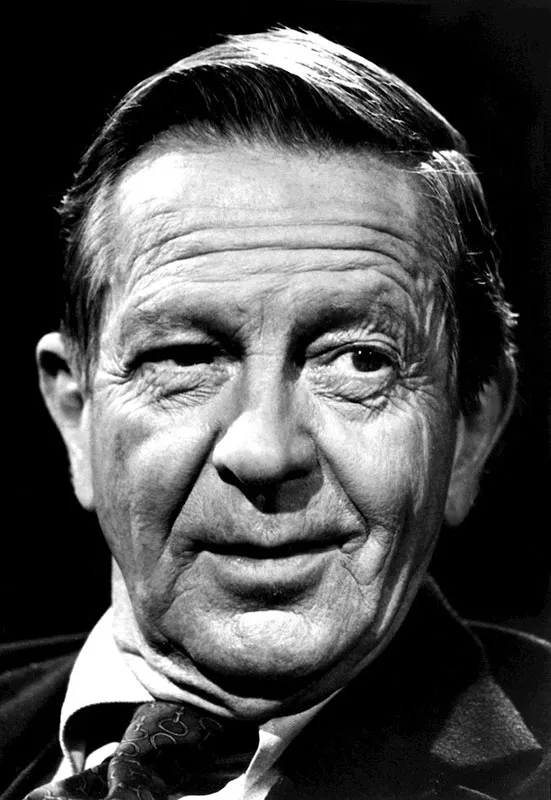
John Cheever, often hailed as the “Chekhov of the suburbs,” is one of the most significant figures in 20th-century American literature. Born on May 27, 1912, in Quincy, Massachusetts, Cheever’s works reflect the complexities of American life, particularly in the post-World War II era. His stories, characterized by their deep psychological insights and often satirical undertones, offer a glimpse into the struggles and aspirations of the American middle class. This article explores the life, fame, and literary contributions of John Cheever, shedding light on the nuances of his work and the historical context that shaped his writing.
Early Life and Education: The Formative Years
John Cheever was born into a family that experienced significant financial instability, which had a profound impact on his early life. His father, Frederick Lincoln Cheever, was a successful shoe salesman, while his mother, Mary Liley Cheever, managed a gift shop. The family enjoyed a comfortable lifestyle until the economic downturn following World War I, which led to the collapse of his father’s business and plunged the family into financial difficulties.
Cheever grew up in Wollaston, a suburb of Quincy, where he attended the Thayer Academy, a private school. However, he found it difficult to fit in and eventually transferred to Quincy High School. His academic performance was mediocre, and in 1929, at the age of 17, he was expelled for smoking. This event became the subject of his first published story, “Expelled,” which appeared in The New Republic in 1930. The story marked the beginning of Cheever’s long and prolific writing career, characterized by a keen observation of social mores and human behavior.
The 1930s: Early Struggles and Breakthroughs
The 1930s were a period of experimentation and struggle for Cheever. After leaving high school, he lived a bohemian lifestyle, moving between Boston, New York, and various other locations without a permanent residence. He shared an apartment in Beacon Hill, Boston, with his older brother Fred, and spent his time writing and submitting stories to various publications.
In 1935, Cheever sold his first story to The New Yorker, a publication with which he would have a long and fruitful relationship. The story, titled “Buffalo,” earned him $45—a modest sum, but a significant milestone in his early career. This sale marked the beginning of his association with The New Yorker, which became the primary outlet for his work over the next several decades.
During this time, Cheever also worked for the Federal Writers’ Project, a New Deal program that provided employment to writers during the Great Depression. He contributed to the WPA Guide to New York City, but found the work unfulfilling and left after less than a year. It was during this period that Cheever met Mary Winternitz, a woman seven years his junior, who would become his wife in 1941.
The 1940s: War, Family, and Early Success
The 1940s were a transformative decade for Cheever, both personally and professionally. In 1941, he married Mary Winternitz, and the following year, he enlisted in the U.S. Army as World War II intensified. His military service, though not particularly distinguished, provided him with a wealth of experiences that would later inform his writing.
In 1943, Cheever published his first collection of short stories, The Way Some People Live. The collection was a modest success, but Cheever himself later dismissed it as immature and attempted to destroy as many copies as he could. Despite his dissatisfaction with the book, it marked the beginning of his emergence as a significant literary voice.
That same year, Cheever and his wife welcomed their first child, Susan. The family moved to Manhattan, where Cheever continued to write, selling stories to The New Yorker and other magazines. His literary output during this period was prolific, and he began to establish a reputation as a sharp observer of middle-class life, capturing the subtleties and contradictions of American society.
The 1950s: Critical Acclaim and Personal Turmoil
The 1950s were a period of both great success and deep personal turmoil for Cheever. In 1953, he published his second collection of short stories, The Enormous Radio, which was well-received and solidified his reputation as one of America’s leading short story writers. The title story, which explores the disintegration of a seemingly perfect marriage through the lens of a mysterious radio that broadcasts the private conversations of the couple’s neighbors, is considered one of Cheever’s finest works.
In 1956, Cheever published his first novel, The Wapshot Chronicle, which won the National Book Award for Fiction. The novel, a semi-autobiographical account of a New England family, was praised for its rich characterizations and lyrical prose. The success of the novel allowed Cheever to travel to Italy, where his third child, Federico, was born.
Despite his professional success, Cheever’s personal life was fraught with difficulties. He struggled with alcoholism, a problem that would plague him for much of his life. His drinking exacerbated his already complex relationships with his wife and children, and he often felt isolated and tormented by his bisexuality, which he tried to suppress. These personal struggles would later find their way into his fiction, adding depth and poignancy to his work.
The 1960s: Continued Success and Deepening Troubles
The 1960s were marked by both continued literary success and worsening personal problems for Cheever. In 1964, he published The Wapshot Scandal, a sequel to The Wapshot Chronicle. The novel was well-received, but it did not achieve the same level of critical acclaim as its predecessor.
In 1964, Cheever also published “The Swimmer,” one of his most famous stories, in The New Yorker. The story, which follows a man as he attempts to swim home through the pools of his suburban neighbors, is a powerful exploration of denial, alienation, and the passage of time. It was later adapted into a film starring Burt Lancaster, in which Cheever made a brief cameo.
Despite these successes, Cheever’s personal life was unraveling. His alcoholism worsened, leading to bouts of depression and erratic behavior. He also began an extramarital affair with actress Hope Lange, further straining his already troubled marriage. In 1969, he published Bullet Park, a novel that received mixed reviews and failed to live up to the expectations set by his earlier work.
During this time, Cheever also taught at the Iowa Writers’ Workshop, where he influenced a new generation of writers, including T.C. Boyle. However, his struggles with alcohol often interfered with his teaching, and his personal life continued to deteriorate.
The 1970s: Redemption and Late-Career Triumphs
The 1970s marked a turning point in Cheever’s life. In 1975, his brother Fred intervened, taking Cheever to the Smithers Alcoholic Rehabilitation Unit in New York. The treatment was successful, and Cheever stopped drinking in 1977. This newfound sobriety brought a sense of clarity and renewed creativity to his work.
In 1977, Cheever published Falconer, a novel set in a prison that explores themes of confinement, redemption, and identity. The novel was a critical and commercial success, and is often considered one of Cheever’s masterpieces. It marked a triumphant return to form and demonstrated that, even in his later years, Cheever remained a formidable literary talent.
Cheever’s final novel, Oh What a Paradise It Seems, was published in 1982, shortly before his death. The novel, though brief, was well-received and provided a fitting conclusion to his illustrious career.
The Final Years: Legacy and Influence
John Cheever passed away on June 18, 1982, in Ossining, New York, after a long battle with kidney cancer. He was buried at the First Parish Cemetery in Norwell, Massachusetts. Despite the personal demons that haunted him throughout his life, Cheever’s literary legacy is one of profound insight into the human condition.
Cheever’s work has had a lasting impact on American literature. He is often compared to Anton Chekhov for his ability to capture the intricacies of ordinary lives with empathy and wit. His stories and novels continue to be studied and admired for their exploration of themes such as alienation, identity, and the American Dream.
Conclusion
John Cheever’s life and work offer a compelling portrait of a man who grappled with his own flaws while producing some of the most enduring literature of the 20th century. From his early struggles to his late-career triumphs, Cheever’s journey is one of redemption, artistic achievement, and a relentless pursuit of understanding the human experience. As the “Chekhov of the suburbs,” Cheever’s stories remain a testament to his extraordinary talent and his deep, often painful, insights into the complexities of modern life.


