
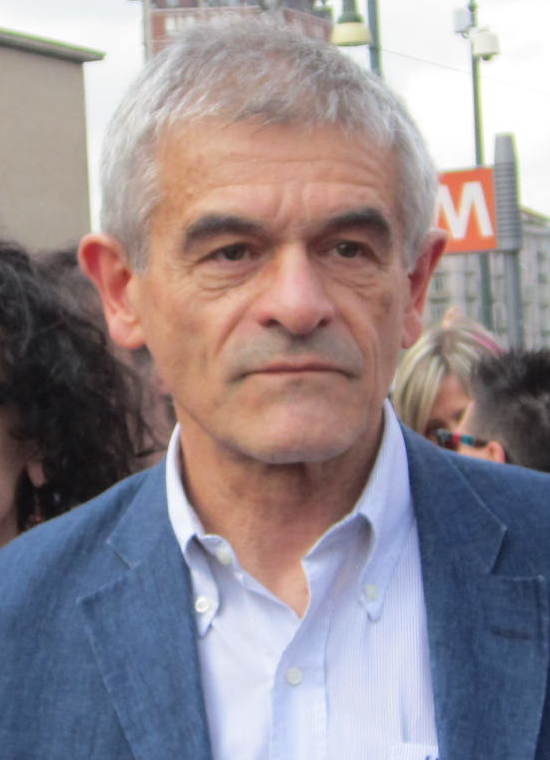
Introduction:
Sergio Chiamparino is a prominent figure in Italian politics, known for his extensive career in both local and national governance. Born on September 1, 1948, in Moncalieri, a town in the province of Turin, Chiamparino has spent decades serving the public, rising to fame as the Mayor of Turin, a role that cemented his reputation as a pragmatic and effective leader. Over the years, he has held various influential positions, including serving as President of the Piedmont Region and leading significant political and economic initiatives. This article provides a detailed exploration of Sergio Chiamparino’s life, his rise to fame, his political achievements, and the lasting impact of his work.
Early Life and Education:
Sergio Chiamparino was born into a modest family in Moncalieri, near Turin. He grew up in a period of significant social and economic change in post-war Italy, which would later influence his political ideology and commitment to social justice. Chiamparino pursued his early education at the “Sommeiller” Technical Institute in Turin, a choice that reflected his practical approach to learning and his interest in understanding the technical and economic aspects of society.
After completing his technical studies, Chiamparino enrolled at the University of Turin, where he earned a degree in Political Science. His academic pursuits at one of Italy’s most prestigious universities provided him with a solid foundation in political theory and economics, shaping his future career. Upon graduation, Chiamparino remained at the university as a researcher, further deepening his understanding of political and economic systems.
Early Political Career:
Chiamparino’s formal entry into politics began in the mid-1970s, a period marked by intense political activism in Italy. In 1975, after completing his military service with the Alpini, the Italian mountain infantry, Chiamparino became actively involved in local politics. He started his political journey as the leader of the Italian Communist Party (PCI) group in Moncalieri, where he quickly gained a reputation for his leadership skills and dedication to public service.
By 1982, Chiamparino had risen to become the head of the Economic Department of the PCI in Turin, a role he held until 1986. His responsibilities included shaping economic policies and strategies for the party, positioning him as a key player in the local political scene. His expertise in economics also led to his appointment as an economic consultant to the PCI delegation in the European Parliament, a position he held until 1988. This experience broadened his understanding of European politics and deepened his commitment to the principles of social justice and economic equality.
In 1989, Chiamparino transitioned to a new role as the regional secretary of the Italian General Confederation of Labour (CGIL), one of Italy’s largest trade unions. His work with the CGIL further solidified his reputation as a champion of workers’ rights and social equity, values that would continue to define his political career.
Rise to Prominence:
The early 1990s marked a significant turning point in Chiamparino’s political career. As the political landscape in Italy shifted with the dissolution of the PCI and the emergence of the Democratic Party of the Left (PDS), Chiamparino adapted to the changing environment. In 1993, he was elected as a city councilor in Turin, marking the beginning of his deep involvement in local governance.
Three years later, in 1996, Chiamparino was elected to the Italian Parliament, where he served as a member of the Chamber of Deputies. His tenure in Parliament allowed him to gain valuable experience in national politics and to build relationships with key political figures. However, it was his return to local politics that would define his legacy.
Mayor of Turin:
In March 2001, Sergio Chiamparino was thrust into the mayoral race for Turin under tragic circumstances. The original candidate for the center-left coalition, Domenico Carpanini, suddenly passed away due to a cerebral hemorrhage while engaged in a debate with his political opponent. With the election looming, Chiamparino was chosen as the new candidate, and he quickly organized an effective campaign that led to his election as Mayor of Turin, winning nearly 53% of the vote in the second round.
As Mayor, Chiamparino faced numerous challenges, but his pragmatic approach and dedication to the city’s development earned him widespread respect. One of his most significant achievements during his first term was successfully managing the preparations for the 2006 Winter Olympics, held in Turin. The event not only put the city on the global map but also spurred significant urban development, including infrastructure improvements and the revitalization of neglected areas.
Chiamparino’s leadership during the Olympics was widely praised, and his administration’s effective handling of the event helped boost Turin’s economy and international reputation. His success in this role led to his re-election in 2006, where he won over 66% of the vote, defeating Rocco Buttiglione, the center-right candidate, in the first round. During his second term, Chiamparino continued to focus on urban development, social policies, and economic revitalization, solidifying his legacy as one of Turin’s most effective mayors.
Challenges and Controversies:
Despite his successes, Chiamparino’s tenure as Mayor was not without its difficulties. In 2004, his administration faced a significant scandal related to the mismanagement of exhumations at the Monumental Cemetery in Turin, handled by a local cooperative. The situation led to a judicial investigation, which concluded in 2008 with Chiamparino’s exoneration. While the episode was a challenge, it did not significantly tarnish his reputation, and he continued to enjoy strong public support.
In 2007, Chiamparino was honored with the title of Grand Officer of the Order of Merit of the Italian Republic, recognizing his contributions to public service. That same year, he was appointed the National Reforms Coordinator for the Democratic Party, reflecting his growing influence within the party. In 2008, he served as the Shadow Minister for Federalism in Walter Veltroni’s shadow cabinet, further highlighting his prominence in national politics.
Post-Mayoral Career and Leadership in Piedmont:
After completing his second term as Mayor of Turin in 2011, Chiamparino did not immediately leave the political scene. In 2012, he was appointed President of the Compagnia di San Paolo, one of Italy’s most important philanthropic foundations. His leadership at the Compagnia di San Paolo further demonstrated his commitment to social issues and his ability to manage large organizations effectively.
In 2014, Chiamparino returned to electoral politics, running as the Democratic Party candidate for President of the Piedmont Region. He won the election with nearly 47% of the vote, taking office during a challenging period marked by economic difficulties and complex regional issues. As President, Chiamparino focused on addressing the region’s economic challenges, promoting sustainable development, and improving public services.
Chiamparino’s leadership in Piedmont was recognized on a national level when he was elected President of the Conference of Regions and Autonomous Provinces in 2015, succeeding Vasco Errani. In this role, he played a key part in coordinating the actions of Italy’s regional governments, particularly in the areas of health care, infrastructure, and economic policy. However, his tenure in this position was brief, as he resigned later that year following a ruling by the Italian Court of Auditors regarding the financial management of the Piedmont Region. Despite this setback, his colleagues chose to freeze his resignation, allowing him to continue to serve in his role.
2019 Regional Elections and Beyond:
In 2019, Chiamparino sought re-election as President of the Piedmont Region. However, in a highly competitive race, he was defeated by Alberto Cirio, the center-right candidate supported by Forza Italia, who garnered nearly 50% of the vote compared to Chiamparino’s 35.8%. The loss marked a significant moment in Chiamparino’s career, as it signaled the end of his tenure in regional leadership.
Following his defeat, Chiamparino has remained an influential figure in Italian politics, offering his insights and experience on various issues. While his future in politics remains uncertain, his impact on both Turin and Piedmont is undeniable.
Legacy and Impact:
Sergio Chiamparino’s legacy is defined by his commitment to public service, his pragmatic approach to governance, and his ability to navigate the complexities of both local and national politics. As Mayor of Turin, he played a crucial role in transforming the city into a vibrant, internationally recognized urban center, particularly through his leadership during the 2006 Winter Olympics. His work in the Piedmont Region further showcased his ability to manage large-scale projects and address complex economic and social issues.
Chiamparino’s influence extends beyond his electoral victories. He has been a key figure in the Democratic Party, contributing to the party’s policies and strategies over the years. His dedication to social justice, economic equality, and regional development has left a lasting impact on the communities he served.
Conclusion:
Sergio Chiamparino’s career is a testament to the power of effective leadership and the importance of public service. From his early days as a local politician in Moncalieri to his tenure as Mayor of Turin and President of the Piedmont Region, Chiamparino has consistently demonstrated his ability to lead with integrity and vision. While his political journey has had its ups and downs, his contributions to Italian politics and society are significant and enduring. As he continues to engage with public life, Sergio Chiamparino remains a respected and influential voice in Italy’s political landscape.


