
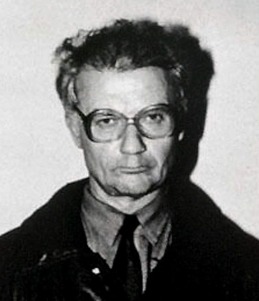
Andrei Chikatilo, born on October 16, 1936, in Yabluchne, Ukraine, is infamous for being one of the most notorious serial killers in history. Often referred to as the “Butcher of Rostov,” Chikatilo’s heinous crimes shocked the world and left an indelible mark on the annals of criminal history. His life, marked by disturbing violence and psychological torment, culminated in a series of brutal murders that spanned more than a decade. This comprehensive exploration delves into the life of Andrei Chikatilo, examining his background, the context of his crimes, and the factors that contributed to his notoriety.
Early Life and Childhood Trauma
Andrei Chikatilo was born in a small village in Ukraine during a time of immense hardship and suffering. His early years were defined by the backdrop of the Soviet Union’s political turmoil and the devastating impacts of World War II. Chikatilo’s family, like many others, endured extreme poverty, starvation, and the oppressive regime’s harsh policies.
One of the most significant events that purportedly shaped Chikatilo’s psyche was the death of his older brother, Stepan. According to family lore, Stepan was abducted and cannibalized during the severe famine that ravaged Ukraine in the early 1930s. Although there is no concrete evidence to confirm the existence of Stepan or the truth of this story, it was a tale that haunted Chikatilo throughout his life. This traumatic narrative may have contributed to his deeply disturbed mental state, fueling his later compulsions.
Chikatilo also suffered from a sexual dysfunction that left him impotent, further isolating him and contributing to his growing feelings of inadequacy and rage. These early experiences, combined with a lack of emotional support and the harsh realities of Soviet life, likely played a role in the development of Chikatilo’s deviant behavior.
Education and Early Career
Despite the difficulties of his upbringing, Andrei Chikatilo was an intelligent and academically capable individual. He aspired to improve his social standing and escape the hardships of his early life through education. In 1954, Chikatilo applied to study law at Moscow State University, but he was not accepted. This rejection was a significant blow to his self-esteem and ambitions.
Chikatilo eventually moved to a small town north of Rostov and found work as a telephone engineer. Although he struggled to integrate into his new community, Chikatilo maintained a facade of normalcy, adhering strictly to the Communist Party’s expectations. In 1963, he married Fayina, a friend of his sister, Tatyana. The couple had two children, Lyudmilla and Yuri, born in 1965 and 1969, respectively.
In 1971, after years of hard work and sacrifice, Chikatilo earned a degree in Russian Literature from the Rostov Liberal Arts University. This achievement allowed him to pursue a career as a teacher, a role that initially seemed to promise stability and respectability. However, his time as a teacher would soon reveal the cracks in his carefully constructed image.
The Descent into Violence
Andrei Chikatilo’s career as a teacher was marred by his inability to connect with his students and the inappropriate behavior that eventually surfaced. He was frequently ridiculed by his students and faced disciplinary actions for making unwanted sexual advances towards them. Despite these issues, Chikatilo managed to maintain his position for several years, but the frustration and humiliation he experienced only deepened his psychological instability.
By the late 1970s, Chikatilo’s suppressed urges began to manifest in increasingly violent ways. In 1978, he committed his first known murder, luring a nine-year-old girl named Yelena Zakotnova to an isolated area near a river. Chikatilo attempted to rape the girl, but when he was unable to perform sexually, he brutally stabbed her to death and discarded her body in the nearby water. The murder of Yelena Zakotnova marked the beginning of a gruesome killing spree that would continue for over a decade.
Chikatilo’s method of operation typically involved luring young women and children to secluded areas, where he would subject them to extreme violence, including stabbing, mutilation, and in some cases, acts of cannibalism. His inability to achieve sexual satisfaction through conventional means drove him to commit increasingly sadistic acts, as the physical and psychological torment he inflicted on his victims became his sole source of gratification.
The Investigation and Arrest
The Soviet authorities were initially slow to recognize the pattern of Chikatilo’s crimes, partly due to the decentralized nature of law enforcement in the Soviet Union and the reluctance to acknowledge the presence of such a heinous criminal within their society. For many years, Chikatilo was able to continue his killing spree with little interference, taking advantage of the chaotic environment and the authorities’ inability to connect the dots between his murders.
It wasn’t until the mid-1980s that law enforcement began to suspect the presence of a serial killer operating in the Rostov region. The investigation, codenamed “Operation Forest Path,” was hampered by the lack of forensic technology and the authorities’ reluctance to consider the possibility of a serial killer. In 1984, an innocent man named Alexander Kravchenko was wrongfully convicted and executed for one of Chikatilo’s murders, further delaying the investigation.
Chikatilo’s downfall began when he was finally placed under surveillance by a team of detectives led by Lieutenant Mikhail Fetisov. After years of evading capture, Chikatilo was arrested in November 1990, following a series of suspicious behaviors that included loitering near a train station where several of his victims had been abducted. Upon his arrest, police discovered evidence linking him to multiple murders, including bloodstains on his clothing that matched those of his victims.
The Trial and Execution
Andrei Chikatilo’s trial, which began in April 1992, was one of the most sensational and disturbing criminal proceedings in Soviet history. The sheer scale of his crimes, combined with the graphic details of the murders, captivated the public and media. Chikatilo was charged with 53 murders, although he later confessed to committing over 56, and possibly more.
Throughout the trial, Chikatilo exhibited bizarre behavior, ranging from defiant outbursts to incoherent ramblings, which led to questions about his sanity. However, a psychiatric evaluation determined that he was mentally fit to stand trial, and he was ultimately found guilty of 52 counts of murder. On October 15, 1992, Chikatilo was sentenced to death.
Chikatilo’s execution took place on February 16, 1994, in a Moscow prison. He was shot in the back of the head, a method commonly used for executions in Russia at the time. His death marked the end of one of the most terrifying chapters in Soviet criminal history, but the legacy of his crimes continues to haunt the collective memory of the region.
Psychological Profile and Legacy
The case of Andrei Chikatilo has been the subject of extensive study by criminologists, psychologists, and forensic experts. His psychological profile is complex, characterized by a combination of sexual sadism, psychopathy, and a deeply rooted sense of inadequacy. Chikatilo’s inability to achieve sexual fulfillment through normal means, coupled with his feelings of powerlessness and humiliation, drove him to seek control and dominance through violence.
Chikatilo’s crimes have also been analyzed in the context of the broader social and political environment of the Soviet Union. Some experts have suggested that the oppressive nature of Soviet society, combined with the economic hardships and lack of social mobility, may have contributed to the development of Chikatilo’s deviant behavior. The failure of the Soviet system to address the psychological needs of individuals, along with the reluctance to acknowledge the presence of such extreme criminality within its borders, created an environment in which Chikatilo could operate with impunity for many years.
Chikatilo’s legacy is a grim reminder of the capacity for human depravity and the importance of understanding the psychological factors that drive individuals to commit such heinous acts. His case has been the subject of numerous books, documentaries, and films, including the 2004 movie “Evilenko,” which fictionalizes his life and crimes.
Conclusion
Andrei Chikatilo’s life is a chilling example of how deeply rooted psychological trauma, combined with a repressive social environment, can lead to unimaginable acts of violence. His story is not just one of a disturbed individual, but also a reflection of the societal failures that allowed him to evade justice for so long. The horrors he inflicted upon his victims and their families left a lasting scar on the communities he terrorized and continue to serve as a sobering reminder of the darkest aspects of human nature.
As society continues to grapple with the legacy of Andrei Chikatilo, it is essential to learn from his case to prevent similar tragedies in the future. Understanding the complex interplay of psychological, social, and environmental factors that contribute to such extreme behavior is crucial in addressing the root causes of violence and ensuring that justice is served for those who fall victim to such atrocities.


