
Introduction
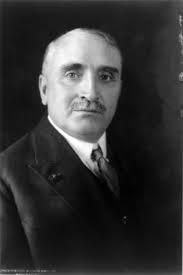
Paul Claudel is a towering figure in French literature, celebrated for his profound contributions as a poet, playwright, and diplomat. His life and work, deeply intertwined with his religious convictions, left an indelible mark on 20th-century literature. Claudel’s writing, characterized by its spiritual intensity and lyrical beauty, has been studied and admired for its exploration of faith, human nature, and the divine. This article delves into the life of Paul Claudel, offering insights into his age, rise to fame, and the key highlights of his illustrious career.
Early Life and Background
Paul Claudel was born on August 6, 1868, in Villeneuve-sur-Fère, a small village in France. He was the youngest of four children, and his sister, Camille Claudel, would later become a renowned sculptor. Claudel’s early life was marked by frequent relocations due to his father’s work as a high-ranking civil servant. These moves included a significant period in Paris, where Claudel spent much of his adolescence. Despite the urban environment, Claudel maintained a deep connection to the rural roots of his birthplace, particularly through his relationship with his maternal grandfather.
Claudel’s education in Paris introduced him to the dominant intellectual currents of the time. He initially lost his religious faith, influenced by the prevailing positivist philosophy, which emphasized science and empirical evidence over spiritual belief. However, Claudel eventually rejected positivism, finding it spiritually unsatisfying, and briefly flirted with anarchism before returning to the Catholic faith. His reconversion occurred in 1886, during a Christmas Mass at Notre-Dame de Paris, where he was profoundly moved by the “Magnificat” and experienced a religious awakening that would shape the rest of his life.
Intellectual and Artistic Formation
As Claudel’s faith deepened, so did his intellectual pursuits. He became an avid reader, immersing himself in the works of great writers such as Dante, Shakespeare, Dostoevsky, and contemporary French authors like Victor Hugo, Émile Zola, and Ernest Renan. His literary tastes were eclectic, spanning the classical and the modern, and he was particularly drawn to the symbolist poetry of Arthur Rimbaud and the complex, spiritual themes explored by Fyodor Dostoevsky.
During this period, Claudel also engaged with the literary scene in Paris, attending the famous Tuesday gatherings hosted by the symbolist poet Stéphane Mallarmé. These encounters deepened his appreciation for the power of language and poetry as a means of exploring and expressing the divine mysteries. Claudel’s early works began to take shape during this time, characterized by their spiritual themes and lyrical style.
Diplomatic Career and Literary Achievements
Claudel’s academic background in law led him to a career in diplomacy, which began in earnest in 1893 with his appointment as a vice-consul in the United States, first in New York and later in Boston. This marked the beginning of a distinguished career that would see Claudel serve in various diplomatic posts across the globe, including China, Germany, Brazil, Japan, and Belgium.
Despite the demands of his diplomatic work, Claudel remained committed to his literary pursuits. His experiences abroad enriched his writing, providing new perspectives and themes. During his time in China, he wrote several works that reflected his fascination with the country’s culture and history. However, it was his return to France and subsequent postings in Europe that marked some of the most productive periods of his literary career.
In 1900, Claudel briefly considered abandoning his diplomatic career to join a Benedictine monastery. Although his application was ultimately rejected, this period of spiritual reflection further deepened his commitment to his faith, which continued to be a central theme in his writing. Claudel’s literary work often grappled with the tension between worldly duties and spiritual aspirations, a duality he experienced firsthand in his life as both a diplomat and a devout Catholic.
Major Works and Contributions to Literature
Paul Claudel’s literary output is vast and varied, encompassing poetry, drama, and essays. His works are known for their dense, symbolic language and exploration of profound spiritual and philosophical questions. Among his most celebrated works is the play L’Annonce faite à Marie (The Tidings Brought to Mary), which he began in the 1890s and later revised. This play, like much of Claudel’s work, is deeply infused with his Catholic faith, exploring themes of redemption, sacrifice, and divine grace.
Another major work, Le Soulier de satin (The Satin Slipper), written in the 1920s, is an epic drama that reflects Claudel’s fascination with both religious and worldly themes. The play, which unfolds over several acts, explores the tension between human passion and divine will, set against the backdrop of the Spanish colonization of the Americas. Le Soulier de satin is considered one of Claudel’s masterpieces, showcasing his ability to blend poetic language with complex theological ideas.
Claudel’s poetry, too, is marked by its spiritual intensity. Collections like Poèmes de guerre and Corona benignitatis Anni Dei reveal his use of rhythmic, vers libre (free verse) that, while breaking from classical poetic forms, still maintained a structured, almost musical quality. His poetry often meditates on the relationship between humanity and the divine, the natural world, and the passage of time.
The Diplomat-Poet: Balancing Public Duty with Private Faith
Throughout his career, Paul Claudel managed to balance his public duties as a diplomat with his private vocation as a poet and playwright. His diplomatic assignments took him to diverse locations, each of which influenced his writing in different ways. In Brazil, for instance, Claudel penned Poèmes de guerre, reflecting on the global turmoil of World War I. His time in Japan and China enriched his understanding of Eastern philosophies and religions, which subtly permeated some of his later works.
Claudel’s ability to juggle these dual roles—diplomat and poet—was rooted in his belief that both paths were means of serving God. He saw his diplomatic work as an extension of his faith, a way to bring order and understanding to the world, much as his writing sought to explore and articulate the mysteries of the divine. This integration of faith and duty is evident in his works, which often address the moral and spiritual responsibilities of individuals in positions of power.
Later Life, Honors, and Legacy
In 1936, Paul Claudel retired from his diplomatic career and settled in the Château de Brangues in Isère, France, which he had purchased a decade earlier. This marked the beginning of a new chapter in his life, where he could fully dedicate himself to writing. During this period, Claudel continued to produce significant works and engage with the intellectual and cultural life of France.
In 1946, Claudel was elected to the prestigious Académie Française, an acknowledgment of his immense contribution to French literature. He also served on the board of the Société des Moteurs Gnome et Rhône, although his involvement in this company during the German occupation of France during World War II attracted some controversy. Nevertheless, Claudel remained a respected figure in French culture.
Claudel’s influence extended beyond his lifetime. His works have been studied for their exploration of the interplay between faith, art, and human experience. His ability to infuse his writing with both lyrical beauty and profound theological insight has inspired generations of writers and thinkers. Claudel’s legacy is that of a man who sought to reconcile the spiritual with the temporal, the divine with the human.
Paul Claudel passed away on February 23, 1955, in Paris, following a heart attack. His epitaph reads simply, “Here lie the remains and the seed of Paul Claudel,” a fitting tribute to a man whose life and work were dedicated to exploring the mysteries of existence and the divine.
Conclusion
Paul Claudel was a man of profound faith, intellectual rigor, and artistic genius. His life as a diplomat and writer was marked by a continuous search for meaning and a deep commitment to his Catholic beliefs. Through his plays, poetry, and essays, Claudel left a lasting legacy in both the literary and spiritual worlds.
Claudel’s work continues to be studied and admired for its exploration of the human condition, the nature of faith, and the relationship between the individual and the divine. His ability to blend his personal experiences with his theological reflections has made his work timeless, resonating with readers across generations. Paul Claudel remains a significant figure in the history of French literature, a testament to the enduring power of art and faith.


