
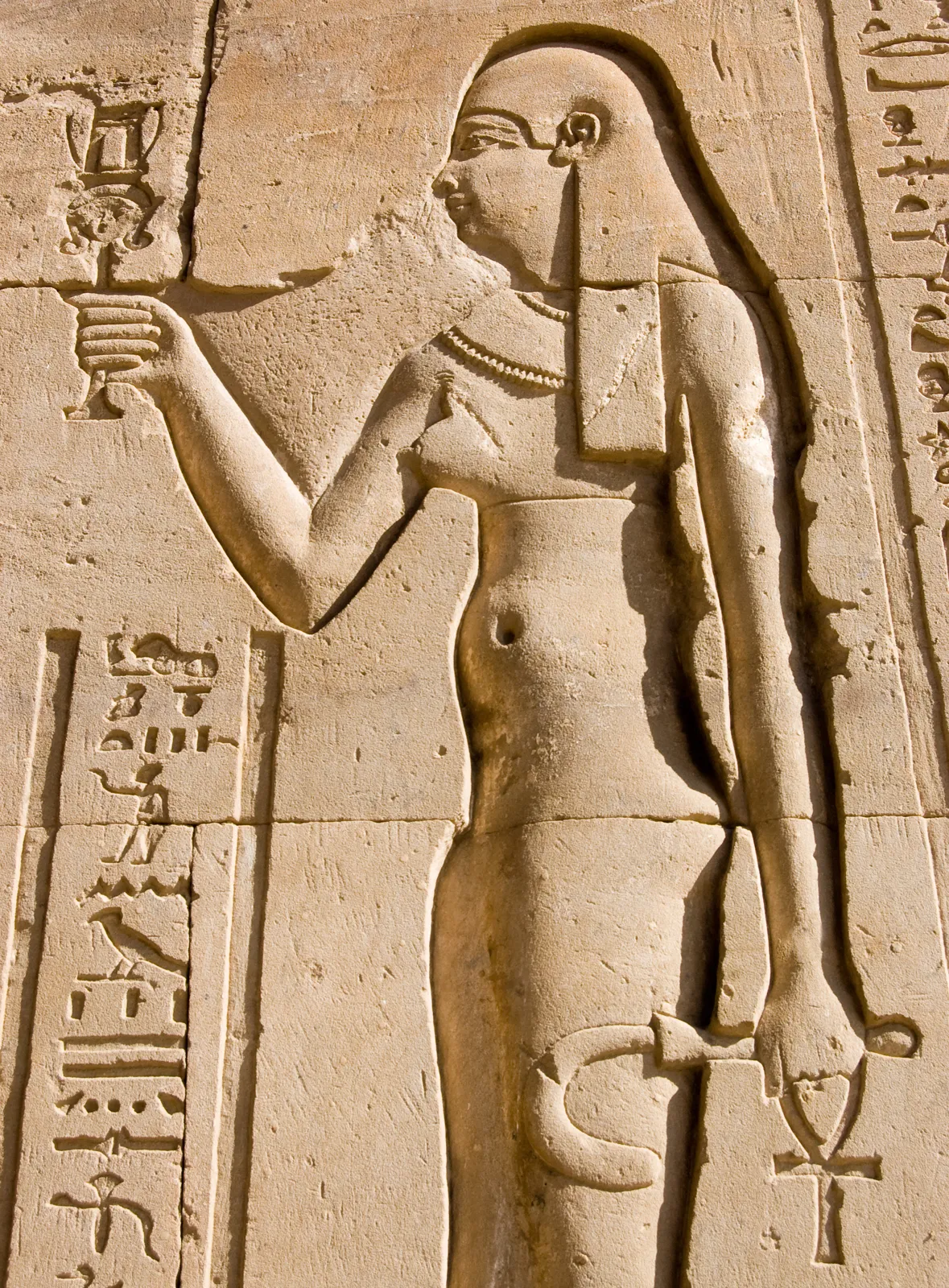
Cleopatra VII Thea Philopator, born in 69 B.C. in Alexandria, Egypt, is one of history’s most famous and enigmatic figures. Her life, marked by political acumen, personal ambition, and legendary relationships with two of Rome’s most powerful men, Julius Caesar and Mark Antony, has been the subject of fascination for centuries. Cleopatra’s reign as the last active ruler of the Ptolemaic Kingdom of Egypt not only defined her era but also left an indelible mark on the history of the ancient world.
Early Life and Ascension to the Throne
Cleopatra was born into the Ptolemaic dynasty, a Macedonian Greek royal family that had ruled Egypt since the death of Alexander the Great in 323 B.C. Her father, Ptolemy XII Auletes, was the Pharaoh of Egypt, and Cleopatra was groomed from a young age to take on the responsibilities of leadership. The Ptolemaic dynasty was known for its tumultuous internal politics, and Cleopatra’s early life was no exception.
When her father died in 51 B.C., Cleopatra, at just 18 years old, ascended to the throne alongside her younger brother, Ptolemy XIII. As was the custom in the Ptolemaic dynasty, Cleopatra was forced to marry her brother to maintain the family’s rule. However, their co-regency was short-lived, as Ptolemy XIII, encouraged by his advisors, sought to oust Cleopatra from power. This led to a civil war within Egypt, forcing Cleopatra to flee to Syria.
The Alliance with Julius Caesar
Cleopatra’s fortunes changed dramatically with the arrival of Julius Caesar in Egypt in 48 B.C. Caesar was pursuing his rival Pompey, who had sought refuge in Egypt, only to be assassinated by Ptolemy XIII’s advisors in a misguided attempt to curry favor with Caesar. Instead of appeasing Caesar, the murder of Pompey enraged him, leading him to intervene in the Egyptian civil war.
Cleopatra, ever the strategist, saw an opportunity to reclaim her throne. According to legend, she had herself smuggled into Caesar’s quarters rolled up in a carpet, a dramatic gesture that underscored her boldness and charm. Cleopatra’s intelligence, linguistic abilities—she was said to speak up to a dozen languages—and understanding of politics impressed Caesar. Their relationship quickly turned romantic, and Caesar supported her claim to the throne.
With Caesar’s military backing, Cleopatra was able to defeat her brother’s forces, leading to Ptolemy XIII’s death in the Battle of the Nile. Cleopatra then married another younger brother, Ptolemy XIV, to solidify her rule, but she was the true power in Egypt. Cleopatra’s relationship with Caesar was not only politically advantageous but also produced a son, Ptolemy XV, better known as Caesarion.
Cleopatra in Rome and the Aftermath of Caesar’s Assassination
In 46 B.C., Cleopatra traveled to Rome with Caesarion to live as Caesar’s consort. Although she was never married to Caesar, Cleopatra’s presence in Rome caused a sensation. She was viewed with a mixture of awe and suspicion by the Roman populace, who were both fascinated and wary of this foreign queen.
Cleopatra’s stay in Rome was cut short by the assassination of Julius Caesar in 44 B.C. The Ides of March marked a turning point in her life. With Caesar dead, Cleopatra had to quickly navigate the volatile political landscape of Rome. Understanding the dangers she and her son faced, she returned to Egypt, where she allegedly had her brother-husband Ptolemy XIV poisoned, making Caesarion her co-ruler.
Relationship with Mark Antony
After Caesar’s death, Rome was plunged into a series of civil wars. Cleopatra’s involvement in Roman politics continued through her relationship with Mark Antony, one of Caesar’s closest allies and a member of the Second Triumvirate that ruled Rome. Antony was given control of Rome’s eastern provinces, which brought him into contact with Cleopatra.
In 41 B.C., Cleopatra and Antony met, and their relationship quickly became both romantic and politically strategic. Cleopatra saw in Antony a means to secure her throne and the independence of Egypt from Roman dominance. For Antony, Cleopatra was a valuable ally in the East, providing military support and significant wealth.
Their relationship was scandalous by Roman standards. Antony married Cleopatra, despite being already married to Octavia, the sister of his fellow triumvir Octavian (the future Emperor Augustus). Cleopatra and Antony had three children together—twins Alexander Helios and Cleopatra Selene, and a son, Ptolemy Philadelphus.
The Decline and Fall of Cleopatra
The alliance between Cleopatra and Antony, along with Antony’s increasing alienation from Octavian, led to a deterioration in relations with Rome. Octavian used Antony’s relationship with Cleopatra to his advantage, portraying Antony as a man bewitched by a foreign queen who was willing to betray Rome for her.
In 31 B.C., the conflict culminated in the Battle of Actium, a decisive naval engagement off the coast of Greece. Octavian’s forces, under the command of Agrippa, defeated the combined fleets of Antony and Cleopatra. Following their defeat, Antony and Cleopatra retreated to Egypt, where their situation became increasingly desperate.
In 30 B.C., as Octavian’s forces closed in on Alexandria, Antony received false news of Cleopatra’s death and, devastated, took his own life. Cleopatra, upon discovering Antony’s fate and realizing that she would be paraded as a trophy in Octavian’s triumph in Rome, chose to end her life as well. According to popular belief, Cleopatra committed suicide by allowing an asp, a venomous snake, to bite her. However, recent studies suggest she may have used a concoction of poisons to ensure a quicker death.
Cleopatra’s Legacy
Cleopatra’s death marked the end of the Ptolemaic Kingdom and the beginning of Roman control over Egypt. Her son, Caesarion, was captured and executed by Octavian, eliminating any threat to Octavian’s rule. Egypt became a province of the Roman Empire, and Cleopatra’s legacy as one of history’s most powerful and enigmatic women was cemented.
Cleopatra has been the subject of countless works of art, literature, and film, often portrayed as a seductive and cunning ruler. However, these depictions sometimes overshadow her intelligence, political acumen, and the cultural significance of her reign. Cleopatra was a polyglot and the first Ptolemaic ruler to learn the Egyptian language, signaling her desire to connect with her subjects and solidify her legitimacy as their queen.
Her relationships with Caesar and Antony were as much about politics as they were about passion. Cleopatra understood the importance of aligning herself with Rome’s most powerful leaders to secure her kingdom’s future. She was a ruler who navigated the complexities of power, love, and war with unmatched skill, making her one of the most enduring figures in history.
Historical Context and Nuances
Cleopatra’s story is not just one of personal drama but also one of the broader geopolitical shifts occurring in the ancient world. Her reign came at a time when the Roman Republic was transitioning into the Roman Empire, and the Mediterranean was a hotbed of political intrigue and military conflict. Cleopatra’s efforts to maintain Egypt’s independence in the face of Roman expansion were ultimately unsuccessful, but they highlighted the challenges faced by smaller states in an era dominated by Rome’s growing power.
The portrayal of Cleopatra throughout history has varied greatly, often reflecting the biases of the cultures that told her story. Roman historians, writing after her death, often depicted her as a seductress who led noble Romans astray, a characterization that has persisted in Western culture. However, modern scholarship has begun to recognize Cleopatra as a capable and intelligent ruler who was deeply committed to her people and her kingdom.
Conclusion: Cleopatra’s Enduring Influence
Cleopatra’s life and legacy continue to captivate historians, scholars, and the public alike. She remains a symbol of female power and intelligence, a woman who defied the expectations of her time and ruled one of the ancient world’s most powerful kingdoms with determination and skill. Cleopatra’s story is a reminder of the complexities of history, where personal ambition and political necessity often intertwine, creating legacies that endure for millennia.
Cleopatra’s ability to navigate the male-dominated world of ancient politics, her strategic use of personal relationships to bolster her political position, and her enduring image as a powerful and enigmatic leader have made her one of the most iconic figures in history. Whether viewed as a tragic heroine or a shrewd strategist, Cleopatra’s story is one of resilience and power, securing her place in the annals of history as the last queen of Egypt.


