
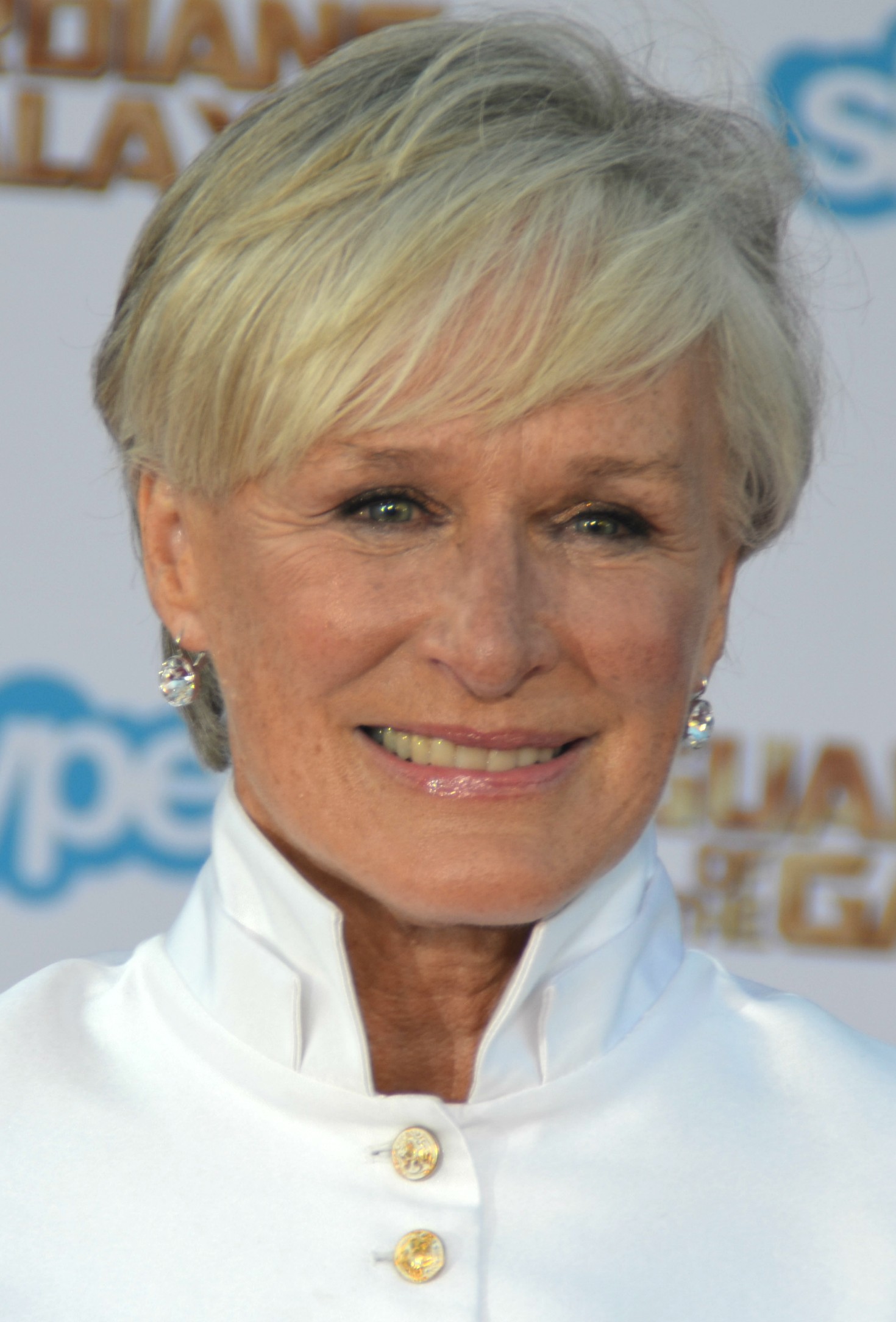
Glenn Close is a name synonymous with extraordinary talent, a formidable presence in both theater and film, and a career that spans over four decades. Born on March 19, 1947, in Greenwich, Connecticut, Glenn Close has become one of the most respected and versatile actresses of her generation. From her early days on the stage to her later iconic roles in Hollywood, Close’s journey to fame is a story of dedication, resilience, and a relentless pursuit of excellence. This article delves into the life and career of Glenn Close, exploring her rise to fame, her significant achievements, and her lasting impact on the entertainment industry.
Early Life and Family Background
Glenn Close was born into an aristocratic family, and her early life was one of privilege and education. Her father, William Taliaferro Close, was a prominent surgeon who worked in the Congo and later became the personal physician to Mobutu Sese Seko, the President of Zaire (now the Democratic Republic of Congo). Growing up, Close spent significant time in both Africa and Europe, where she attended a Swiss boarding school. This international upbringing exposed her to diverse cultures and experiences, which would later inform her work as an actress.
However, Close’s childhood was also marked by her involvement with the Moral Re-Armament (MRA), a controversial religious and social movement that advocated for moral and spiritual renewal. Close has spoken openly about the psychological impact of being part of this group, which she left at the age of 22. The experience, however, did contribute to her ability to adopt different personas, a skill that would prove invaluable in her acting career.
Education and Early Career
After leaving the MRA, Close pursued higher education, enrolling at the College of William & Mary in Virginia, where she graduated in 1974 with a degree in drama and anthropology. Her time at college was pivotal in shaping her acting career, as she immersed herself in theater and developed her craft. Close’s early performances at college were well-received, and it wasn’t long before she set her sights on New York City, the epicenter of American theater.
In New York, Close quickly made a name for herself on Broadway. Her stage career began with performances in various off-Broadway productions, but it was her role in the 1980 Broadway production of “Barnum” that earned her critical acclaim and her first Tony Award nomination. Close’s powerful stage presence and her ability to convey deep emotion made her a standout performer in the highly competitive New York theater scene.
Breakthrough in Film
Glenn Close’s transition from stage to screen was seamless, and her film debut came in 1982 with “The World According to Garp.” In this adaptation of John Irving’s novel, Close played Jenny Fields, a feminist and single mother, a role that earned her an Academy Award nomination for Best Supporting Actress. Her performance was widely praised, and it marked the beginning of a prolific film career.
Close followed up this success with roles in “The Big Chill” (1983) and “The Natural” (1984), both of which earned her additional Academy Award nominations. By the mid-1980s, Close had established herself as one of Hollywood’s most talented and versatile actresses. Her ability to take on complex, often challenging roles set her apart from her peers, and she quickly became a sought-after leading lady.
Iconic Roles and Cultural Impact
One of Glenn Close’s most iconic roles came in 1987 when she starred as Alex Forrest in the psychological thriller “Fatal Attraction.” Directed by Adrian Lyne, the film tells the story of a married man, played by Michael Douglas, who has an affair with a woman who becomes dangerously obsessed with him. Close’s portrayal of Alex Forrest was both chilling and sympathetic, and it earned her yet another Academy Award nomination for Best Actress.
“Fatal Attraction” was a massive commercial success and became a cultural phenomenon, sparking discussions about infidelity, mental illness, and the dynamics of power in relationships. The film’s infamous “bunny boiler” scene, in which Close’s character boils the pet rabbit of Douglas’s daughter, has since become a part of popular culture, with the term “bunny boiler” entering the lexicon to describe a vindictive ex-lover.
Close continued to take on challenging roles throughout the late 1980s and early 1990s. In 1988, she starred in “Dangerous Liaisons,” a period drama directed by Stephen Frears. In the film, Close played the Marquise de Merteuil, a manipulative and scheming aristocrat who orchestrates a series of deceptions and seductions. Her performance was widely acclaimed, and she received yet another Academy Award nomination for Best Actress. The role solidified Close’s reputation as one of the most formidable actresses in Hollywood, capable of bringing depth and complexity to even the most morally ambiguous characters.
Continued Success and Versatility
As the 1990s progressed, Glenn Close continued to demonstrate her incredible range as an actress. She starred alongside Jeremy Irons in “Reversal of Fortune” (1990), a legal drama based on the true story of Claus von Bülow, who was accused of attempting to murder his wife. Close played Sunny von Bülow, the comatose wife at the center of the trial, and her nuanced performance was once again met with critical acclaim.
Close’s versatility was further showcased in her role as Cruella de Vil in Disney’s live-action adaptation of “101 Dalmatians” (1996). Her portrayal of the fashion-obsessed villain was both campy and menacing, and it became one of her most beloved roles. The film was a box office hit, and Close received a Golden Globe nomination for her performance.
In addition to her work in film, Close continued to appear on stage, earning Tony Awards for her performances in “The Real Thing” (1984) and “Sunset Boulevard” (1995). Her commitment to theater, even as she became a major Hollywood star, underscored her dedication to the craft of acting and her love for live performance.
Television Success and Awards
While Glenn Close was already a well-established film and stage actress, she also made significant contributions to television. In the early 2000s, she took on the role of Captain Monica Rawling in the critically acclaimed television series “The Shield.” Her performance was praised for its intensity and complexity, and it marked a successful foray into television drama.
However, it was her role as Patty Hewes in the legal thriller series “Damages” (2007-2012) that truly cemented her status as a television powerhouse. Close played a ruthless and cunning attorney who would stop at nothing to win her cases. The role earned her two Primetime Emmy Awards for Outstanding Lead Actress in a Drama Series and a Golden Globe Award. “Damages” showcased Close’s ability to dominate the small screen with the same gravitas she brought to her film and stage roles.
Later Career and Recognition
As Glenn Close moved into the 2010s, she continued to take on a variety of roles that demonstrated her enduring talent and versatility. In 2011, she starred in and produced “Albert Nobbs,” a film in which she played the title role of a woman living as a man in 19th-century Ireland. The film was a passion project for Close, who had previously played the role on stage in the 1980s. Her performance in the film earned her another Academy Award nomination, bringing her total to six.
Close’s later film roles include “The Wife” (2017), in which she played the long-suffering spouse of a famous writer. The film explored themes of gender inequality and the sacrifices women make in support of their husbands’ careers. Close’s performance was widely lauded, and she won a Golden Globe Award for Best Actress in a Motion Picture – Drama. Many critics considered her performance to be one of the best of her career, and it once again brought Close to the forefront of awards season.
In 2020, Close starred in “Hillbilly Elegy,” a film directed by Ron Howard and based on the memoir by J.D. Vance. Close played the role of Mamaw, the tough, no-nonsense grandmother of the protagonist. While the film received mixed reviews, Close’s performance was praised, and she received her eighth Academy Award nomination for her work.
Personal Life and Advocacy
Beyond her acting career, Glenn Close is also known for her advocacy work. She has been an outspoken advocate for mental health awareness, inspired by her family’s own experiences with mental illness. Close co-founded the organization Bring Change to Mind, which aims to end the stigma surrounding mental illness and provide support to those affected by it.
Close has also been involved in various charitable causes, including environmental conservation and animal rights. Her commitment to using her platform for social good has earned her respect not only as an actress but also as a humanitarian.
Legacy and Impact
Glenn Close’s legacy in the entertainment industry is undeniable. She has been nominated for eight Academy Awards, making her one of the most nominated actresses in history, and she has won numerous other awards, including three Tony Awards, three Golden Globe Awards, and three Primetime Emmy Awards. Close’s ability to inhabit a wide range of characters, from heroines to villains, and to bring depth and nuance to each role, has made her one of the most respected actresses of her generation.
Close’s impact extends beyond her performances. She has been a trailblazer for women in the entertainment industry, consistently choosing roles that challenge traditional gender norms and explore complex themes. Her commitment to her craft and her willingness to take on difficult and sometimes controversial roles have set a standard for excellence in acting.
Conclusion
Glenn Close’s career is a testament to her extraordinary talent, dedication, and resilience. From her early days on the stage to her iconic film roles and her success in television, Close has consistently pushed the boundaries of what is possible in acting. Her work has not only entertained audiences but has also sparked important conversations about gender, power, and the human condition.
As Glenn Close continues to take on new projects and challenge herself as an actress, there is no doubt that her influence will be felt for generations to come. She is not just a star; she is a force in the entertainment industry, and her legacy will endure long after the final curtain falls.


