
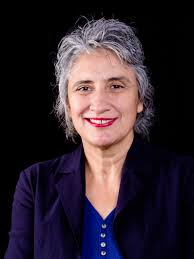
Paola Concia, born Anna Paola Concia on July 4, 1963, in Avezzano, Italy, is a prominent Italian politician, activist, and advocate for LGBTQ+ rights. Her life and career are marked by a steadfast commitment to social justice, gender equality, and the fight against discrimination. As one of the first openly gay members of the Italian Parliament, Concia’s work has had a significant impact on the LGBTQ+ community in Italy, and her advocacy continues to inspire change both within her country and beyond.
Early Life and Passion for Sports
Paola Concia’s early years were defined by her love for sports. Growing up in Avezzano, a small town in the province of L’Aquila, Concia developed a strong passion for physical education and athletics. This enthusiasm led her to pursue studies at the Istituto Superiore di Educazione Fisica (ISEF) in L’Aquila, where she earned a degree in physical education. Concia’s dedication to sports extended beyond her academic pursuits; she became a physical education teacher and a tennis coach, roles that allowed her to share her passion with others.
However, Concia’s interests were not limited to sports. As the 1980s progressed, she began to develop a keen interest in politics, particularly in issues related to social justice and equality. This burgeoning political awareness would soon lead her to become an active participant in the Italian political scene, where she would make her mark as a champion for human rights.
Entry into Politics and Early Career
Paola Concia’s political journey began in the late 1980s when she became involved with the Italian Communist Party (PCI). This period was marked by significant political and social changes in Italy, and Concia quickly established herself as a committed activist. Her work with the PCI provided her with invaluable experience and introduced her to the complexities of political life.
During the early 1990s, Concia faced personal challenges that would shape her future path. After the death of her mother, she decided to move to Rome, where she continued her involvement in politics and began to explore new professional opportunities. In 1994, she secured a position as an assistant to Franca Chiaromonte, a member of the Italian Parliament. This role gave Concia insight into the workings of the legislative process and solidified her commitment to public service.
By 1996, Concia’s reputation as a capable and dedicated professional had earned her a consultancy role at the newly established Ministry of Equal Opportunities, working alongside Anna Finocchiaro, a prominent figure in the Democratic Party (PD). Concia played a key role in shaping the ministry’s agenda, which focused on promoting gender equality and addressing issues related to discrimination and violence against women.
Advocacy for Women’s Rights and LGBTQ+ Equality
As her career progressed, Paola Concia became increasingly focused on issues related to women’s rights and LGBTQ+ equality. In 1998, she collaborated with Giovanna Melandri, then Minister for Youth and Sports, to develop policies aimed at increasing women’s participation in public life. That same year, Concia co-founded the Emily Association, an organization dedicated to empowering women and promoting their involvement in politics and the workforce.
Concia’s advocacy work extended beyond women’s rights to encompass the fight for LGBTQ+ equality. In 2002, she publicly came out as a lesbian, a courageous move that was particularly significant in the context of Italian society, where LGBTQ+ rights were still a contentious issue. Concia’s decision to live openly as a gay woman marked a turning point in her life and career, as she became one of the most visible and vocal advocates for LGBTQ+ rights in Italy.
Political Career and Legislative Efforts
Paola Concia’s activism and dedication to social justice eventually led her to run for public office. In 2008, she was elected to the Italian Parliament as a member of the Democratic Party, representing the region of Puglia. Her election was a historic moment for Italy, as Concia became one of the first openly gay members of Parliament, breaking new ground for LGBTQ+ representation in Italian politics.
During her time in Parliament, Concia focused on advancing legislation that aimed to protect the rights of LGBTQ+ individuals and combat discrimination based on sexual orientation and gender identity. In collaboration with fellow parliamentarians Barbara Pollastrini and Giovanni Cuperio, Concia introduced a bill in 2008 titled “Measures Against Persecutory Acts and Discrimination Based on Sexual Orientation or Gender Identity.” The proposed legislation sought to address the legal gaps in Italy’s protection of LGBTQ+ individuals and to establish more robust measures against hate crimes and discrimination.
Despite the significance of the proposed legislation, it faced considerable opposition within the Italian Parliament. The bill, which included provisions to equate same-sex marriage with heterosexual marriage and to create legal recognition for same-sex couples through civil unions, was ultimately rejected by the majority of center-right lawmakers. Undeterred, Concia continued to advocate for LGBTQ+ rights, reintroducing the bill in 2011 with additional provisions to strengthen protections against homophobic hate crimes. Although the bill garnered support from the then-Minister for Equal Opportunities, Mara Carfagna, it was again defeated in Parliament, highlighting the challenges faced by LGBTQ+ activists in Italy.
Personal Life and Marriage
In 2011, Paola Concia made headlines once again when she married her long-time partner, German criminologist Ricarda Trautmann. The couple’s civil union took place in Frankfurt, Germany, in a ceremony attended by close friends and family. Concia’s marriage was a groundbreaking event in Italian politics, as it marked the first time that an openly gay Italian parliamentarian had publicly entered into a same-sex union.
The marriage was not only a personal milestone for Concia but also a significant political statement. At the time, Italy did not legally recognize same-sex marriages or civil unions, and Concia’s decision to marry abroad underscored the disparities in legal protections for LGBTQ+ individuals in different European countries. Trautmann, who adopted Concia’s surname after the marriage, became an integral part of Concia’s life and advocacy work, further highlighting the personal dimension of Concia’s fight for equality.
Continued Advocacy and Legacy
Following her time in Parliament, Paola Concia remained deeply involved in advocacy work, particularly in the areas of LGBTQ+ rights and women’s empowerment. She continued to serve as the president of the Agensport Lazio, where she focused on promoting sports as a means of social inclusion and youth development. Concia’s work in this role demonstrated her enduring commitment to using sports as a platform for positive social change.
In addition to her work in sports, Concia remained active within the Democratic Party, where she held various leadership roles, including responsibility for the party’s sports initiatives in the Puglia region. Her focus on youth sports and gender equality in athletics was part of her broader mission to create a more inclusive and equitable society.
Throughout her career, Concia has been recognized for her contributions to social justice and her courage in standing up for marginalized communities. Her work has not only advanced the cause of LGBTQ+ rights in Italy but has also inspired a new generation of activists and leaders to continue the fight for equality.
Conclusion
Paola Concia’s life and career are a testament to the power of perseverance, courage, and dedication to social justice. From her early years as a physical education teacher and tennis coach to her groundbreaking role as an openly gay member of the Italian Parliament, Concia has consistently championed the rights of women, LGBTQ+ individuals, and other marginalized groups.
Her work in advancing legislation to protect LGBTQ+ individuals from discrimination, as well as her advocacy for women’s empowerment, has left an indelible mark on Italian society. While her legislative efforts faced significant challenges, Concia’s persistence in the face of adversity has helped to bring important issues to the forefront of public discourse.
Today, Paola Concia continues to be a leading voice in the fight for equality, using her platform to advocate for the rights of all individuals, regardless of their gender, sexual orientation, or background. Her legacy as a trailblazer in Italian politics and a tireless advocate for social justice will undoubtedly continue to inspire future generations.


