
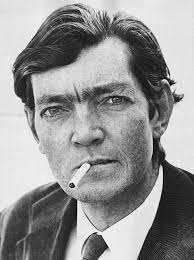
Julio Cortázar, born on August 26, 1914, in Brussels, Belgium, to Argentine parents, is widely regarded as one of the most influential writers of the 20th century. Often mentioned in the same breath as literary giants like Jorge Luis Borges and Gabriel García Márquez, Cortázar is celebrated for his innovative narrative techniques, his deep psychological insights, and his ability to blend the fantastical with the mundane. His works have left an indelible mark on Latin American literature and continue to inspire readers and writers worldwide. This article explores the life, achievements, and enduring legacy of Julio Cortázar, providing a comprehensive overview of his journey from obscurity to literary fame.
Early Life and Education
Julio Cortázar was born in Brussels during a turbulent time, as World War I raged across Europe. His father, a diplomat, was stationed in Belgium, and the family was forced to move frequently during Cortázar’s early years. Shortly after the war ended, the Cortázar family returned to Argentina, where Julio would spend most of his childhood.
Growing up in Buenos Aires, Cortázar was a voracious reader from a young age, devouring the works of Edgar Allan Poe, Arthur Rimbaud, and other literary greats. His mother, who recognized his prodigious talent, encouraged his literary pursuits, and by the age of nine, Cortázar had already written his first novel. Despite his early love for literature, his childhood was marked by feelings of alienation and illness, which would later influence the themes of dislocation and existential angst in his works.
Cortázar’s formal education began at the Escuela Normal Mariano Acosta, where he earned a degree to become a primary school teacher. He later enrolled at the University of Buenos Aires, where he studied literature and philosophy. However, financial pressures forced him to abandon his studies before completing his degree. Nevertheless, his academic background and his extensive self-education equipped him with a deep understanding of literature, which he would later use to revolutionize the Latin American literary scene.
Early Career and Literary Beginnings
Julio Cortázar’s early career was marked by a series of teaching positions in various small towns in Argentina. During this time, he continued to write, experimenting with different forms and styles. In 1938, under the pseudonym Julio Denis, he published his first collection of poems, Presencia (Presence). Although this work did not gain much attention, it marked the beginning of his literary journey.
In the early 1940s, Cortázar began to gain recognition for his critical essays and short stories, which were published in various literary journals. His early works were heavily influenced by European modernist writers, as well as by the surrealists and existentialists. During this period, he also worked as a translator, a skill that would later play a crucial role in his literary career.
In 1949, Cortázar published Los Reyes (The Kings), a dramatic retelling of the myth of the Minotaur. This work showcased his fascination with myth, symbolism, and the boundaries between reality and fantasy—themes that would become central to his later works. Despite the critical acclaim that Los Reyes received, it was Cortázar’s short stories that truly began to establish his reputation as a writer. His first major collection of short stories, Bestiario (Bestiary), was published in 1951 and is now considered a classic of Latin American literature.
Move to Paris and Literary Fame
In 1951, disillusioned with the political climate in Argentina under Juan Perón, Cortázar moved to Paris, where he would live for the rest of his life. This move was pivotal in Cortázar’s career, as it allowed him to immerse himself in the vibrant intellectual and artistic life of post-war Paris. It was here that he began to develop his unique narrative style, blending elements of fantasy, surrealism, and psychological realism.
In Paris, Cortázar worked as a freelance translator, translating works by Edgar Allan Poe, Daniel Defoe, and others into Spanish. His translation of Poe’s complete short stories is still considered one of the best in the Spanish language. This work not only provided him with a steady income but also deepened his understanding of narrative structure and literary form.
Cortázar’s literary breakthrough came in 1963 with the publication of Rayuela (Hopscotch), a novel that challenged conventional notions of narrative structure. Rayuela is often described as an “anti-novel” because it allows readers to choose their own path through the book, either by reading it in the traditional linear order or by following a non-linear sequence suggested by the author. This innovative approach to storytelling was revolutionary and established Cortázar as a leading figure in the Latin American Boom, a literary movement that included writers like Gabriel García Márquez, Mario Vargas Llosa, and Carlos Fuentes.
Rayuela explores themes of existentialism, identity, and the search for meaning in a fragmented world. The novel’s protagonist, Horacio Oliveira, is a quintessentially modern character—alienated, introspective, and constantly questioning the nature of reality. The novel’s structure, which mirrors the chaos and unpredictability of life, was a direct challenge to the rigid forms and conventions of traditional literature. Rayuela was a critical and commercial success, and it remains one of the most important works of Latin American literature.
Themes and Style
Julio Cortázar’s work is characterized by its experimental nature, its blending of fantasy and reality, and its exploration of existential themes. He was heavily influenced by the surrealists, and his stories often involve the intrusion of the fantastic into the everyday. This blending of the real and the unreal creates a sense of disorientation and uncertainty in the reader, which is central to Cortázar’s narrative technique.
Cortázar’s stories are also known for their psychological depth. He was deeply interested in the human mind and its complexities, and his characters often grapple with issues of identity, memory, and perception. This psychological focus is evident in works like La Casa Tomada (House Taken Over), a story about a brother and sister who slowly lose control of their home to an unseen force. The story is a masterpiece of psychological horror, using ambiguity and suggestion to create a sense of unease.
Music, particularly jazz, played a significant role in Cortázar’s life and work. He was an avid jazz enthusiast and often drew parallels between jazz improvisation and his own narrative techniques. This influence is most evident in El Perseguidor (The Pursuer), a short story inspired by the life of jazz musician Charlie Parker. The story explores themes of artistic genius, existential despair, and the fleeting nature of time, mirroring the improvisational and ephemeral qualities of jazz music.
Cortázar’s style is also marked by its playfulness and humor. He often used wordplay, puns, and linguistic experimentation in his stories, challenging readers to think critically about language and its limitations. This playfulness is evident in Historia de Cronopios y de Famas (Cronopios and Famas), a collection of absurd and whimsical stories that defy conventional categorization.
Later Works and Political Involvement
After the success of Rayuela, Cortázar continued to write prolifically, producing a series of novels, short stories, and essays that further cemented his reputation as a literary innovator. Notable works from this period include 62: Modelo para armar (62: A Model Kit, 1968), Libro de Manuel (A Manual for Manuel, 1973), and Octaedro (Octahedron, 1974). These works continued to explore the themes of existentialism, identity, and the fluidity of reality that had defined his earlier works.
In the 1970s, Cortázar became increasingly involved in political activism, particularly in support of leftist movements in Latin America. He was a vocal critic of U.S. intervention in the region and supported the Cuban Revolution and the Sandinista government in Nicaragua. His political engagement is reflected in works like Libro de Manuel, a novel that blends fiction and political commentary, and Fantomas contra los vampiros multinacionales (Fantomas Against the Multinational Vampires, 1975), a comic book that satirizes the global capitalist system.
Despite his political activism, Cortázar never allowed his work to become didactic. He remained committed to artistic experimentation and to pushing the boundaries of literary form. His later works, though more overtly political, retained the playful, imaginative quality that had characterized his earlier stories.
Personal Life and Legacy
Julio Cortázar’s personal life was marked by both joy and tragedy. In 1953, he married Aurora Bernárdez, an Argentine translator and writer who would become his lifelong companion and collaborator. The couple lived in Paris for many years, where they immersed themselves in the city’s vibrant cultural scene. However, their marriage was not without difficulties, and they eventually separated, though they remained close friends until Cortázar’s death.
In the 1970s, Cortázar entered into a relationship with the Canadian writer Carol Dunlop. The couple embarked on a series of adventures together, including a road trip from Paris to Marseille that they later chronicled in the book Los Autonautas de la Cosmopista (The Autonauts of the Cosmoroute). Dunlop’s death in 1982 was a devastating blow to Cortázar, and it marked the beginning of the end of his own life.
Julio Cortázar died on February 12, 1984, in Paris, from leukemia. He was 69 years old. His death marked the end of an era in Latin American literature, but his influence continues to be felt today. Cortázar is buried in the Montparnasse Cemetery in Paris, alongside Carol Dunlop.
Cortázar’s legacy is vast and enduring. He is widely regarded as one of the greatest writers of the 20th century, and his works have been translated into numerous languages. His influence can be seen in the works of countless writers, both in Latin America and beyond, who have drawn inspiration from his innovative narrative techniques and his exploration of the boundaries between reality and fantasy.
Conclusion
Julio Cortázar was a literary giant whose work transcended national and linguistic boundaries. His innovative narrative techniques, his blending of fantasy and reality, and his deep psychological insights have left an indelible mark on world literature. From his early days as a teacher and translator in Argentina to his later years as a literary icon in Paris, Cortázar remained committed to pushing the boundaries of literary form and to exploring the complexities of the human experience.
Cortázar’s influence extends far beyond the confines of literature. His work has inspired filmmakers, musicians, and artists, and his legacy continues to be celebrated by readers around the world. As one of the leading figures of the Latin American Boom, Cortázar helped to reshape the literary landscape of the 20th century, and his works remain as vital and relevant today as they were when they were first published.
Julio Cortázar’s life and work remind us of the power of imagination, the importance of challenging conventions, and the enduring impact of literature as a force for both personal and social change.


