
Introduction
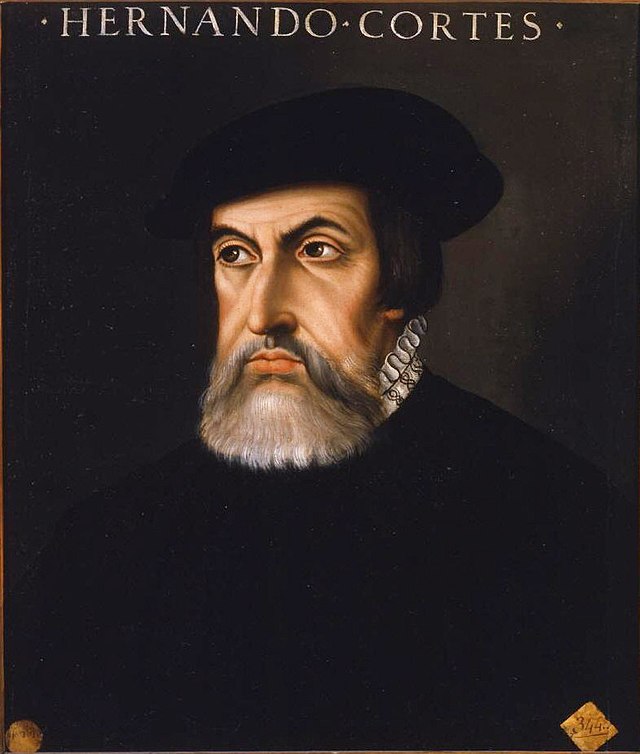
Hernán Cortés, a name synonymous with the Age of Exploration, remains one of the most pivotal figures in the history of the Americas. Born in 1485 in Medellín, located in the Spanish region of Extremadura, Cortés rose to fame as the Spanish conquistador who brought the mighty Aztec Empire to its knees. His legacy, however, is steeped in controversy, as his conquests led to the decimation of indigenous populations and the establishment of Spanish rule over vast territories in the New World. This article delves deep into the life, achievements, and lasting impact of Hernán Cortés, exploring the nuances of his actions and the historical context in which he operated.
Early Life and Background
Hernán Cortés was born into a world of stark contrasts. The late 15th century was a period marked by the confluence of medieval traditions and the dawning of the Renaissance in Europe. Cortés’ birthplace, Extremadura, was a rugged and relatively impoverished region, yet it produced some of Spain’s most famous explorers, including Francisco Pizarro, who would later conquer the Inca Empire.
Details about Cortés’ early life are somewhat scarce, leading to speculation about his upbringing. Some sources suggest that he came from a noble family, while others contend that his origins were more modest. Regardless of his social standing, it is clear that Cortés was deeply influenced by the Catholic Church, which played a central role in his life and the lives of those around him. From an early age, Cortés exhibited a strong inclination towards military endeavors, a path that would eventually lead him to the shores of the New World.
The Call to Adventure: Early Expeditions
Cortés’ journey into the annals of history began in 1504 when he joined an expedition to the Caribbean, serving under the command of Diego Velázquez de Cuéllar, the governor of Cuba. This was a time when Spain was expanding its influence across the Atlantic, driven by the desire for new territories, wealth, and the spread of Christianity. Cortés quickly distinguished himself as a capable and ambitious leader, qualities that did not go unnoticed by his superiors.
Despite his early successes, Cortés’ relationship with Governor Velázquez was fraught with tension. The ambitious conquistador often acted independently, defying orders and pursuing his own agenda. This rebellious streak led to his temporary imprisonment, but it also set the stage for his most famous exploit: the conquest of Mexico.
The Conquest of Mexico: A Defining Moment
In 1519, Hernán Cortés embarked on the expedition that would define his legacy. At the time, the Aztec Empire was one of the most powerful civilizations in the Americas, with a population numbering in the millions. Cortés, however, was undeterred by the seemingly insurmountable odds. Armed with 11 ships, 508 soldiers, and a burning desire for glory, he set sail for the Yucatán Peninsula.
Upon landing in Cozumel, Cortés encountered Jerónimo de Aguilar, a shipwrecked Spaniard who had lived among the Maya for several years. Aguilar’s fluency in the Mayan language proved invaluable to Cortés, as it allowed him to communicate with the indigenous peoples and forge alliances with those who were discontented with Aztec rule.
Cortés’ strategy was one of diplomacy, manipulation, and brute force. He quickly allied himself with the Totonac people, who were eager to rebel against their Aztec overlords. With their support, Cortés marched inland, eventually reaching the Aztec capital of Tenochtitlán.
The Encounter with Montezuma
The meeting between Hernán Cortés and the Aztec emperor Montezuma II is one of the most iconic moments in history. Montezuma, who believed that Cortés might be the reincarnation of the god Quetzalcoatl, welcomed the Spaniards into his city. This act of hospitality, however, would prove to be a fatal mistake.
Cortés, ever the shrewd tactician, took Montezuma hostage, effectively using him as a puppet to control the vast Aztec Empire. Over the course of several months, tensions between the Spanish and the Aztecs escalated, culminating in the outbreak of violence. Montezuma, once the ruler of a mighty empire, was now a prisoner in his own palace.
The Fall of Tenochtitlán
The final assault on Tenochtitlán began in earnest in May 1521. Cortés, supported by thousands of indigenous allies who sought to overthrow the Aztecs, laid siege to the city. The siege lasted for over two months, with both sides suffering heavy casualties. The Aztecs, weakened by famine, disease, and the relentless attacks, ultimately succumbed to the superior firepower of the Spanish.
On August 13, 1521, Tenochtitlán fell, marking the end of the Aztec Empire. The once-great city was reduced to rubble, and its survivors were either enslaved or subjected to harsh conditions under Spanish rule. Cortés, now the undisputed ruler of Mexico, established the capital of “New Spain” on the ruins of Tenochtitlán, a city that would later become Mexico City.
The Aftermath: Cortés’ Later Years
With the conquest of Mexico complete, Hernán Cortés was hailed as a hero in Spain. He was granted the title of “Marqués del Valle de Oaxaca” and amassed immense wealth from the plundered treasures of the Aztecs. However, his relationship with the Spanish Crown remained complicated. Despite his achievements, Cortés was viewed with suspicion by the Spanish nobility, who were wary of his growing power and independence.
In 1528, Cortés was recalled to Spain, where he faced a series of legal challenges to his authority. Although he was eventually cleared of most charges, the Crown stripped him of his governorship of New Spain. Undeterred, Cortés returned to Mexico in 1530, where he continued to explore and expand Spanish territories.
The Discovery of California
One of Cortés’ final acts of exploration was the discovery of California in 1535. Although he did not find the mythical cities of gold he had hoped for, his expedition marked the beginning of Spanish interest in the region. Today, the Gulf of California, the body of water separating the Baja California Peninsula from mainland Mexico, is also known as the “Sea of Cortés” in his honor.
The Decline and Death of a Conquistador
By the mid-1530s, Hernán Cortés’ influence had waned. His relationship with the Spanish Crown had deteriorated, and he found himself increasingly marginalized by the new Viceroy of New Spain. Despite his wealth and titles, Cortés was no longer the powerful figure he once was.
In 1541, he participated in an ill-fated expedition to Algiers, which ended in disaster for the Spanish forces. This defeat marked the end of Cortés’ military career. Disillusioned and weary, he returned to Spain, where he spent his final years in relative obscurity.
Hernán Cortés died on December 2, 1547, at the age of 62, in Castilleja de la Cuesta, near Seville. In accordance with his wishes, his remains were eventually transported to Mexico, where they were interred in the Church of Jesus Nazarene in Mexico City.
Legacy and Controversy
Hernán Cortés’ legacy is a complex and contentious one. On one hand, he is remembered as a brilliant military strategist and explorer who played a crucial role in the expansion of the Spanish Empire. His conquests brought vast new territories under Spanish control and opened the door for further exploration and colonization in the Americas.
On the other hand, Cortés is also seen as a ruthless conqueror whose actions led to the destruction of entire civilizations. The fall of the Aztec Empire marked the beginning of a dark chapter in the history of the indigenous peoples of the Americas. The Spanish conquest brought with it not only the imposition of a foreign culture and religion but also widespread death and suffering due to warfare, forced labor, and diseases such as smallpox, which decimated the native population.
Historians continue to debate the motivations and moral implications of Cortés’ actions. Was he driven purely by greed and ambition, or did he genuinely believe in the righteousness of his cause? Was he a visionary leader or a merciless opportunist? These questions remain open to interpretation, but what is undeniable is the profound impact that Cortés had on the course of history.
Hernán Cortés in Popular Culture
The story of Hernán Cortés has been retold countless times in literature, film, and other forms of popular culture. His exploits have been romanticized and vilified, often reflecting the changing attitudes toward colonialism and imperialism.
In recent years, there has been a growing recognition of the need to present a more nuanced view of Cortés and the events of the conquest. This includes acknowledging the agency of indigenous peoples who resisted Spanish rule, as well as those who collaborated with the Spaniards for their own reasons.
Conclusion
Hernán Cortés was a man of his time, embodying the complexities and contradictions of the Age of Exploration. His life and career were marked by extraordinary achievements and deep moral ambiguities. As we reflect on his legacy, it is important to consider the broader historical context in which he operated and to recognize the lasting impact of his actions on the world we live in today.
Cortés’ story is a reminder of the power of ambition and the far-reaching consequences of conquest. His name will forever be associated with the dramatic and often tragic transformation of the Americas, a legacy that continues to shape our understanding of history.


