
Introduction
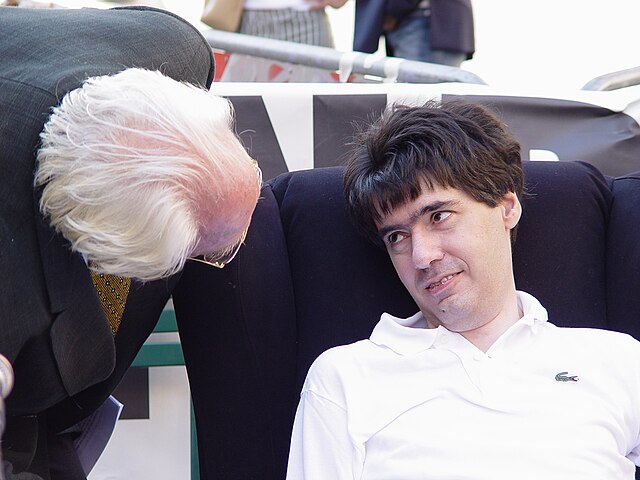
Luca Coscioni, born on July 16, 1967, in Orvieto, Italy, was a prominent Italian economist, politician, and activist whose life was marked by his relentless advocacy for scientific research and the rights of individuals suffering from severe illnesses. Coscioni’s life story is one of remarkable resilience and determination, as he transformed his personal battle with Amyotrophic Lateral Sclerosis (ALS), also known as Lou Gehrig’s disease, into a global campaign for the freedom of scientific research and human dignity. This article explores Luca Coscioni’s life, his contributions to politics and science, and the lasting impact of his activism.
Early Life and Academic Pursuits
Luca Coscioni grew up in Orvieto, a historic town in central Italy. From an early age, he demonstrated a keen interest in academics, particularly in the fields of economics and politics. His academic journey began at the prestigious Liceo-Ginnasio Statale F.A. Gualterio in Orvieto, where he completed his classical studies. Coscioni’s intellectual curiosity and passion for learning led him to enroll at the University of Rome “La Sapienza,” where he pursued a degree in Economics and Commerce.
In 1991, Luca Coscioni graduated with honors, earning a perfect score of 110/110. His thesis, titled “The Trade of Agricultural Products Between Developed and Developing Countries from the Post-War Period to Today,” reflected his deep understanding of global economic issues and his commitment to addressing the challenges faced by developing nations. His academic excellence earned him a place in the competitive doctoral program in “Mountain Economics and the Forest-Wood-Environment Systems” at the University of Trento.
During his doctoral studies, Coscioni conducted extensive research in economics, focusing on international trade and environmental economics. His work took him to various research institutions, including the Institut National de la Recherche Agronomique (INRA) in Nancy, France, where he studied under the guidance of Dr. Gerard Buttoud. Coscioni’s research contributions were recognized through numerous publications in academic journals, establishing him as a promising young economist in Italy.
The Onset of Illness and Political Awakening
In 1995, at the age of 28, Luca Coscioni was diagnosed with Amyotrophic Lateral Sclerosis (ALS), a progressive neurodegenerative disease that affects nerve cells in the brain and spinal cord. The diagnosis was devastating, as ALS gradually robs individuals of their ability to move, speak, and eventually breathe, all while leaving cognitive functions intact. Faced with this life-altering condition, Coscioni initially withdrew from public life, grappling with the physical and emotional toll of the disease.
However, after several years of navigating the healthcare system and confronting the limitations imposed by his illness, Coscioni experienced a profound political awakening. He realized that his struggle with ALS could serve as a catalyst for broader social change, particularly in the areas of scientific research and patient rights. In 1999, Coscioni made the bold decision to re-enter the political arena, this time as a passionate advocate for the rights of individuals with disabilities and for the advancement of medical research.
The Radical Party and Advocacy for Scientific Research
Luca Coscioni’s entry into active politics began in 1999 when he discovered the Radical Party, an Italian political movement known for its commitment to civil liberties, human rights, and scientific progress. Drawn to the party’s progressive stance on issues such as euthanasia, stem cell research, and reproductive rights, Coscioni became deeply involved in their initiatives. In 2000, he ran as a candidate for the Lista Bonino in the regional elections in Umbria, marking the start of his formal political career.
One of the defining moments of Coscioni’s activism occurred in 2001 when he was elected to the Radical Party’s Coordinating Committee. Despite the physical limitations imposed by ALS, Coscioni used a voice synthesizer to communicate his ideas and participate in political debates. His first public speech with the synthesizer, delivered at a party meeting in Chianciano, resonated deeply with attendees and marked the beginning of his crusade for the freedom of scientific research.
Coscioni’s efforts were particularly focused on the legalization of embryonic stem cell research and therapeutic cloning in Italy. He argued that such research held the potential to develop treatments for diseases like ALS, Parkinson’s, and Alzheimer’s, which currently had no cure. Coscioni’s advocacy extended beyond Italy’s borders; in February 2001, he addressed the European Parliament’s Temporary Committee on Human Genetics and Biotechnology, urging lawmakers to support research that could alleviate the suffering of millions of patients worldwide.
The Luca Coscioni Association
In 2002, Luca Coscioni, alongside prominent figures like Marco Pannella and Emma Bonino, founded the Luca Coscioni Association for the Freedom of Scientific Research. The association was established as a non-profit organization dedicated to promoting scientific research free from religious and political interference. It aimed to create a platform for scientists, patients, and advocates to collaborate in the fight for medical advancements and the protection of human rights.
Under Coscioni’s leadership, the association gained significant international support, including endorsements from 48 Nobel laureates and over 500 scientists and researchers. These endorsements brought global attention to the ethical and legal challenges surrounding stem cell research, placing Coscioni at the forefront of a movement that sought to balance scientific progress with moral considerations.
The association’s work also involved raising awareness about the challenges faced by individuals with disabilities, particularly in accessing healthcare, education, and public services. Coscioni emphasized the importance of empowering patients and ensuring that their voices were heard in policy discussions. His advocacy played a crucial role in shifting public opinion and influencing legislative debates on issues related to bioethics and medical research.
Electoral Campaigns and International Recognition
Luca Coscioni’s commitment to his cause was evident in his participation in various electoral campaigns, despite the physical challenges posed by ALS. In the 2001 Italian general elections, he was the top candidate for the Lista Bonino in the proportional representation system. His campaign was supported by a coalition of scientists, intellectuals, and activists who recognized the importance of his message.
During the campaign, Coscioni highlighted the need for Italy to align its policies with the latest scientific advancements and to remove barriers that hindered research. His candidacy received widespread media coverage, bringing attention to the ethical dilemmas surrounding stem cell research and the rights of individuals with disabilities. Although he did not win a seat in parliament, Coscioni’s campaign succeeded in elevating the discourse on these critical issues.
Coscioni’s efforts were also recognized internationally. In 2003, he was invited to speak at the World Congress for Freedom of Scientific Research in Rome, where he shared his vision for a future where science and ethics could coexist harmoniously. His speeches, delivered through his voice synthesizer, were poignant reminders of the human cost of delaying scientific progress.
The Final Years and Legacy
Luca Coscioni’s battle with ALS ended on February 20, 2006, when he passed away at the age of 38. His death was announced live on Radio Radicale by Marco Pannella, a longtime friend and ally in the fight for civil liberties. Coscioni’s passing marked the end of a remarkable life, but his legacy continues to inspire activists, scientists, and policymakers around the world.
The Luca Coscioni Association remains active, continuing the work that Coscioni began. The organization advocates for the rights of patients, the freedom of scientific research, and the ethical use of biotechnology. It also plays a key role in educating the public about the importance of separating science from religious and political influences, ensuring that medical research can progress for the benefit of all humanity.
Coscioni’s life and work have been commemorated in various ways. His story has been the subject of documentaries, books, and academic studies that explore the intersection of science, ethics, and politics. In Italy, he is remembered as a symbol of courage and perseverance, someone who used his personal struggle to advocate for a better world.
Conclusion
Luca Coscioni’s life was a testament to the power of resilience, intellect, and advocacy. Despite being diagnosed with a debilitating disease, he chose to dedicate his life to fighting for the rights of others and advancing scientific research. His work has had a lasting impact on the fields of bioethics and medical research, challenging societal norms and pushing the boundaries of what is possible.
Coscioni’s legacy serves as a reminder that even in the face of immense personal challenges, it is possible to effect change and make a difference in the world. His contributions to science, politics, and human rights continue to resonate today, inspiring future generations to pursue progress with integrity and compassion.


