
Introduction
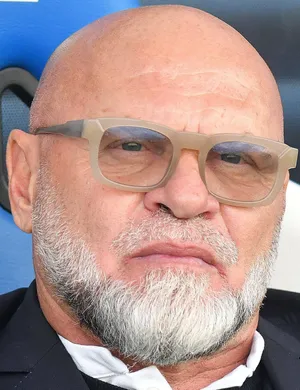
Serse Cosmi, born in Ponte San Giovanni, a suburb of Perugia, Italy, on May 5, 1958, is one of the most colorful and charismatic figures in Italian football. Known for his fiery temper, passion for the game, and his trademark baseball cap, Cosmi has built a reputation as a determined and innovative football manager who has experienced both the highs and lows of the profession. Over the years, Cosmi has become an icon in Italian football, celebrated not just for his tactical acumen but also for his ability to inspire and galvanize teams. This article delves into the life, career, and impact of Serse Cosmi, exploring how he rose from humble beginnings to become a respected and recognized name in football management.
Early Life and Passion for Football
Serse Cosmi’s journey into the world of football is a story of passion, perseverance, and self-determination. Growing up in Ponte San Giovanni, Cosmi was surrounded by the sport from a young age. Like many Italian children, football was more than just a game; it was a way of life. However, unlike some of his peers who may have harbored dreams of becoming professional footballers, Cosmi’s path was different. He started his footballing journey as a player but soon realized that his true calling was on the sidelines as a coach.
The early years were not easy for Cosmi. He faced numerous challenges, both on and off the field. After losing his father at a young age, he was raised by his mother, Iole, and two older sisters. The hardships of his early life instilled in him a resilience and work ethic that would later become hallmarks of his coaching career. Football became an escape, a passion that offered solace and a sense of purpose.
Cosmi’s playing career was modest, limited to the lower divisions of Italian football. He played for local amateur clubs like Deruta, Cannara, Spello, and Pontevecchio, where he honed his understanding of the game. Despite not achieving great success as a player, these experiences provided him with a deep understanding of football from the grassroots level, a knowledge that would prove invaluable in his future coaching career.
The Transition to Coaching
By the age of 30, Serse Cosmi had decided to transition from playing to coaching, recognizing that his real passion lay in nurturing and developing talent rather than competing on the field himself. His coaching career began in the youth sector, where he worked with local clubs to develop young players. His first significant break came in 1990 when he was appointed as the head coach of Pontevecchio, the club from his hometown.
The early days at Pontevecchio were tough. The team struggled in the lower divisions, often finding themselves near the bottom of the league tables. However, Cosmi’s determination and unconventional methods began to pay off. He focused on building a strong team spirit and utilized his charismatic personality to motivate his players. His ability to connect with his squad, both on a personal and professional level, became a key feature of his coaching style.
One of the most memorable moments of his early coaching career occurred during his time at Pontevecchio. Facing the threat of relegation, Cosmi, in a desperate bid to change the team’s fortunes, took his players to a local “mystic” known as “Il Baffo,” who was reputed to perform rituals that could bring good luck. The superstitious act worked wonders as the team went on an incredible run of 12 consecutive victories, securing their place in the league. This episode cemented Cosmi’s reputation as an eccentric but effective coach.
Cosmi’s success at Pontevecchio did not go unnoticed, and in 1995, he was appointed head coach of Arezzo, a club with a rich history but struggling in the lower divisions. At Arezzo, Cosmi continued to apply his hands-on, passionate approach to management. His tenure at Arezzo was marked by two promotions, taking the club from Serie D to Serie C1, just one step away from Serie B, Italy’s second division.
The Perugia Miracle
Serse Cosmi’s big break came in 2000 when he was appointed head coach of Perugia, a club with a rich history in Italian football. At the time, Perugia was in Serie A, Italy’s top football division, but the team was struggling to find its footing among the elite. Cosmi’s appointment was seen as a gamble by many, given his lack of experience at the highest level. However, this would be the opportunity that would define his career.
Cosmi’s tenure at Perugia was nothing short of miraculous. He inherited a team that was largely considered relegation fodder, but through his passionate and energetic approach, he managed to transform the club into one of the most exciting teams in Serie A. Known for his innovative tactics and motivational skills, Cosmi was able to get the best out of his players, many of whom were journeymen or unheralded talents.
Under Cosmi’s guidance, Perugia became famous for their never-say-die attitude and their ability to punch above their weight. The team regularly finished in the top half of the Serie A table, and in 2003, they achieved one of the greatest feats in the club’s history by qualifying for the UEFA Intertoto Cup, a summer competition that provided a route into the UEFA Cup (now known as the UEFA Europa League). Perugia went on to win the Intertoto Cup, defeating major European clubs along the way, and secured their place in European competition.
Cosmi’s achievements at Perugia earned him widespread acclaim. He was praised for his tactical acumen, his ability to inspire his players, and his charismatic presence on the sidelines. His iconic image, complete with his trademark baseball cap, became synonymous with the underdog spirit of his team. However, despite his successes, Cosmi’s time at Perugia also highlighted the difficulties of sustaining success with limited resources. In 2004, after several successful seasons, Cosmi left Perugia, marking the end of an era for both the coach and the club.
The Journeyman Coach
Following his departure from Perugia, Serse Cosmi embarked on a series of coaching stints across Italy, each with varying degrees of success. In 2004, he took charge of Genoa, a historic club in Serie B with ambitions of returning to Serie A. Cosmi’s tenure at Genoa was marked by initial success as he guided the team to the top of the Serie B table. However, the club was embroiled in a match-fixing scandal that led to their relegation to Serie C1, and Cosmi parted ways with Genoa amidst the turmoil.
Cosmi’s next major appointment came in 2005 when he was named head coach of Udinese, a club that had recently qualified for the UEFA Champions League. The challenge was immense, as Udinese was set to compete against Europe’s elite clubs. Cosmi’s tenure at Udinese saw mixed results; while the team performed admirably in Europe, they struggled to maintain consistency in Serie A. Cosmi left Udinese in 2006, having guided them through a challenging but memorable European campaign.
Over the next decade, Cosmi continued his career as a journeyman coach, taking on roles at several clubs, including Brescia, Livorno, Palermo, and Siena. At each stop, he brought his characteristic passion and tactical knowledge, often taking over teams in difficult situations. While he achieved varying levels of success, Cosmi’s ability to galvanize teams and inspire players remained a constant.
In 2011, Cosmi had a brief but eventful stint at Palermo, where he was appointed to replace Delio Rossi. Palermo’s volatile president, Maurizio Zamparini, was notorious for his quick trigger in firing coaches, and Cosmi’s time at the club was no different. Despite achieving some positive results, Cosmi was sacked after just a few months in charge, underscoring the unpredictable nature of his coaching career.
Serse Cosmi’s Legacy
Serse Cosmi’s coaching career is a testament to his resilience, adaptability, and unwavering passion for football. He is a coach who has always been willing to take on challenges, whether leading a small club to unexpected heights or stepping into difficult situations with larger teams. His legacy in Italian football is defined not only by his tactical innovations but also by the emotional connection he fosters with his players and fans.
Cosmi’s influence extends beyond the clubs he has managed. He is seen as a symbol of the passionate, gritty side of Italian football, where determination and heart can sometimes outweigh financial resources and star power. His ability to connect with his players on a personal level has been a hallmark of his success, and many of those who played under him speak highly of the impact he had on their careers.
In addition to his work on the sidelines, Cosmi has also contributed to the broader footballing community through his media appearances and commentary. His insights into the game, delivered with the same passion that characterizes his coaching, have made him a respected voice in Italian football.
Conclusion
Serse Cosmi’s journey from the amateur fields of Umbria to the top tiers of Italian football is a story of perseverance, passion, and the power of belief. His career is a reminder that success in football is not solely defined by trophies or titles but by the impact a coach can have on the lives of players, fans, and the game itself.
As he continues to be involved in football, whether as a coach, commentator, or mentor, Serse Cosmi’s legacy as one of Italy’s most beloved and enigmatic coaches is secure. His story is an inspiration to aspiring coaches and a celebration of the unique spirit that he brings to the beautiful game.


