
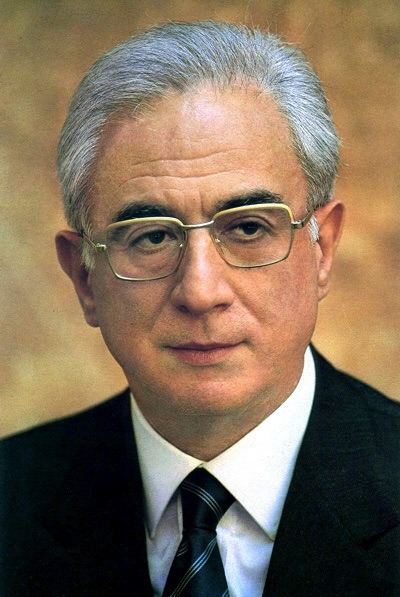
Francesco Cossiga is one of Italy’s most enduring and influential political figures, whose career spanned several decades and left an indelible mark on the country’s history. Born on July 26, 1928, in Sassari, Cossiga quickly rose through the ranks of Italian politics, becoming a prominent member of the Christian Democracy (Democrazia Cristiana, or DC) party. His life and career are a testament to his tenacity, intellect, and ability to navigate the turbulent waters of Italian politics during some of its most challenging periods.
Early Life and Education
Cossiga’s early life was marked by academic excellence and a precocious entry into the world of politics. He completed his high school education at the young age of sixteen and graduated with a law degree just four years later. By the age of seventeen, he had already joined the Christian Democracy party, which would become his political home for much of his life. At just 28, he was appointed the provincial secretary of the DC, a role that marked the beginning of his rapid ascent within the party.
Rise to Prominence
Cossiga’s rise in the political world was nothing short of meteoric. In 1958, at the age of 30, he was elected to the Italian Parliament, where he would serve for many years. His early political career saw him hold several important positions, including Undersecretary of Defense in the government led by Aldo Moro. By 1976, he had become Italy’s youngest-ever Minister of the Interior at the age of 48, a position he would hold during some of the most turbulent years of Italy’s post-war history.
The Years of Lead and the Moro Affair
The late 1970s in Italy were characterized by political violence and terrorism, a period often referred to as the “Years of Lead” (Anni di Piombo). During this time, Cossiga became a central figure in the Italian government’s efforts to combat domestic terrorism. His role as Minister of the Interior placed him at the forefront of the government’s response to the kidnapping of Aldo Moro, a former Prime Minister and prominent DC leader, by the Red Brigades, a far-left terrorist organization.
The kidnapping and eventual murder of Moro in 1978 were traumatic events for Italy and deeply affected Cossiga. The failure to rescue Moro led to widespread criticism of Cossiga, who was accused by some of incompetence and by others of not doing enough to secure Moro’s release. These accusations haunted him for the rest of his life, and he often spoke about the emotional toll the incident took on him, once stating, “If I have white hair and spots on my skin, it is because of this. Because while we let Moro be killed, I realized it.”
Presidency of the Republic
Despite the controversies surrounding the Moro affair, Cossiga’s political career continued to thrive. In 1979, he became the youngest Prime Minister of Italy at the age of 51. However, his government was short-lived, lasting only until 1980 when it was brought down by internal party opposition. After a brief period away from the political spotlight, Cossiga made a dramatic return in 1985 when he was elected President of the Italian Republic, receiving a record number of votes from both the DC and the opposition parties.
As President, Cossiga initially adopted a low-profile, strictly adhering to the constitutional role of the presidency. However, by the late 1980s, his approach began to change dramatically. He became increasingly outspoken, criticizing the political system, the judiciary, and the Italian Constitution. This new, more combative style earned him the nickname “Il Picconatore” (The Pickaxe-Wielder), as he used his position to “chip away” at the existing political order.
Cossiga’s presidency was marked by his calls for sweeping reforms of the Italian state and his attacks on individual politicians and institutions. His behavior was controversial, and some even questioned his mental stability, to which he famously responded, “I am doing it, not being it. There is a difference.”
The Gladio Affair and Impeachment Threat
One of the most significant controversies of Cossiga’s presidency was his involvement in the Gladio affair. In 1990, then-Prime Minister Giulio Andreotti revealed the existence of Gladio, a secret NATO-backed paramilitary organization that had been set up during the Cold War to counter a potential Soviet invasion. Cossiga, who had been aware of Gladio’s existence, found himself at the center of a political storm, as many Italians were outraged by the revelation of the secret organization.
The disclosure of Gladio led to a political crisis, with the left-wing Democratic Party of the Left (PDS) initiating impeachment proceedings against Cossiga. However, before the process could be completed, Cossiga chose to step down from the presidency in 1992, just before the general elections. In a televised address, he defended his actions and left office voluntarily, anticipating the collapse of the very political system he had spent years criticizing.
Later Years and Legacy
After his resignation, Cossiga largely withdrew from the political scene, although he made occasional returns to the spotlight. In the late 1990s, during a period of political instability in Italy, he briefly founded the Udeur (Union of Democrats for Europe) party and played a key role in the formation of a new government led by Massimo D’Alema. However, his involvement in party politics was short-lived, and he soon returned to his role as an independent “free hitter” with the creation of the Union for the Republic (UPR).
In the 2001 general elections, Cossiga lent his support to Silvio Berlusconi, although he later distanced himself from Berlusconi’s government, choosing not to vote for it in the Senate. Cossiga remained a controversial and outspoken figure until his death on August 17, 2010.
Historical Context and Significance
Francesco Cossiga’s life and career were deeply intertwined with the political history of post-war Italy. His rise to power came during a period of significant political change, as Italy transitioned from the immediate aftermath of World War II into the Cold War era. The Christian Democracy party, to which Cossiga belonged, was the dominant political force in Italy during this time, playing a crucial role in shaping the country’s political landscape.
Cossiga’s involvement in the Moro affair and the Years of Lead placed him at the center of some of the most traumatic events in modern Italian history. His tenure as President of the Republic came during a time of political stagnation and crisis in Italy, as the country grappled with issues such as corruption, organized crime, and the challenge of reforming its institutions.
Cossiga’s legacy is complex and multifaceted. On the one hand, he is remembered as a dedicated public servant who held some of the highest offices in the Italian state. On the other hand, his later years were marked by controversy, as he became increasingly critical of the very political system he had spent his life serving. His calls for reform, while often divisive, highlighted the deep-seated issues within the Italian state and the need for change.
Cossiga’s life also offers a window into the broader historical context of post-war Italy, a period marked by rapid economic growth, political instability, and social change. His career reflects the challenges faced by Italy as it sought to rebuild itself after the devastation of World War II and navigate the complexities of the Cold War era.
Conclusion
Francesco Cossiga’s life and career were marked by both extraordinary achievements and significant controversies. From his early days as a rising star in the Christian Democracy party to his tumultuous tenure as President of the Republic, Cossiga was a central figure in Italian politics for much of the second half of the 20th century. His legacy is one of both service and dissent, as he played a key role in shaping the political landscape of modern Italy while also challenging the status quo and calling for reform. As Italy continues to grapple with the challenges of its political system, Cossiga’s life and career offer important lessons about the complexities of leadership, the limits of power, and the enduring need for change.


