
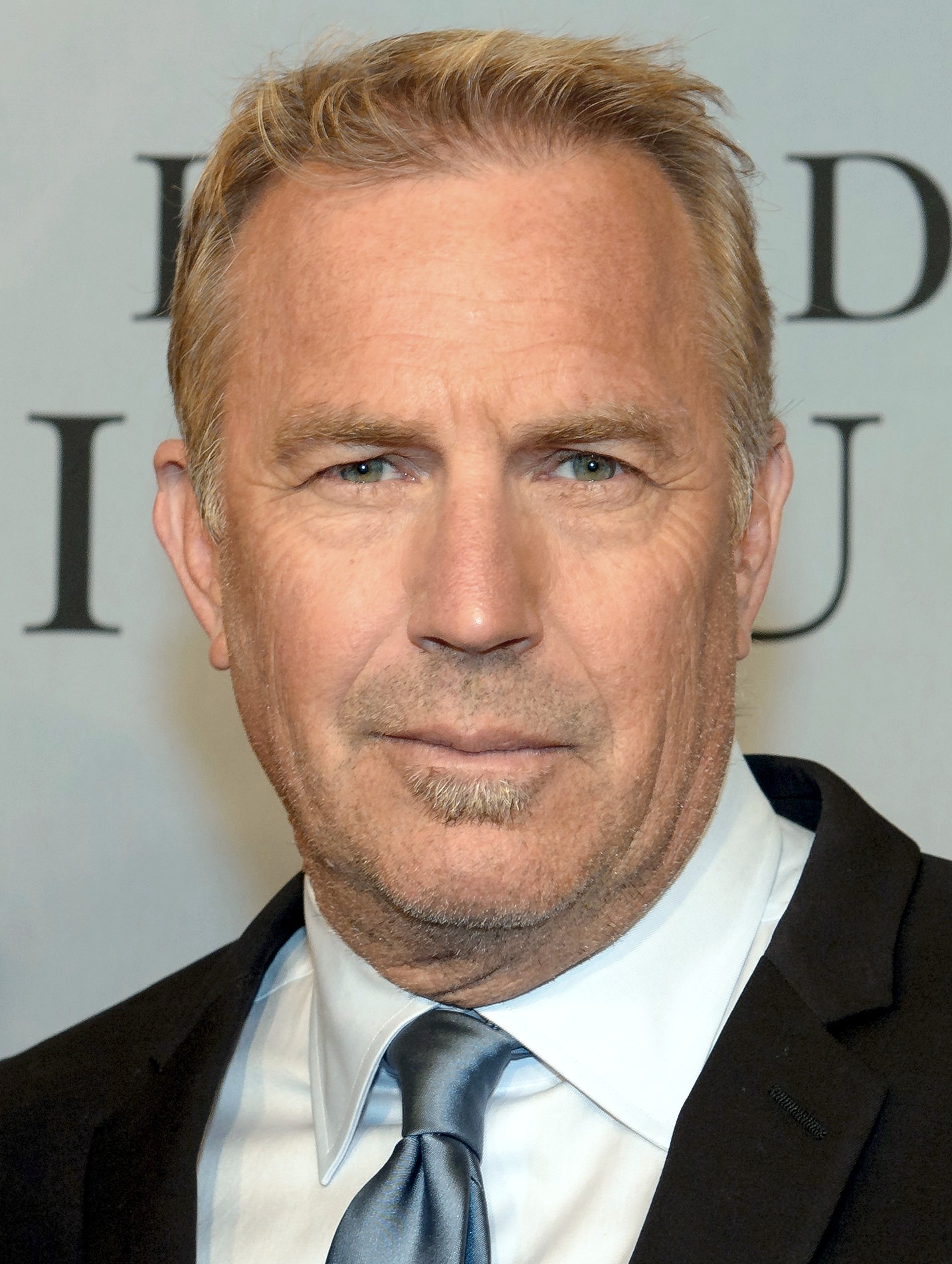
Early Life and Background
Kevin Michael Costner, born on January 18, 1955, in Lynwood, California, is one of Hollywood’s most versatile and enduring stars. Raised in Compton, California, Costner was the youngest of three boys in a blue-collar family. His father, William Costner, was an electrician and a utility executive, and his mother, Sharon Costner, was a welfare worker. Kevin’s early life was marked by frequent relocations due to his father’s job, which took the family to various parts of California. Despite the instability, Costner developed a love for sports, music, and storytelling, which would later fuel his passion for acting.
Costner attended California State University, Fullerton, where he majored in marketing and finance. However, it was during his college years that he discovered his true calling in the arts. After graduation, he married his college sweetheart, Cindy Silva, in 1978. The couple had three children together before their eventual divorce in 1994.
Early Career and Breakthrough
Kevin Costner’s journey into acting began in the early 1980s, a period that saw him take on small roles in films and television. His official film debut came in 1982 with Chasing Dreams, but it was his appearance in the 1985 film Silverado that first brought him significant attention. Directed by Lawrence Kasdan, Silverado was a western that showcased Costner’s natural charisma and solidified his potential as a leading man.
However, it was another Kasdan project, The Big Chill (1983), that initially seemed poised to be Costner’s big break. Unfortunately, his scenes were cut from the final version, but the disappointment didn’t deter him. Instead, it motivated him to push forward in his career.
Rise to Stardom: The Untouchables and Bull Durham
Costner’s real breakthrough came in 1987 with his role in Brian De Palma’s The Untouchables. Playing Eliot Ness, the determined federal agent who brings down Al Capone, Costner’s performance was both gritty and earnest, earning him widespread acclaim and firmly establishing him as a leading actor in Hollywood.
Following The Untouchables, Costner starred in Bull Durham (1988), a romantic comedy set in the world of minor league baseball. His portrayal of “Crash” Davis, a seasoned catcher nearing the end of his career, resonated with audiences and critics alike. The film was a box-office success and became a cult classic, further enhancing Costner’s reputation as a versatile actor capable of handling both drama and comedy.
The 1990s: Peak of Success and Directorial Debut
The 1990s were a defining decade for Kevin Costner, marked by critical and commercial success as well as his emergence as a director. In 1990, Costner made his directorial debut with Dances with Wolves, a sweeping epic about a Union Army lieutenant who befriends a tribe of Lakota Indians. The film was a massive success, both critically and commercially, and went on to win seven Academy Awards, including Best Picture and Best Director for Costner. Dances with Wolves not only solidified Costner’s status as a major Hollywood player but also showcased his talent behind the camera.
Following the success of Dances with Wolves, Costner starred in a series of high-profile films that cemented his status as one of the biggest stars of the 1990s. In 1991, he took on the iconic role of Robin Hood in Robin Hood: Prince of Thieves, a film that, despite mixed reviews, became a box-office hit. That same year, he starred in Oliver Stone’s JFK, playing New Orleans District Attorney Jim Garrison in a controversial and thought-provoking drama about the assassination of President John F. Kennedy. Costner’s performance in JFK was widely praised, and the film further established his ability to tackle complex, dramatic roles.
Costner’s next major success came in 1992 with The Bodyguard, a romantic thriller in which he starred opposite Whitney Houston. The film was a global sensation, largely due to Houston’s hit song “I Will Always Love You,” and it remains one of the highest-grossing films of Costner’s career. His portrayal of Frank Farmer, a stoic former Secret Service agent turned bodyguard, added to his appeal as a leading man in Hollywood.
Mid-Career Challenges: Waterworld and Beyond
Despite his early successes, the mid-1990s presented Costner with significant challenges. In 1995, he starred in and produced Waterworld, a post-apocalyptic action film set in a future where the Earth is covered by water. The film, which was one of the most expensive ever made at the time, was plagued by production issues, including budget overruns and on-set conflicts. Although Waterworld eventually recouped its costs and became profitable, it was widely considered a flop by the media and damaged Costner’s reputation as a bankable star.
Undeterred by the mixed reception of Waterworld, Costner continued to take risks with his film choices. In 1997, he directed and starred in The Postman, another post-apocalyptic film that, like Waterworld, was met with critical disdain and commercial failure. Despite the setbacks, Costner remained a prominent figure in Hollywood, known for his dedication to ambitious projects, even if they did not always succeed.
Return to Form: Thirteen Days and Open Range
The early 2000s marked a period of resurgence for Kevin Costner, as he returned to form with a series of well-received films. In 2000, he starred in Thirteen Days, a political thriller about the Cuban Missile Crisis. Costner’s portrayal of White House aide Kenny O’Donnell was praised for its depth and authenticity, and the film was lauded for its historical accuracy and tense narrative.
Costner also returned to the director’s chair with the 2003 western Open Range. The film, which he also starred in alongside Robert Duvall, was a critical and commercial success, earning praise for its realistic portrayal of the Old West and its strong performances. Open Range demonstrated that Costner had not lost his touch as a filmmaker and reaffirmed his status as a leading actor and director in Hollywood.
Personal Life and Public Image
Throughout his career, Kevin Costner’s personal life has often been in the spotlight. His marriage to Cindy Silva, which lasted from 1978 to 1994, produced three children and was widely covered by the media. After their divorce, Costner had several high-profile relationships before marrying Christine Baumgartner, a model and handbag designer, in 2004. The couple has three children together.
In addition to his acting and directing career, Costner has pursued other interests, including music. He is the lead singer of the country-rock band Kevin Costner & Modern West, which has released several albums and toured internationally. Costner’s passion for music is well-known, and he often incorporates his love of storytelling into his songwriting.
The 2010s and 2020s: Reinvention and Continued Success
The 2010s saw Kevin Costner continue to evolve as an actor, taking on roles that showcased his range and maturity. In 2012, he starred in the critically acclaimed miniseries Hatfields & McCoys, which earned him an Emmy Award for Outstanding Lead Actor in a Miniseries or Movie. The series was a major success and highlighted Costner’s ability to excel in television as well as film.
Costner’s film work during this period was equally impressive. He appeared in a variety of genres, from sports dramas like McFarland, USA (2015) to action thrillers like 3 Days to Kill (2014). In 2016, he played a supporting role in Hidden Figures, a film about African-American women mathematicians who worked at NASA during the Space Race. The film was a critical and commercial success, and Costner’s performance was praised for its understated strength.
In 2018, Costner took on the role of John Dutton in the television series Yellowstone, a modern-day western that quickly became one of the most popular shows on television. As the patriarch of a powerful ranching family, Costner’s portrayal of Dutton has been hailed as one of the best performances of his career, further solidifying his place as a Hollywood legend.
Historical Context and Nuances
Kevin Costner’s career is emblematic of the changing landscape of Hollywood from the 1980s to the present day. Emerging as a leading man during the height of the blockbuster era, Costner’s early roles reflected the rugged, all-American hero archetype that was popular during the Reagan years. His transition into directing with Dances with Wolves in 1990 coincided with a broader shift in Hollywood towards more complex, character-driven stories that explored themes of identity, culture, and history.
Costner’s willingness to take risks, both as an actor and a director, has defined his career. Whether it was the ambitious scope of Dances with Wolves, the controversial subject matter of JFK, or the experimental nature of The Postman, Costner has consistently pushed the boundaries of what is expected in mainstream cinema. His work has often challenged audiences to think critically about American history and culture, making him not just a star, but a significant cultural figure.
Conclusion: A Lasting Legacy
Kevin Costner’s career, spanning over four decades, is a testament to his talent, versatility, and resilience. From his early days as a leading man in Hollywood to his later successes as a director, producer, and television star, Costner has consistently proven himself to be one of the most dynamic and enduring figures in the entertainment industry.
As he continues to take on new challenges and explore different facets of his artistry, Kevin Costner’s legacy is secure. He remains a beloved figure in Hollywood, admired not just for his performances, but for his dedication to his craft and his willingness to take risks in pursuit of his creative vision. Whether on the big screen or the small screen, Kevin Costner’s contributions to film and television will continue to be celebrated for years to come.


