
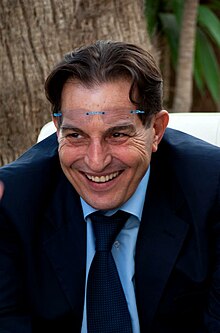
Rosario Crocetta is a prominent figure in Italian politics, particularly known for his tenure as the President of the Sicilian Region. Born on February 8, 1951, in Gela, Sicily, Crocetta’s life has been marked by his commitment to social justice, his fight against organized crime, and his progressive political views. This detailed examination of his life offers insights into the man who has become a symbol of resistance against the mafia in Sicily and an advocate for transparency and reform in Italian politics.
Early Life and Background
Rosario Crocetta was born into a modest family; his father worked for the local water company, and his mother was a seamstress. Growing up in Gela, a town plagued by mafia influence and economic challenges, Crocetta was deeply influenced by the social and political environment around him. His older brother, Salvatore Crocetta, would later become a senator in the Italian Communist Party, further embedding political activism in the family’s ethos.
After completing his education, Crocetta began working at the local Eni refinery in Gela. However, his ambitions extended beyond the industrial sector, leading him to engage in journalism. He contributed to leftist publications such as “L’Unità” and “Il Manifesto,” where he developed his voice as a critic of social injustices and a defender of workers’ rights.
Political Ascent in the 1980s and 1990s
Rosario Crocetta’s formal entry into politics came in the late 1980s. In 1987, he published a collection of poetry titled Diario di una giostra, reflecting his introspective nature and artistic leanings. His political career began with his affiliation to the Italian Communist Party (PCI), and later, he joined the newly formed Rifondazione Comunista (Communist Refoundation Party). In 1996, Crocetta was appointed as the Cultural Assessor (councilor) in Gela, marking the beginning of his active participation in local governance.
During his tenure as Cultural Assessor, Crocetta was instrumental in fostering cultural exchanges between Sicily and various international partners, thereby enhancing the region’s cultural profile. His work in this role earned him recognition and laid the foundation for his future political endeavors.
The Turn of the Millennium: A New Chapter
The early 2000s marked a significant period in Crocetta’s political career. He joined the Partito dei Comunisti Italiani (Party of Italian Communists) and served again as a councilor in Gela, this time overseeing Public Education. However, it was his candidacy for mayor of Gela in 2002 that brought him into the national spotlight. Initially defeated by the center-right candidate Giovanni Scaglione by a narrow margin, Crocetta contested the election results, citing irregularities in the vote count. The Regional Administrative Court ordered a recount, which revealed that Crocetta had indeed won by over 300 votes, overturning the initial result.
As mayor, Crocetta made waves with his staunch anti-mafia stance. Gela, long a stronghold of Cosa Nostra, was rife with corruption and criminal activities. Crocetta’s administration took bold steps to combat organized crime, including the dismissal of municipal employees suspected of mafia affiliations and the introduction of stringent measures to ensure transparency in public tenders. His actions earned him both widespread admiration and numerous death threats from mafia operatives.
In 2007, Crocetta was re-elected as mayor with an overwhelming majority, securing nearly 65% of the vote in the first round. His second term was marked by continued efforts to dismantle mafia influence and promote civic engagement in Gela. Despite the challenges, Crocetta’s leadership was instrumental in shifting the power dynamics in the city, making it a symbol of resistance against organized crime in Sicily.
Entering National and European Politics
Rosario Crocetta’s success in Gela propelled him onto the national stage. In 2008, Anna Finocchiaro, a leading figure in the Democratic Party (PD), proposed Crocetta as the Public Works Assessor for the Sicilian Regional Government in the event of her election as president. Although Finocchiaro was ultimately unsuccessful, Crocetta’s political capital continued to grow.
In 2009, Crocetta was elected to the European Parliament as a representative of the Democratic Party. His tenure as an MEP was marked by his focus on social justice, anti-corruption measures, and human rights. He served as Vice President of the European Parliament’s Special Anti-Mafia Commission, where he worked to strengthen international cooperation in the fight against organized crime.
Crocetta’s decision to step down as mayor of Gela in 2009 to focus on his European parliamentary duties was a significant moment in his career. It marked his transition from local to international politics, where he continued to advocate for the causes that had defined his career: transparency, justice, and the rule of law.
Presidency of the Sicilian Region
In 2012, Rosario Crocetta made history by becoming the first openly gay president of the Sicilian Region, a milestone in Italian and European politics. His campaign was supported by a coalition of center-left parties, including the Democratic Party, the Socialist Party, and the Union of the Center. Crocetta’s victory, with 30.5% of the vote, reflected the electorate’s desire for change and a break from the entrenched corruption that had plagued the region.
Crocetta’s presidency was characterized by his bold and often controversial decisions. Upon taking office, he immediately set about implementing reforms aimed at reducing government inefficiency and tackling corruption. He announced the closure of thirteen regional companies, cut the salaries of regional executives, and dismissed over twenty journalists appointed by previous administrations. These actions were part of his broader strategy to streamline the regional government and eliminate wasteful spending.
One of Crocetta’s most significant moves was his decision to have the Sicilian government constitute itself as a civil party in the ongoing “State-Mafia Negotiation” trial in Palermo, signaling his commitment to holding all parties accountable for their involvement in the alleged negotiations between the Italian state and the mafia during the early 1990s.
In 2013, Crocetta proposed the abolition of provincial governments in Sicily, replacing them with consortia of municipalities. This reform was passed by the Sicilian Regional Assembly with a majority vote, reflecting Crocetta’s ability to push through significant legislative changes despite the challenges of governing a complex and divided region.
However, Crocetta’s tenure was not without controversy. In 2014, he was investigated by the Court of Auditors for alleged fiscal mismanagement involving over two million euros. Although these allegations were serious, they did not result in a conviction. More damaging, however, was the 2015 scandal involving leaked conversations in which Crocetta’s personal physician allegedly made a derogatory comment about Lucia Borsellino, the daughter of the slain anti-mafia magistrate Paolo Borsellino. The public outcry led to Crocetta’s temporary self-suspension from the presidency, although he was later reinstated.
Legacy and Impact
Rosario Crocetta’s political career is a study in contrasts. On one hand, he is celebrated for his courageous stand against the mafia and his efforts to reform Sicily’s notoriously corrupt political system. On the other hand, his time in office was marred by scandals and controversies that highlighted the challenges of governing in a region where old loyalties and deep-seated corruption often clash with efforts to bring about change.
Crocetta’s legacy is one of resilience and determination. As an openly gay politician in a deeply conservative region, he broke barriers and challenged stereotypes, paving the way for greater acceptance and diversity in Italian politics. His life’s work has been dedicated to the principles of justice, transparency, and social equity—values that continue to resonate in the ongoing struggle against corruption and organized crime in Italy.
Conclusion
Rosario Crocetta’s life and career offer a compelling narrative of struggle, resistance, and reform. From his early days in Gela to his role as a European parliamentarian and president of Sicily, Crocetta has remained steadfast in his commitment to social justice and the fight against corruption. His story is a testament to the power of perseverance and the enduring impact of principled leadership.
As Italy continues to grapple with the challenges of organized crime, corruption, and social inequality, the lessons from Crocetta’s career remain as relevant as ever. His legacy serves as an inspiration to future generations of leaders who seek to build a more just and equitable society.


